Warning: Trying to access array offset on false in /srv/htdocs/wp-content/themes/viv-child/lib/ajax-functions.php on line 54
Warning: Trying to access array offset on false in /srv/htdocs/wp-content/themes/viv-child/lib/ajax-functions.php on line 54
Warning: Trying to access array offset on false in /srv/htdocs/wp-content/themes/viv-child/lib/ajax-functions.php on line 54
Warning: Trying to access array offset on false in /srv/htdocs/wp-content/themes/viv-child/lib/ajax-functions.php on line 54
Warning: Undefined property: stdClass::$post_name in /srv/htdocs/wp-content/themes/viv-child/lib/ead-card.php on line 383
Warning: Undefined property: stdClass::$post_name in /srv/htdocs/wp-content/themes/viv-child/lib/ead-card.php on line 383
Warning: Undefined property: stdClass::$post_name in /srv/htdocs/wp-content/themes/viv-child/lib/ead-card.php on line 383
Warning: Undefined property: stdClass::$post_name in /srv/htdocs/wp-content/themes/viv-child/lib/ead-card.php on line 383
Warning: Undefined property: stdClass::$post_name in /srv/htdocs/wp-content/themes/viv-child/lib/ead-card.php on line 383
Warning: Undefined property: stdClass::$post_name in /srv/htdocs/wp-content/themes/viv-child/lib/ead-card.php on line 383
Warning: Undefined property: stdClass::$post_name in /srv/htdocs/wp-content/themes/viv-child/lib/ead-card.php on line 383
A House Divided: the United States, 1830-1860 In what ways did slavery drive the growing sectional divide in the mid-19th century? What other significant factors contributed to the division?
Primary Sources Spotlight Kit
Source: Education for American Democracy
A House Divided: the United States, 1830-1860 In what ways did slavery drive the growing sectional divide in the mid-19th century? What other significant factors contributed to the division?
Primary Sources Spotlight Kit
The phrase “a house divided” comes from Abraham Lincoln’s speech to the Illinois Republican State Convention in 1858, when he describes a nation so badly torn between those that permitted slavery and those that prohibited it that it was on the brink of war. While the issue of slavery is understood to be central to the start of the Civil War, this set of resources is intended to introduce students to more details of the growing tension in the nation. Resources include information and images about expanding territory and the addition of new states to the union; voices of the abolitionist movement; political tension and acts of violence. It does not provide comprehensive coverage of these decades, but it helps to highlight that the growing tension was both multifaceted and happening across the entire nation.
The resources in this spotlight kit are intended for classroom use, and are shared here under a CC-BY-SA license. Teachers, please review the copyright and fair use guidelines.
Meredith Gavrin
Meredith Gavrin (New Haven, CT) has worked in the field of education for 30 years, primarily as both a teacher and school administrator. After teaching in New York City Public Schools, she co-founded New Haven Academy, an interdistrict magnet high school in New Haven, Connecticut, where she continues to work as an administrator and teaches one Civics class to seniors. She is also a member of the Advisory Group for the Partner Schools Network of Facing History and Ourselves and a board member of the Fund for Women and Girls at the Community Foundation for Greater New Haven. She also served on the Fall 2021 EAD Educator Task Force.
The resources in this spotlight kit are intended for classroom use. Teachers, if your use will be beyond a single classroom, please review the copyright and fair use guidelines.
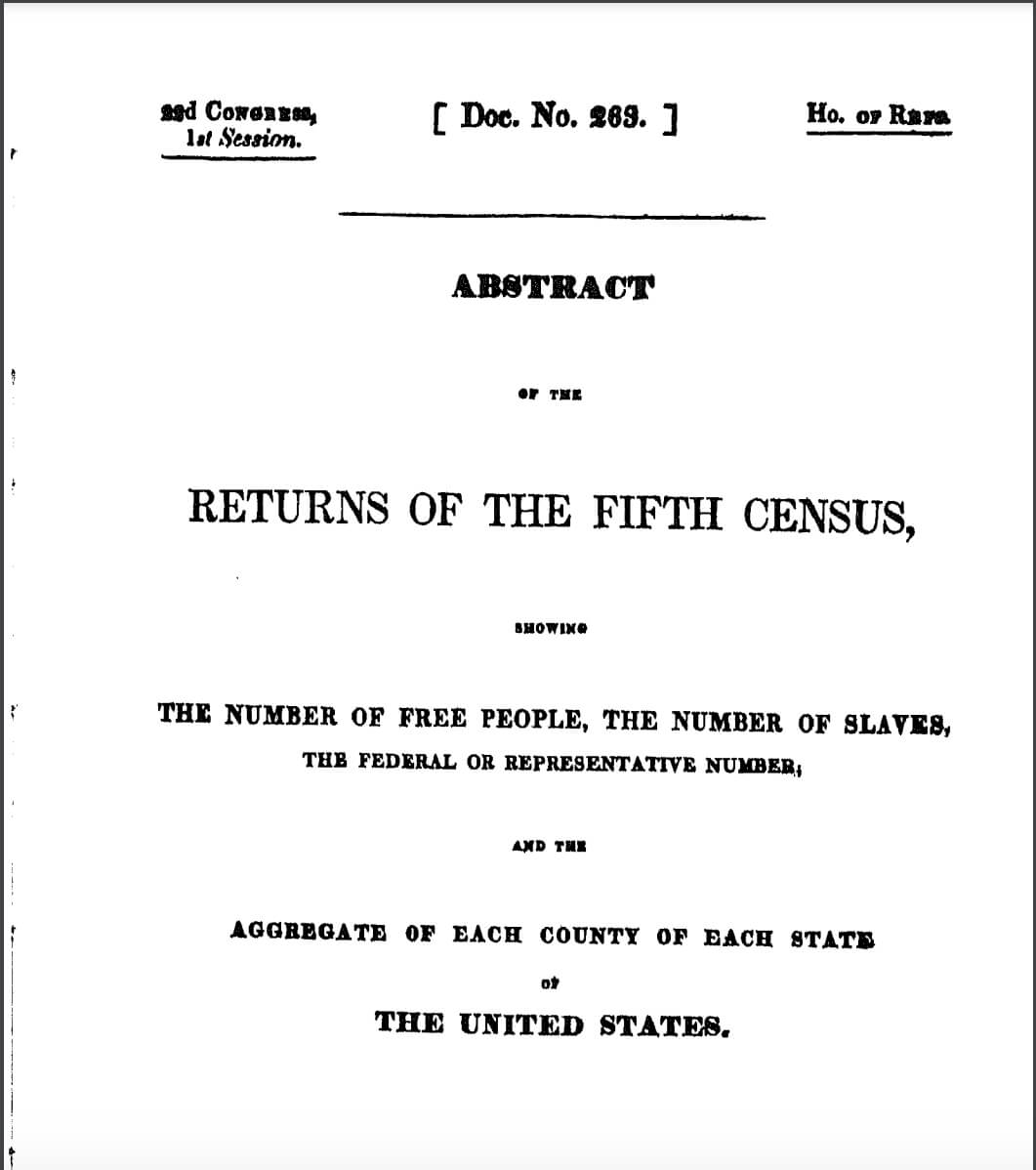
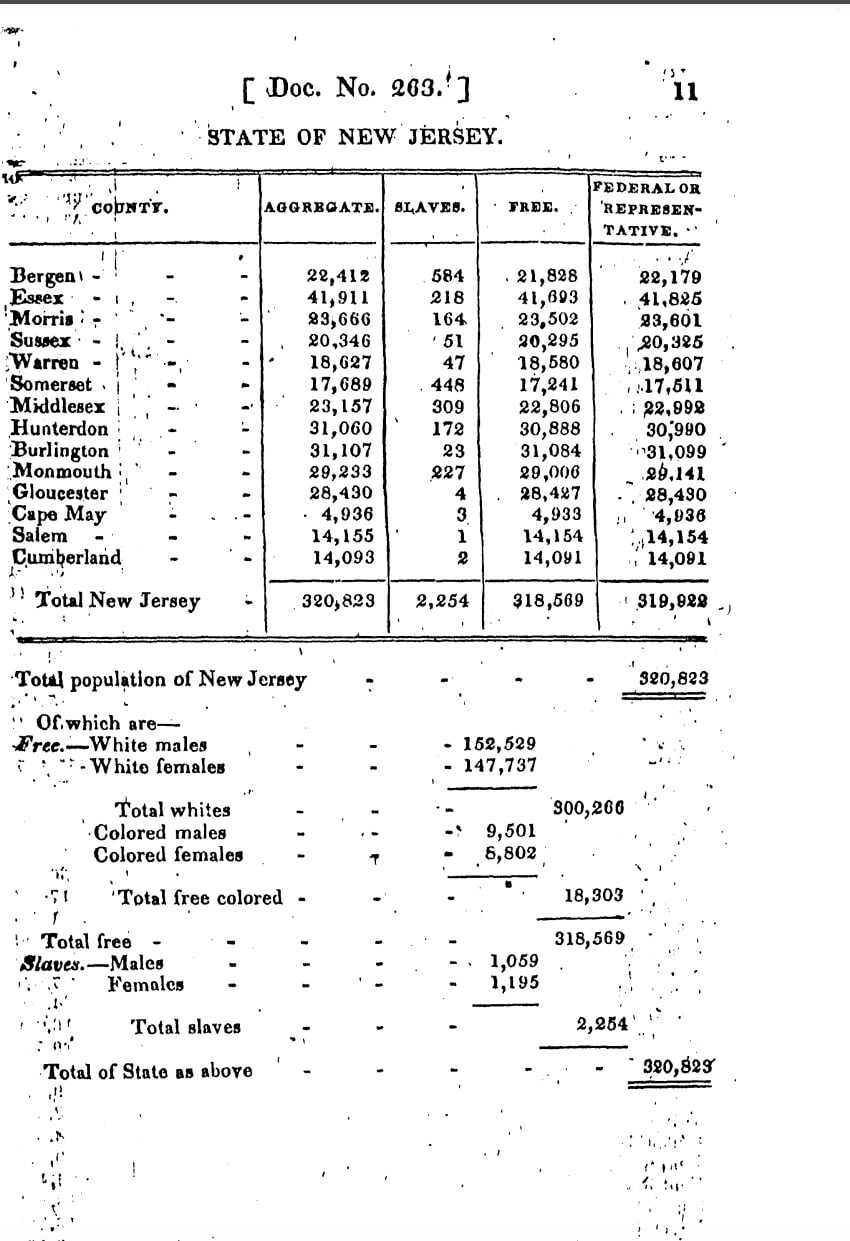
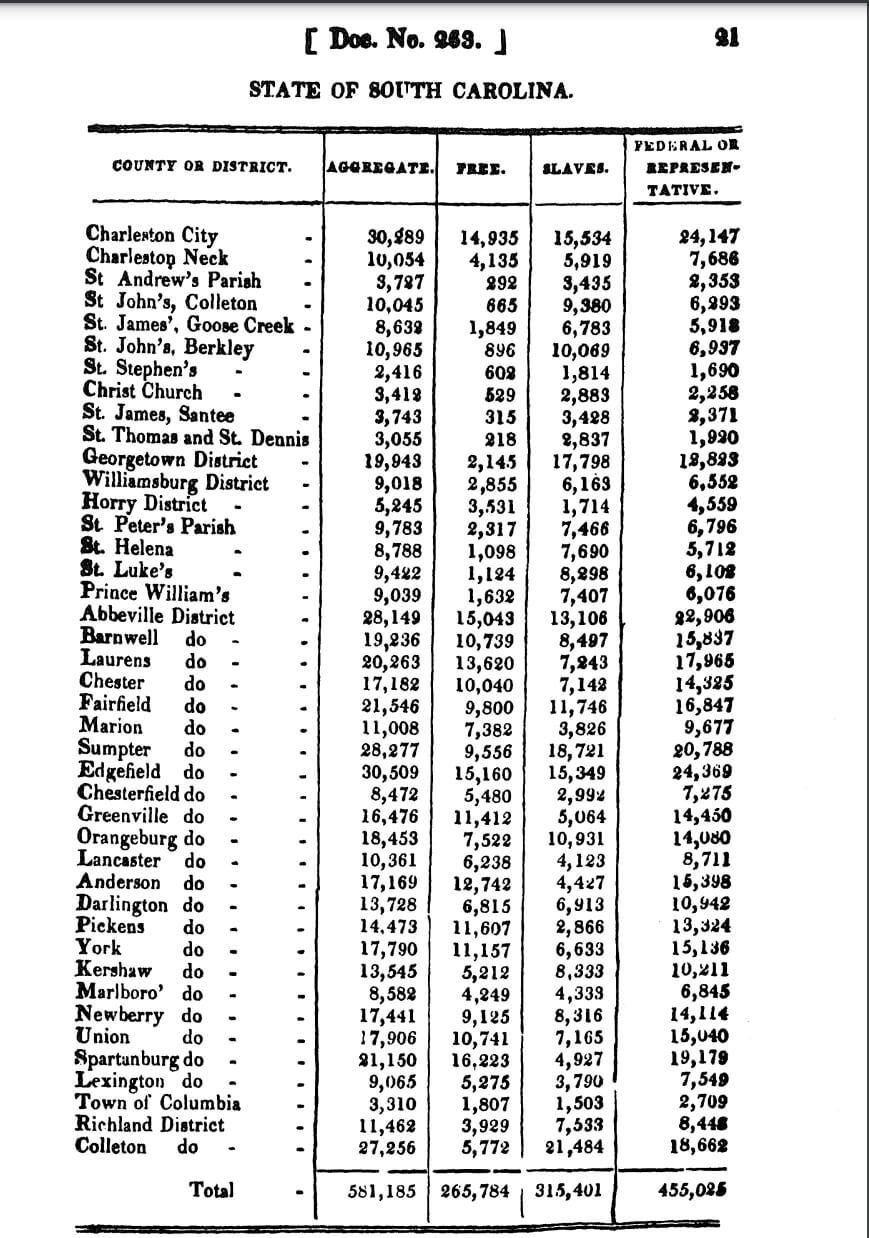
This abstract of the Census from 1830 not only provides numbers, state by state, of free and enslaved persons – but students will note that there are enslaved persons in many of the states they consider “free” (sample pages at left).
Note that the terminology is historically accurate but might be offensive to students unless context is provided (this will be true for many of the documents from this era).
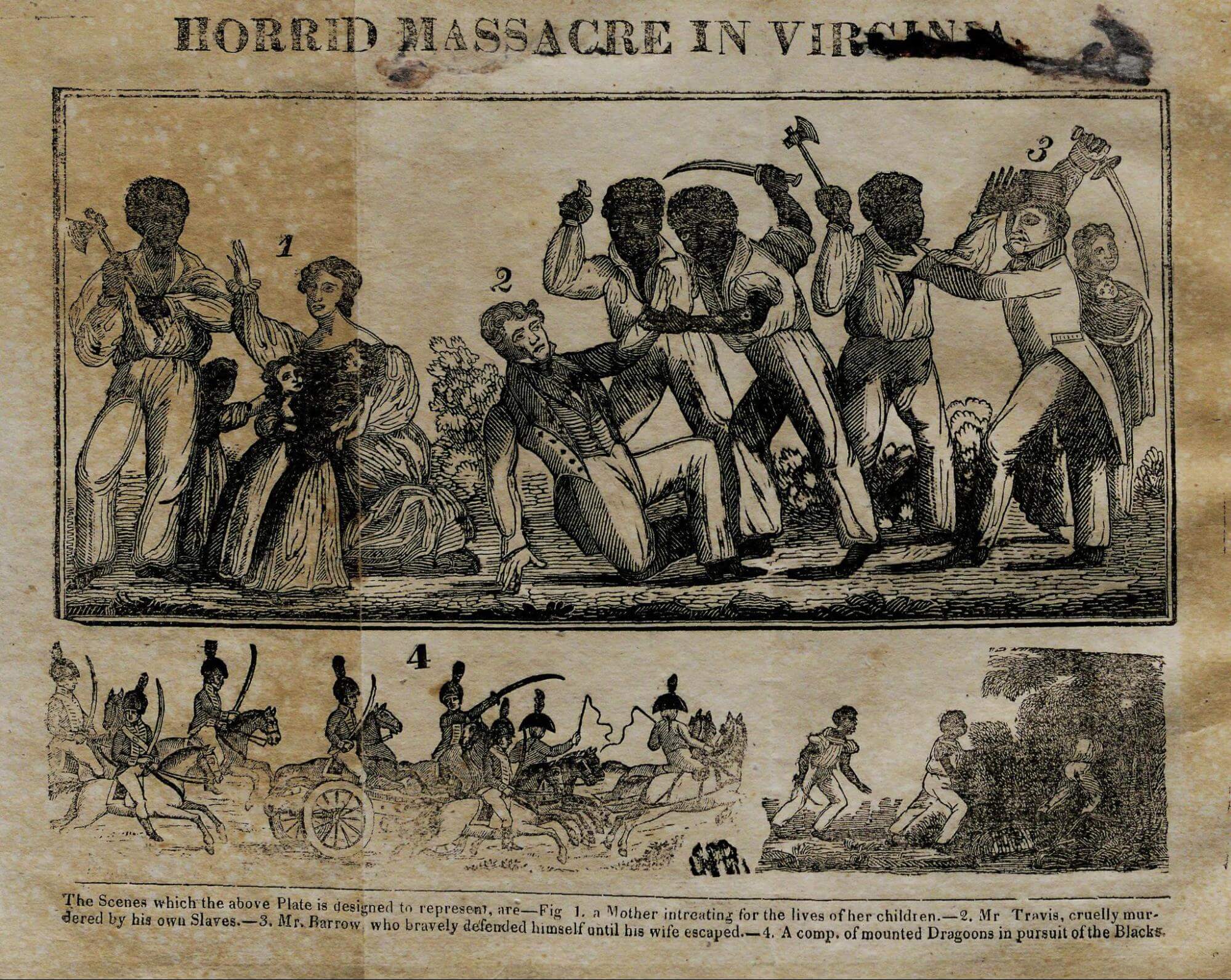
“Even though Turner and his followers had been stopped, panic spread across the region. In the days following the attack, 3000 soldiers, militia men, and vigilantes killed more than one hundred suspected rebels. …Nat Turner’s rebellion led to the passage of a series of new laws. The Virginia legislature actually debated ending slavery, but chose instead to impose additional restrictions and harsher penalties on the activities of both enslaved and free African Americans. Other slave states followed suit, restricting the rights of free and enslaved blacks to gather in groups, travel, preach, and learn to read and write.” (Gilder Lehrman, link at right.)
Nat Turner’s Rebellion led to both public debate and a tightening of laws and policies. “Nat Turner was an enslaved man who had learned to read and write and become a religious leader despite his enslavement; following what he took to be religious signs, he led other enslaved people in an armed uprising. The violence of the uprising and Turner’s ability to escape and hide for approximately six weeks following the event led to changes in laws and policies and also led to a widespread climate of fear among white slaveholders. Enslaved people in far-flung states who had no connection to the event were lynched by white mobs. The State of Virginia briefly considered ending the practice of slavery in the wake of the rebellion, but they ultimately decided instead to tighten the laws of slavery.
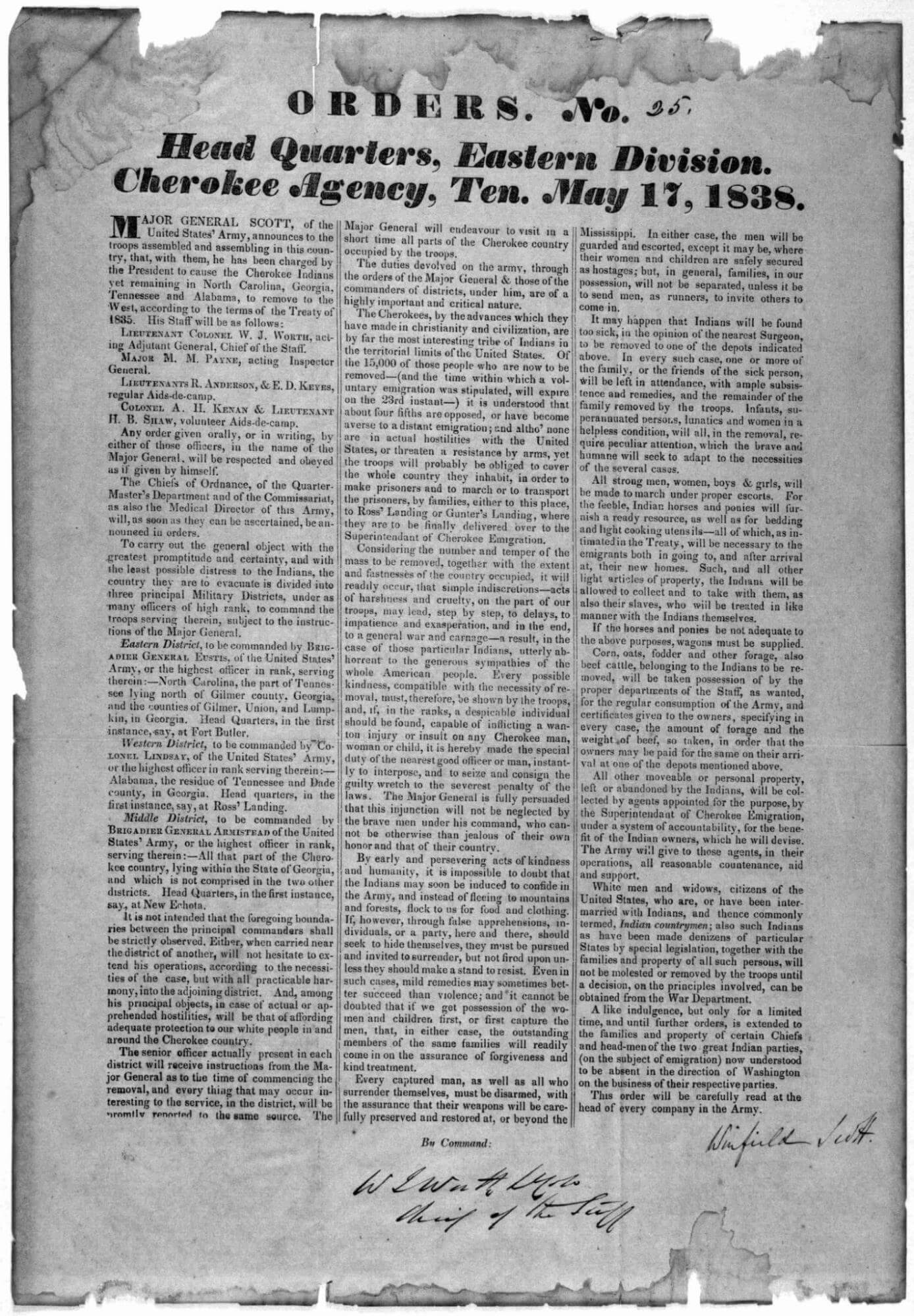
Orders pursuant to the Indian Removal Act of 1830 (Trail of Tears)
While the Trail of Tears and “Indian Removal Act” are not central to understanding slavery, they are critical events in the history of the country in this era; in addition, the concept of “indian removal” connects directly to tensions that rose as the nation expanded in both population and territory.
As the United States acquired Western territories, and as the power battle between slaveholding and free states continued, the land on which Native nations lived became increasingly valuable. After President Andrew Jackson signed the Indian Removal Act of 1830, the Choctaw, Creek, and Cherokee nations were forced to move from their land, most often on foot and with the deaths of many people, into Western territories. The 1838 forced removal of the Cherokee people from their Georgia land led to the deaths of thousands of people (exact numbers are unknown, but estimates range around 4,000 - 5,000.)
“On May 26, 1836, the House of Representatives adopted a ‘Gag Rule’ stating that all petitions regarding slavery would be tabled without being read, referred, or printed….The enactment of the Gag Rule, rather than discouraging petitioners, energized the anti-slavery movement to flood the Capitol with written demands. Activists held up the suppression of debate as an example of the slaveholding South’s infringement of the rights of all Americans.”
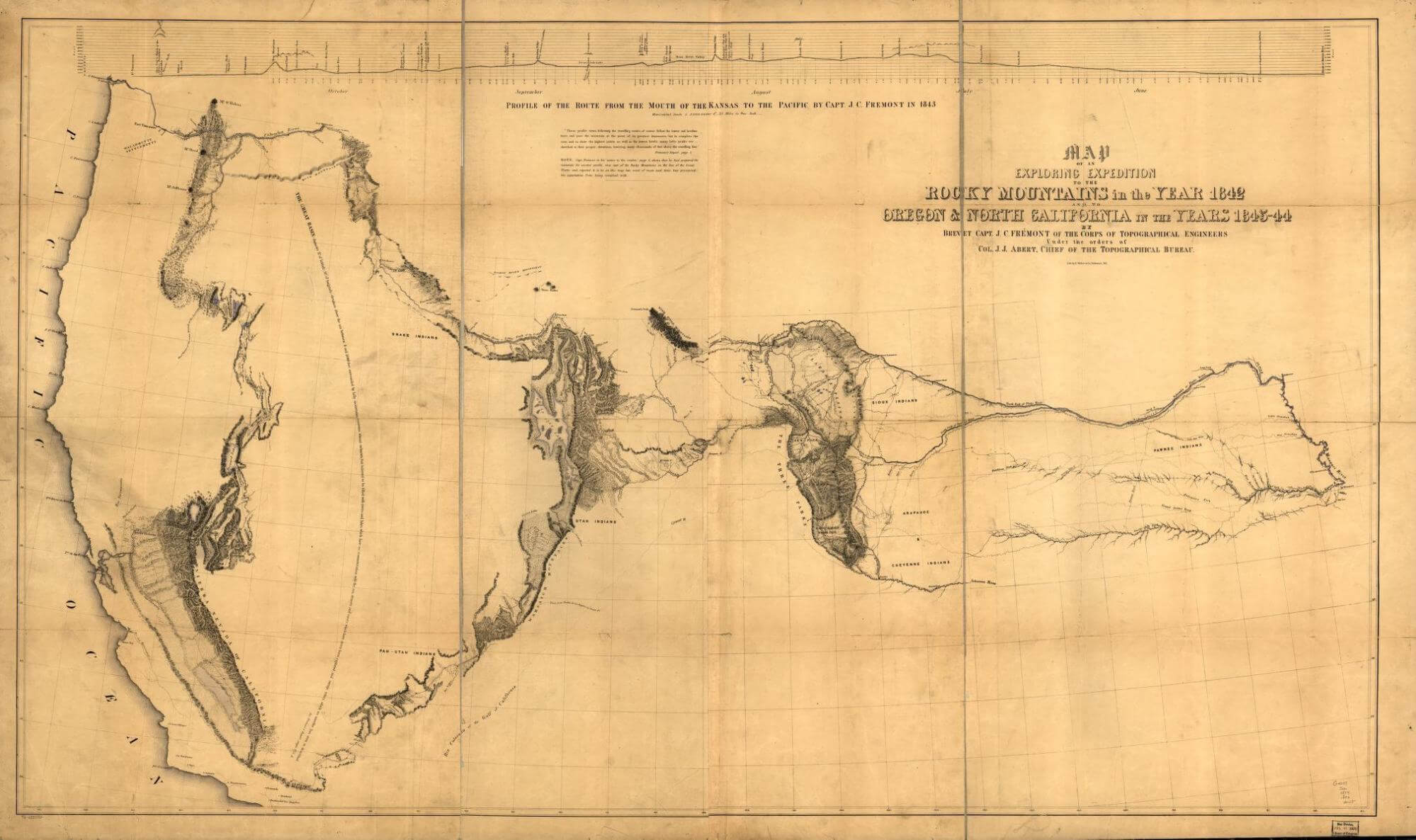
“The pact set a border between Texas and Mexico and ceded California, Nevada, Utah, New Mexico, most of Arizona and Colorado, and parts of Oklahoma, Kansas, and Wyoming to the United States. …the acquisition of so much territory with the issue of slavery unresolved lit the fuse that eventually set off the Civil War in 1861.”
CHAPTER I. I WAS born in Tuckahoe, near Hillsborough, and about twelve miles from Easton, in Talbot county, Maryland. I have no accurate knowledge of my age, never having seen any authentic record containing it. By far the larger part of the slaves know as little of their ages as horses know of theirs, and it is the wish of most masters within my knowledge to keep their slaves thus ignorant. I do not remember to have ever met a slave who could tell of his birthday. They seldom come nearer to it than planting-time, harvest-time, cherry-time, spring-time, or fall-time. A want of information concerning my own was a source of unhappiness to me even during childhood. The white children could tell their ages. I could not tell why I ought to be deprived of the same privilege. I was not allowed to make any inquiries of my master concerning it. He deemed all such inquiries on the part of a slave improper and impertinent, and evidence of a restless spirit. The nearest estimate I can give makes me now between twenty-seven and twenty-eight years of age. I come to this, from hearing my master say, some time during 1835, I was about seventeen years old.
Students would benefit from reading an excerpt of the text of Narrative of the Life of Frederick Douglass – but in addition, the cover itself is an interesting artifact, and students can discuss its details and its possible impact upon publication in 1845. (See also text in this chart, below, from Frederick Douglass’ July 4 address in 1852.)
Hempel, Carlene, et al. “Frederick Douglass, 1818-1895. Narrative of the Life of Frederick Douglass, an American Slave. Written by Himself.” Documenting the American South, https://docsouth.unc.edu/neh/douglass/douglass.html.
"A somewhat tongue-in-cheek dramatization of the moment during the heated debate in the Senate over the admission of California as a free state when Mississippi senator Henry S. Foote drew a pistol on Thomas Hart Benton of Missouri.”
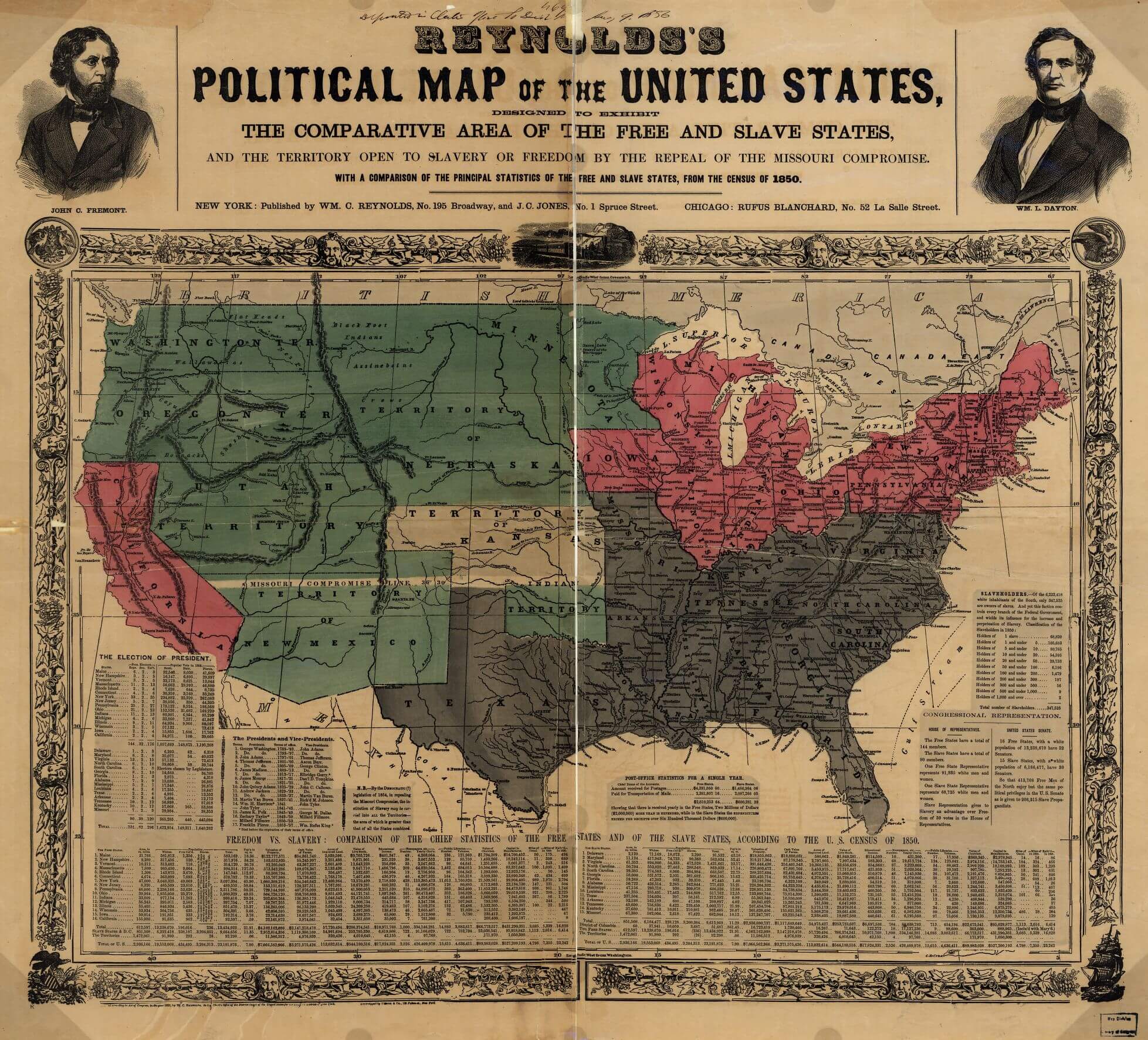
As new states were added to the nation, the question of how many would permit slavery and how many would prohibit it – and, therefore, which faction had more power – continued to contribute to growing tension.
This map has a range of valuable information, not only about Presidential politics, but also about population statistics and slavery. It makes a particular point of comparison with the 1830 Census, hyperlinked above in this chart.
See above; understanding the life and words of Sojourner Truth helps students to understand the complexity and intersectionality of both the women’s rights movement and the abolitionist movement.
TitleProceedings of the Woman's Rights Convention held at the Broadway Tabernacle, in the city of New York, on Tuesday and Wednesday, Sept. 6th and 7th, 1853.
Frederick Douglass, “What to the Slave is the Fourth of July?”, 1852
Douglass raises critical questions about patriotism, citizenship, and the nation’s ideals in this address. The text highlights issues that will continue to be points of tension not only at the start of the Civil War, but throughout Reconstruction (and, truly, throughout American history).
“I say it with a sad sense of the disparity between us. I am not included within the pale of glorious anniversary! Your high independence only reveals the immeasurable distance between us. The blessings in which you, this day, rejoice, are not enjoyed in common. The rich inheritance of justice, liberty, prosperity and independence, bequeathed by your fathers, is shared by you, not by me. The sunlight that brought light and healing to you, has brought stripes and death to me. This Fourth July is yours, not mine. You may rejoice, I must mourn.” - Frederick Douglass, July 5, 1852
“The years of 1854-1861 were a turbulent time in Kansas territory. The Kansas-Nebraska Act of 1854 …allowed the residents of these territories to decide by popular vote whether their state would be free or slave. This concept of self-determination was called popular sovereignty'. …Three distinct political groups occupied Kansas: pro-slavers, free-staters and abolitionists. Violence broke out immediately between these opposing factions and continued until 1861 when Kansas entered the Union as a free state on January 29th. This era became forever known as ‘Bleeding Kansas’.” (National Park Service, link at right.)
This excerpt from (or the entirety of) Lincoln’s address to the Republican State Convention puts the notion of “a house divided” in its original context, just before the start of the Civil War.
NOTE: Because it provides the central concept of this set of resources, I’ve included it last (although it predates John Brown’s speech above.)
Illinois Republican State Convention, Springfield, Illinois June 16, 1858
Abraham Lincoln
Mr. President and Gentlemen of the Convention. If we could first know where we are, and whither we are tending, we could better judge what to do, and how to do it.
We are now far into the fifth year, since a policy was initiated, with the avowed object, and confident promise, of putting an end to slavery agitation. Under the operation of that policy, that agitation has not only, not ceased, but has constantly augmented.
In my opinion, it will not cease, until a crisis shall have been reached, and passed -
"A house divided against itself cannot stand."
I believe this government cannot endure, permanently half slave and half free.
I do not expect the Union to be dissolved - I do not expect the house to fall - but I do expect it will cease to be divided. It will become all one thing, or all the other.
1
John Brown's Raid (US National Park Service). (2021, July 30). National Park Service. Retrieved March 20, 2022, from https://www.nps.gov/articles/john-browns-raid.htm
John Brown's Raid on Harper's Ferry. (n.d.). Ohio History Central. Retrieved March 20, 2022, from https://ohiohistorycentral.org/w/John_Brown%27s_Raid_on_Harper%27s_Ferry
An excerpt from John Brown's address to the court after hearing his guilty verdict, 1859
John Brown’s raid on Harper’s Ferry fits into Lincoln’s foretelling of a crisis and further spurs the start of the Civil War. Brown’s speech to the courtroom highlights his sense of what, in this moment, constitutes justice and injustice.
John Brown’s Raid on Harper’s Ferry: John Brown, an abolitionist, led the Raid on Harper’s Ferry, a federal arsenal, in an effort to start an armed insurrection against slavery. The event, which took place after Lincoln’s “a house divided” speech, serves as an example of the violence Lincoln foretold. Brown echoed Lincoln’s sentiments, explaining in 1859, “I, John Brown, am now quite certain that the crimes of this guilty land will never be purged away but with blood. I had, as I now think, vainly flattered myself that without very much bloodshed it might be done.” Brown and his followers were trapped and arrested, and Brown was tried and found guilty of treason.
“I have, may it please the court, a few words to say. In the first place, I deny everything but what I have all along admitted--the design on my part to free the slaves. I intended certainly to have made a clean thing of that matter, as I did last winter when I went into Missouri and there took slaves without the snapping of a gun on either side, moved them through the country, and finally left them in Canada. I designed to have done the same thing again on a larger scale. That was all I intended. I never did intend murder, or treason, or the destruction of property, or to excite or incite slaves to rebellion, or to make insurrection.
I have another objection; and that is, it is unjust that I should suffer such a penalty. Had I interfered in the manner which I admit...had I so interfered in behalf of the rich, the powerful, the intelligent, the so-called great, or in behalf of any of their friends--either father, mother, brother, sister, wife, or children, or any of that class--and suffered and sacrificed what I have in this interference, it would have been all right; and every man in this court would have deemed it an act worthy of reward rather than punishment.”
Quotation beneath the photograph: "If de fust woman God ever made was strong enough to turn de world upside down all alone, dese women all togedder ought to be able to turn it back and get it right side up agin."
This photograph pairs with the text in the row below from the Women’s Rights Convention of 1853, when Sojourner Truth spoke to the group.
The Women’s Rights Convention: The Seneca Falls Convention of 1848 is a significant event in the fight for women’s rights and for women’s suffrage, though activists at the convention itself debated whether suffrage should be the center point of their platform. In addition, the Seneca Falls Convention is now widely understood to represent some tension between the women’s rights movement and the abolitionist movement; some activists at the time felt that the right to vote should not go to black men before white women. In this collection of documents, Sojourner Truth’s speech to a smaller, subsequent convention – one held in New York in 1853 – is included, largely because of the critical role Sojourner Truth plays in demonstrating the importance of the intersectionality of both the women’s rights and abolitionist movements.
1
On this day, the Seneca Falls Convention begins. (2021, July 19). National Constitution Center. Retrieved March 20, 2022, from https://constitutioncenter.org/blog/on-this-day-the-seneca-falls-convention-begins and More Women's Rights Conventions - Women's Rights National Historical Park (US National Park Service). (n.d.). National Park Service. Retrieved March 20, 2022, from https://www.nps.gov/wori/learn/historyculture/more-womens-rights-conventions.htm and Proceedings of the Woman's Rights Convention held at the Broadway Tabernacle, in the city of New York, on Tuesday and Wednesday, Sept. 6th and 7th, 1853. (n.d.). Library of Congress. Retrieved March 20, 2022, from https://www.loc.gov/item/93838289/
This abstract of the Census from 1830 not only provides numbers, state by state, of free and enslaved persons – but students will note that there are enslaved persons in many of the states they consider “free” (sample pages at left).
Note that the terminology is historically accurate but might be offensive to students unless context is provided (this will be true for many of the documents from this era).
“Even though Turner and his followers had been stopped, panic spread across the region. In the days following the attack, 3000 soldiers, militia men, and vigilantes killed more than one hundred suspected rebels. …Nat Turner’s rebellion led to the passage of a series of new laws. The Virginia legislature actually debated ending slavery, but chose instead to impose additional restrictions and harsher penalties on the activities of both enslaved and free African Americans. Other slave states followed suit, restricting the rights of free and enslaved blacks to gather in groups, travel, preach, and learn to read and write.” (Gilder Lehrman, link at right.)
Nat Turner’s Rebellion led to both public debate and a tightening of laws and policies. “Nat Turner was an enslaved man who had learned to read and write and become a religious leader despite his enslavement; following what he took to be religious signs, he led other enslaved people in an armed uprising. The violence of the uprising and Turner’s ability to escape and hide for approximately six weeks following the event led to changes in laws and policies and also led to a widespread climate of fear among white slaveholders. Enslaved people in far-flung states who had no connection to the event were lynched by white mobs. The State of Virginia briefly considered ending the practice of slavery in the wake of the rebellion, but they ultimately decided instead to tighten the laws of slavery.
Orders pursuant to the Indian Removal Act of 1830 (Trail of Tears)
While the Trail of Tears and “Indian Removal Act” are not central to understanding slavery, they are critical events in the history of the country in this era; in addition, the concept of “indian removal” connects directly to tensions that rose as the nation expanded in both population and territory.
As the United States acquired Western territories, and as the power battle between slaveholding and free states continued, the land on which Native nations lived became increasingly valuable. After President Andrew Jackson signed the Indian Removal Act of 1830, the Choctaw, Creek, and Cherokee nations were forced to move from their land, most often on foot and with the deaths of many people, into Western territories. The 1838 forced removal of the Cherokee people from their Georgia land led to the deaths of thousands of people (exact numbers are unknown, but estimates range around 4,000 - 5,000.)
“On May 26, 1836, the House of Representatives adopted a ‘Gag Rule’ stating that all petitions regarding slavery would be tabled without being read, referred, or printed….The enactment of the Gag Rule, rather than discouraging petitioners, energized the anti-slavery movement to flood the Capitol with written demands. Activists held up the suppression of debate as an example of the slaveholding South’s infringement of the rights of all Americans.”
“The pact set a border between Texas and Mexico and ceded California, Nevada, Utah, New Mexico, most of Arizona and Colorado, and parts of Oklahoma, Kansas, and Wyoming to the United States. …the acquisition of so much territory with the issue of slavery unresolved lit the fuse that eventually set off the Civil War in 1861.”
CHAPTER I. I WAS born in Tuckahoe, near Hillsborough, and about twelve miles from Easton, in Talbot county, Maryland. I have no accurate knowledge of my age, never having seen any authentic record containing it. By far the larger part of the slaves know as little of their ages as horses know of theirs, and it is the wish of most masters within my knowledge to keep their slaves thus ignorant. I do not remember to have ever met a slave who could tell of his birthday. They seldom come nearer to it than planting-time, harvest-time, cherry-time, spring-time, or fall-time. A want of information concerning my own was a source of unhappiness to me even during childhood. The white children could tell their ages. I could not tell why I ought to be deprived of the same privilege. I was not allowed to make any inquiries of my master concerning it. He deemed all such inquiries on the part of a slave improper and impertinent, and evidence of a restless spirit. The nearest estimate I can give makes me now between twenty-seven and twenty-eight years of age. I come to this, from hearing my master say, some time during 1835, I was about seventeen years old.
Students would benefit from reading an excerpt of the text of Narrative of the Life of Frederick Douglass – but in addition, the cover itself is an interesting artifact, and students can discuss its details and its possible impact upon publication in 1845. (See also text in this chart, below, from Frederick Douglass’ July 4 address in 1852.)
Hempel, Carlene, et al. “Frederick Douglass, 1818-1895. Narrative of the Life of Frederick Douglass, an American Slave. Written by Himself.” Documenting the American South, https://docsouth.unc.edu/neh/douglass/douglass.html.
"A somewhat tongue-in-cheek dramatization of the moment during the heated debate in the Senate over the admission of California as a free state when Mississippi senator Henry S. Foote drew a pistol on Thomas Hart Benton of Missouri.”
As new states were added to the nation, the question of how many would permit slavery and how many would prohibit it – and, therefore, which faction had more power – continued to contribute to growing tension.
This map has a range of valuable information, not only about Presidential politics, but also about population statistics and slavery. It makes a particular point of comparison with the 1830 Census, hyperlinked above in this chart.
Frederick Douglass, “What to the Slave is the Fourth of July?”, 1852
Douglass raises critical questions about patriotism, citizenship, and the nation’s ideals in this address. The text highlights issues that will continue to be points of tension not only at the start of the Civil War, but throughout Reconstruction (and, truly, throughout American history).
“I say it with a sad sense of the disparity between us. I am not included within the pale of glorious anniversary! Your high independence only reveals the immeasurable distance between us. The blessings in which you, this day, rejoice, are not enjoyed in common. The rich inheritance of justice, liberty, prosperity and independence, bequeathed by your fathers, is shared by you, not by me. The sunlight that brought light and healing to you, has brought stripes and death to me. This Fourth July is yours, not mine. You may rejoice, I must mourn.” - Frederick Douglass, July 5, 1852
See above; understanding the life and words of Sojourner Truth helps students to understand the complexity and intersectionality of both the women’s rights movement and the abolitionist movement.
TitleProceedings of the Woman's Rights Convention held at the Broadway Tabernacle, in the city of New York, on Tuesday and Wednesday, Sept. 6th and 7th, 1853.
“The years of 1854-1861 were a turbulent time in Kansas territory. The Kansas-Nebraska Act of 1854 …allowed the residents of these territories to decide by popular vote whether their state would be free or slave. This concept of self-determination was called popular sovereignty'. …Three distinct political groups occupied Kansas: pro-slavers, free-staters and abolitionists. Violence broke out immediately between these opposing factions and continued until 1861 when Kansas entered the Union as a free state on January 29th. This era became forever known as ‘Bleeding Kansas’.” (National Park Service, link at right.)
This excerpt from (or the entirety of) Lincoln’s address to the Republican State Convention puts the notion of “a house divided” in its original context, just before the start of the Civil War.
NOTE: Because it provides the central concept of this set of resources, I’ve included it last (although it predates John Brown’s speech above.)
Illinois Republican State Convention, Springfield, Illinois June 16, 1858
Abraham Lincoln
Mr. President and Gentlemen of the Convention. If we could first know where we are, and whither we are tending, we could better judge what to do, and how to do it.
We are now far into the fifth year, since a policy was initiated, with the avowed object, and confident promise, of putting an end to slavery agitation. Under the operation of that policy, that agitation has not only, not ceased, but has constantly augmented.
In my opinion, it will not cease, until a crisis shall have been reached, and passed -
"A house divided against itself cannot stand."
I believe this government cannot endure, permanently half slave and half free.
I do not expect the Union to be dissolved - I do not expect the house to fall - but I do expect it will cease to be divided. It will become all one thing, or all the other.
1
John Brown's Raid (US National Park Service). (2021, July 30). National Park Service. Retrieved March 20, 2022, from https://www.nps.gov/articles/john-browns-raid.htm
John Brown's Raid on Harper's Ferry. (n.d.). Ohio History Central. Retrieved March 20, 2022, from https://ohiohistorycentral.org/w/John_Brown%27s_Raid_on_Harper%27s_Ferry
An excerpt from John Brown's address to the court after hearing his guilty verdict, 1859
John Brown’s raid on Harper’s Ferry fits into Lincoln’s foretelling of a crisis and further spurs the start of the Civil War. Brown’s speech to the courtroom highlights his sense of what, in this moment, constitutes justice and injustice.
John Brown’s Raid on Harper’s Ferry: John Brown, an abolitionist, led the Raid on Harper’s Ferry, a federal arsenal, in an effort to start an armed insurrection against slavery. The event, which took place after Lincoln’s “a house divided” speech, serves as an example of the violence Lincoln foretold. Brown echoed Lincoln’s sentiments, explaining in 1859, “I, John Brown, am now quite certain that the crimes of this guilty land will never be purged away but with blood. I had, as I now think, vainly flattered myself that without very much bloodshed it might be done.” Brown and his followers were trapped and arrested, and Brown was tried and found guilty of treason.
“I have, may it please the court, a few words to say. In the first place, I deny everything but what I have all along admitted--the design on my part to free the slaves. I intended certainly to have made a clean thing of that matter, as I did last winter when I went into Missouri and there took slaves without the snapping of a gun on either side, moved them through the country, and finally left them in Canada. I designed to have done the same thing again on a larger scale. That was all I intended. I never did intend murder, or treason, or the destruction of property, or to excite or incite slaves to rebellion, or to make insurrection.
I have another objection; and that is, it is unjust that I should suffer such a penalty. Had I interfered in the manner which I admit...had I so interfered in behalf of the rich, the powerful, the intelligent, the so-called great, or in behalf of any of their friends--either father, mother, brother, sister, wife, or children, or any of that class--and suffered and sacrificed what I have in this interference, it would have been all right; and every man in this court would have deemed it an act worthy of reward rather than punishment.”
Quotation beneath the photograph: "If de fust woman God ever made was strong enough to turn de world upside down all alone, dese women all togedder ought to be able to turn it back and get it right side up agin."
This photograph pairs with the text in the row below from the Women’s Rights Convention of 1853, when Sojourner Truth spoke to the group.
The Women’s Rights Convention: The Seneca Falls Convention of 1848 is a significant event in the fight for women’s rights and for women’s suffrage, though activists at the convention itself debated whether suffrage should be the center point of their platform. In addition, the Seneca Falls Convention is now widely understood to represent some tension between the women’s rights movement and the abolitionist movement; some activists at the time felt that the right to vote should not go to black men before white women. In this collection of documents, Sojourner Truth’s speech to a smaller, subsequent convention – one held in New York in 1853 – is included, largely because of the critical role Sojourner Truth plays in demonstrating the importance of the intersectionality of both the women’s rights and abolitionist movements.
1
On this day, the Seneca Falls Convention begins. (2021, July 19). National Constitution Center. Retrieved March 20, 2022, from https://constitutioncenter.org/blog/on-this-day-the-seneca-falls-convention-begins and More Women's Rights Conventions - Women's Rights National Historical Park (US National Park Service). (n.d.). National Park Service. Retrieved March 20, 2022, from https://www.nps.gov/wori/learn/historyculture/more-womens-rights-conventions.htm and Proceedings of the Woman's Rights Convention held at the Broadway Tabernacle, in the city of New York, on Tuesday and Wednesday, Sept. 6th and 7th, 1853. (n.d.). Library of Congress. Retrieved March 20, 2022, from https://www.loc.gov/item/93838289/
As part of the dissemination of the Educating for American Democracy Roadmap, we organized an Educator Task Force (ETF).Members of the early ETF curated an initial collection of over 500 instructional resources aligned to the seven themes and five design challenges.In addition to this collection, ETF members recently built robust, diverse, and accessible primary source collections, known as Spotlight Kits, that provide rich avenues for inquiry and that braid U.S. history and civic learning throughout.
add to list:
The Media and Elections: How does the media in its various forms impact elections and influence voters? How has the impact of the media changed over the course of American history?
Primary Sources Spotlight Kit
Source: Education for American Democracy
The Media and Elections: How does the media in its various forms impact elections and influence voters? How has the impact of the media changed over the course of American history?
Primary Sources Spotlight Kit
United States political elections have a long and complicated history with the media, with everything from newspapers to political cartoons to radio and television affecting the tenor and tone of elections and influencing voters. This spotlight kit focuses on the 1800 Presidential Election, the 1860 Presidential Election, and the 1960 Presidential Election, and provides primary sources directly related to these events. These three elections represent significant moments in American history; their undercurrents of political division, social upheaval, and unrest echo in contemporary political campaigns and debates.
The resources in this spotlight kit are intended for classroom use, and are shared here under a CC-BY-SA license. Teachers, please review the copyright and fair use guidelines.
Jessica Culver
Jessica Culver (Ozark, AR) teaches social studies, including Civics/Economics and concurrent college credit history courses, at Ozark High School in Ozark, Arkansas. Jessica holds an undergraduate degree in Social Studies Education, a graduate degree in History, and a graduate degree in Education/Library Media, all from Arkansas Tech University. She is a certified yoga instructor, a 2020-2021 Fulbright Teacher for Global Classrooms, a 2021-2022 U.S. Institute of Peace Teacher, a member of the National Constitution Center’s Teacher Advisory Council, a National History Day Teacher, and Economics Arkansas Master Economics Teacher, a National Geographic Educator, a Take Charge Today National Master Educator, a recipient of the 2021 Arkansas Ag in the Classroom award, and a nominee for the 2021 Patricia Behring Teacher of the Year National History Day award. Jessica is also active with the Bill of Rights Institute and the Jump$tart organization. Her students received recognition in 2021 with the Goethe-Institut’s “Our Sustainable Future” international competition for their work on environment and sustainability.
EAD, Education Task Force
Marc Turner
Marc Turner (Columbia, SC) teaches U.S. History, U.S. Government, and Macroeconomics at the AP and Honors level at Spring Hill High School in Chapin, South Carolina. After 28 years in education, Marc has just about done it all. He has taught at the middle school, high school, and collegiate level. He is the President of the South Carolina Council for Social Studies and the Co-Chair of the South Carolina Council for History Education. Marc presents at state and national conferences, is a National Board Certified Teacher, a Fulbright Teacher Exchange alumnus, a James Madison Fellow, supports National History Day, and sponsors the Mock Trial and We the People programs at Spring Hill. Currently, he is pursuing a master’s degree in American History and Government from Ashland University.
EAD, Education Task Force
Meredith Gavrin
Meredith Gavrin (New Haven, CT) has worked in the field of education for 30 years, primarily as both a teacher and school administrator. After teaching in New York City Public Schools, she co-founded New Haven Academy, an interdistrict magnet high school in New Haven, Connecticut, where she continues to work as an administrator and teaches one Civics class to seniors. She is also a member of the Advisory Group for the Partner Schools Network of Facing History and Ourselves and a board member of the Fund for Women and Girls at the Community Foundation for Greater New Haven. She also served on the Fall 2021 EAD Educator Task Force.
The resources in this spotlight kit are intended for classroom use. Teachers, if your use will be beyond a single classroom, please review the copyright and fair use guidelines.
Primary Resources by Era/Date
1800 Presidential Campaign (6)
“Thoughts, on the subject of the ensuing election…”, 1800
“Thoughts, on the subject of the ensuing election, addressed to the party in the state of New-York, who claim exclusively the appellation of federalists “... April 1, 1800.
Transcript
Excerpt: “At a time when the eyes of all genuine Americans are wet with sorrow for the loss of a WASHINGTON, it is particularly incumbent upon you…to remember not only what you owe to the example of his life, but what is due also to the authority of his opinions…..Before, therefore, you adopt the nomination of a single candidate, test his principles, private and public, with those of a WASHINGTON. Is he a moral man, and a friend to religion? If he is not, reject him….
….Does he, in fine, think it just, proper, or prudent, that Mr. ADAMS should be continued four other years in office, and that the many extraordinary blessings of his Presidency, which have been detailed, should be continued with him. If he does, reject him…surely it is time for Mr. Adams to retire, and do this when he may, he will carry with him an abundant share, both of public honours and public money.”
The Election of 1800 was a bitter partisan battle. This article highlights the opposition felt towards incumbent president John Adams, focusing on both political and moral failings on his behalf. Adams would go on to lose New York’s vote and the presidency.
1
The resources in this spotlight kit are intended for classroom use. Teachers, if your use will be beyond a single classroom, please review the copyright and fair use guidelines.
Thoughts, on the subject of the ensuing election, addressed to the party in the state of New-York, who claim exclusively the appellation of federalists ... April 1, . {Albany Printed by Barber & Southwick } Positive Photostat. Albany, 1800. Pdf. Retrieved from the Library of Congress, www.loc.gov/item/rbpe.1130010b/
(An April 1800 broadside containing opinions and persuasive writing concerning the upcoming presidential election.)
In this cartoon from 1797, as Monticello Classroom explains, "Jefferson’s political enemies portrayed the then-vice-president as dangerously pro-French, un-Christian, and un-American. Jefferson kneels ready to sacrifice the U.S. Constitution …[as] God and an American eagle oppose him, as Satan happily looks on.”
Thomas Paine did not hesitate to critique John Adams and the federalist party during Thomas Jefferson’s presidency. As a result, federalists published this image of Thomas Paine working with the devil to bring down the Nation.
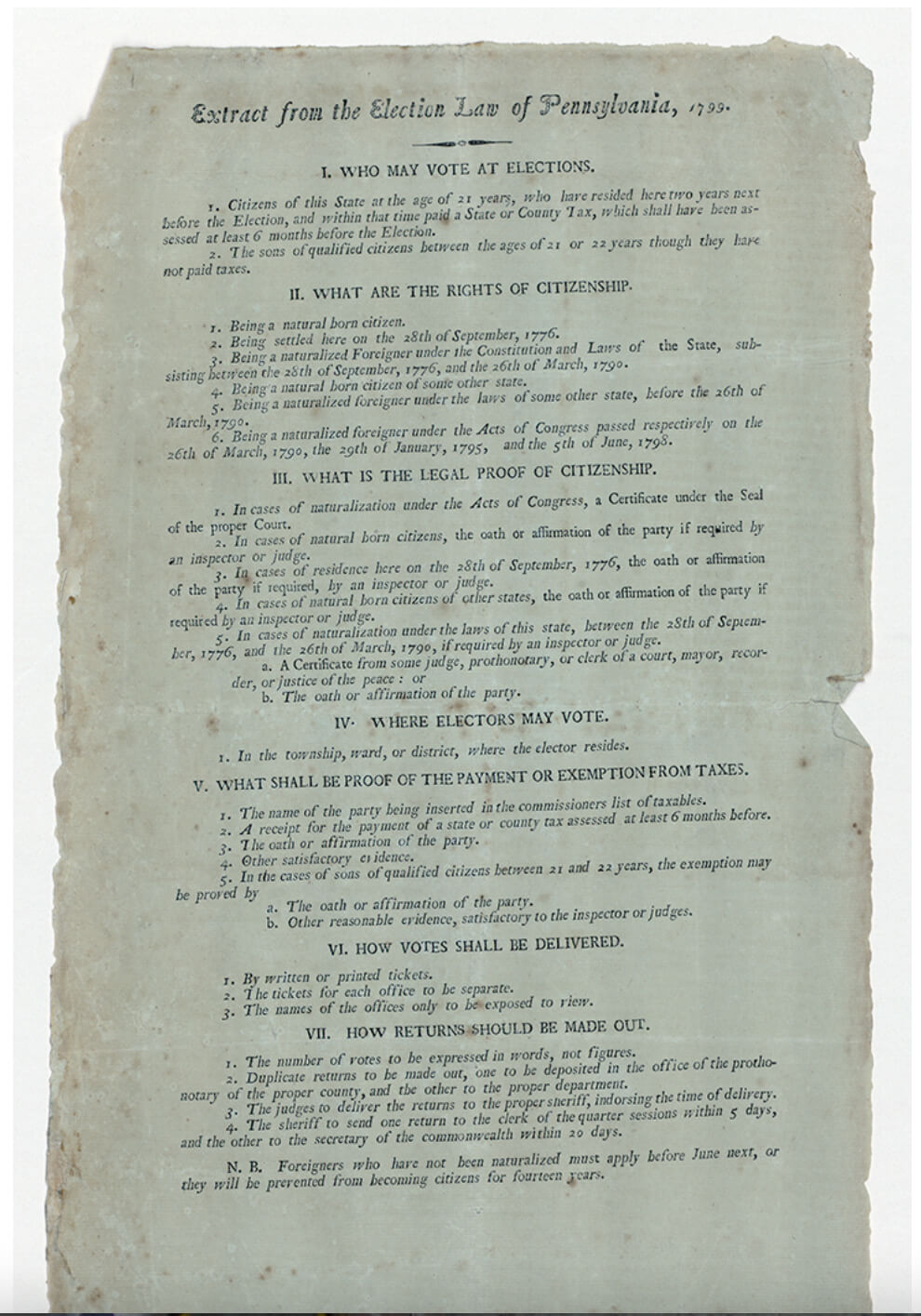
“Extract from the Election Law of Pennsylvania,” 1799
According to the Library of Congress, “State and federal laws governing elections and citizenship are listed in this anonymous broadside, clearly published with an eye to the elections leading up to the national presidential election of 1800. In Pennsylvania, Federalists and Republicans battled to elect supporters for the state legislature so that they could control the selection of presidential electors. In the end, Pennsylvania’s electors split their votes between John Adams and Thomas Jefferson.”
Extract from the Election Law of Pennsylvania, 1799. [Philadelphia: 1799]. Broadside. Rare Book and Special Collections Division, Library of Congress (097.04.00) [Digital ID# us0097_04]
From “The National Intelligencer and Washington Advertiser,” November 7, 1800
Transcript
Excerpt:
“...from what I have stated you can vote only either for Mr. Pinckney or Mr. Jefferson; for Mr. Adams is out of the question.
If, for the above reasons you do not think that Mr. Pinckney will make a good President, Mr. Jefferson is your only resource.
Examine his character. His friends believe him not only wise but honest; they believe him to be a true friend to his country; they believe him to be a genuine republican. His enemies acknowledge his talents, his dignity of public as well as private character. All agree that he is independent. He is the friend of peace with all the world. Such a man must be your friend.”
Newspapers during the Election of 1800 were very partisan and did not shy away from personal and private attacks on candidates. Samuel Harrison Smith started the National Intelligencer as a Republican affiliated paper at the behest of Thomas Jefferson.
1
“About The national intelligencer and Washington advertiser. [volume] (Washington City [D.C.]) 1800-1810,” The National Intelligencer, https://chroniclingamerica.loc.gov/lccn/sn83045242/. Accessed May 16, 2022.
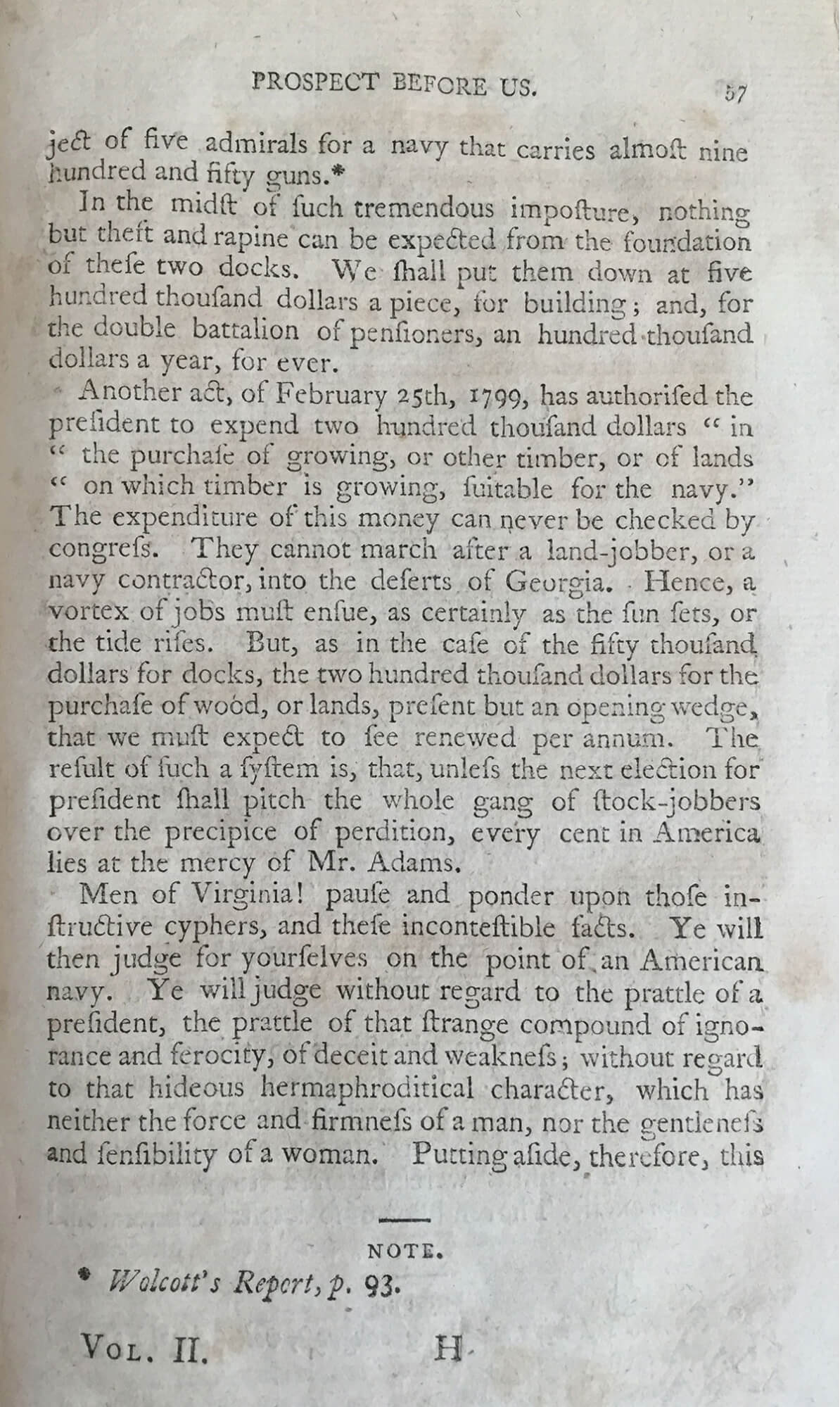
James Calendar pamphlet, “ Prospect Before Us,” 1800-1801
Transcript
Excerpt:
“...Unless the next election for president shall pitch the whole gang of stock-jobbers over the precipice of perdition, every cent in America lies at the mercy of Mr. Adams.
Men of Virginia! Pause and ponder upon those instructive cyphers, and these incontestible facts….judge without regard to the prattle of a president, the prattle of that strange compound of ignorance and ferocity, of deceit and weakness; without regard to that hideous hermaphroditical character, which has neither the force and firmness of a man, nor the gentleness and sensibility of a woman.”
James Calendar was a partisan editor who wrote this piece denouncing John Adams on the basis of his moral failings.
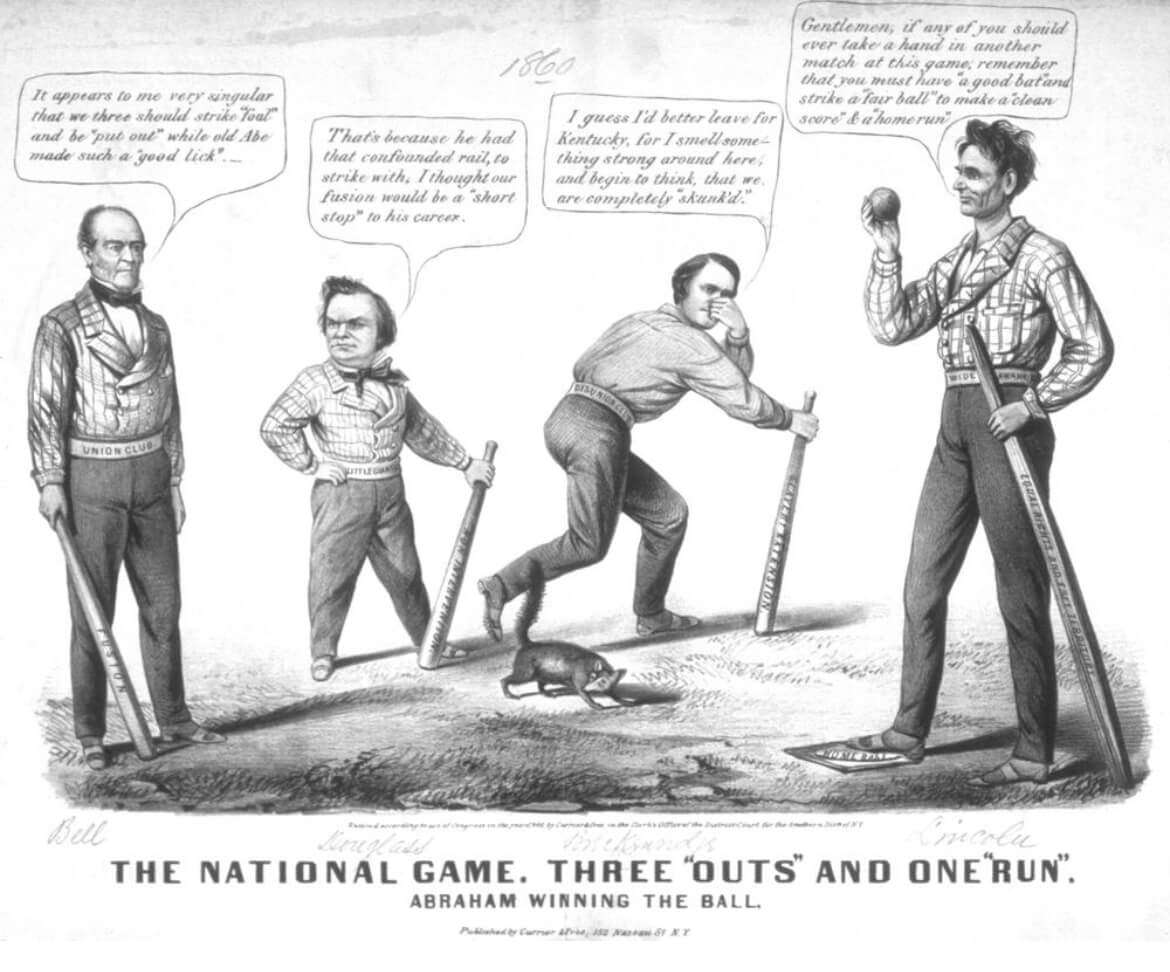
“The National Game. Three 'Outs' and One 'Run' (Abraham winning the Ball),” 1860
The election of 1860 came with stark partisanship between candidates Abraham LIncoln, John Bell, Stephen A. Douglas, and John C. Breckinridge. In this cartoon, Lincoln wins “The National Game” by using his "good bat" –– a wooden rail labeled "Equal Rights and Free Territory.”
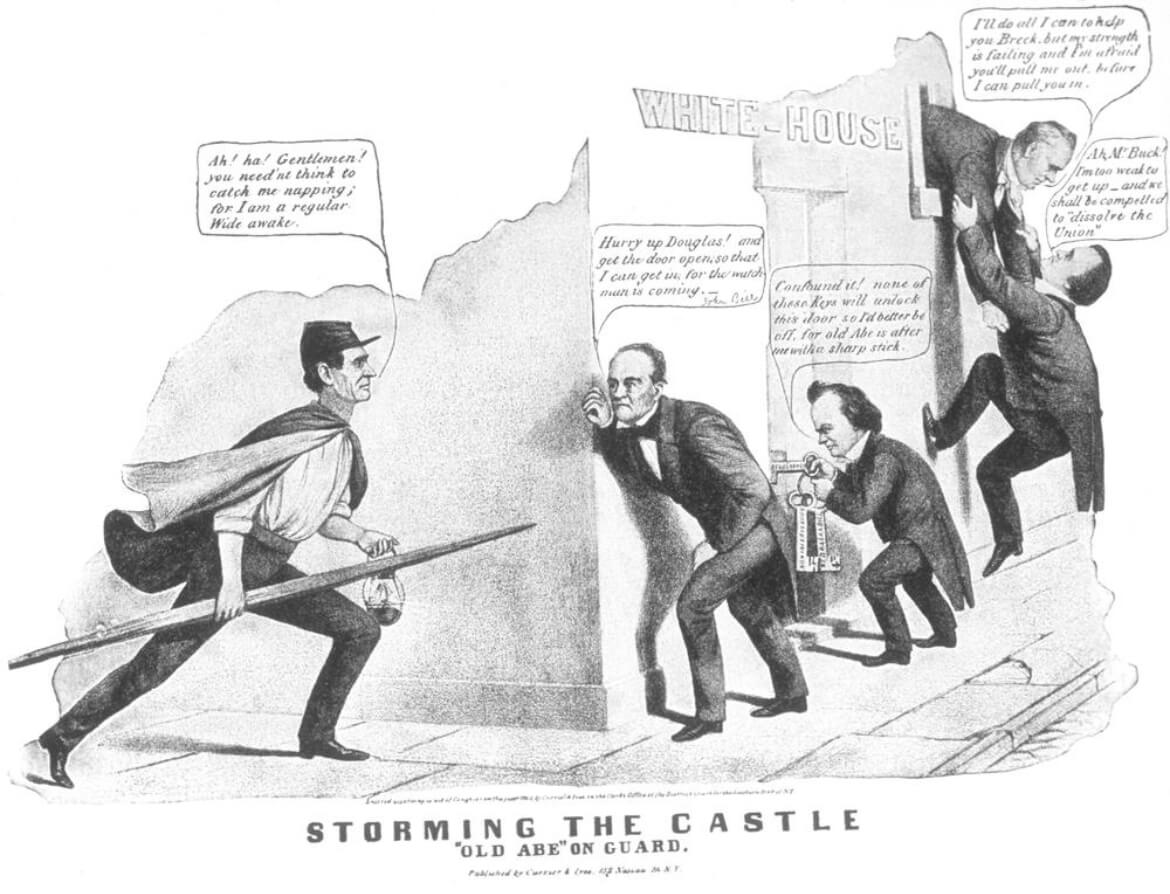
In this cartoon, Lincoln is dressed as a “Wide Awake,” a member of a Republican-supporting youth group in the North. In the background, we see incumbent James Buchanan helping the other presidential candidates through the window of the White House. This depicts the partisan splits leading up to the 1860 election.
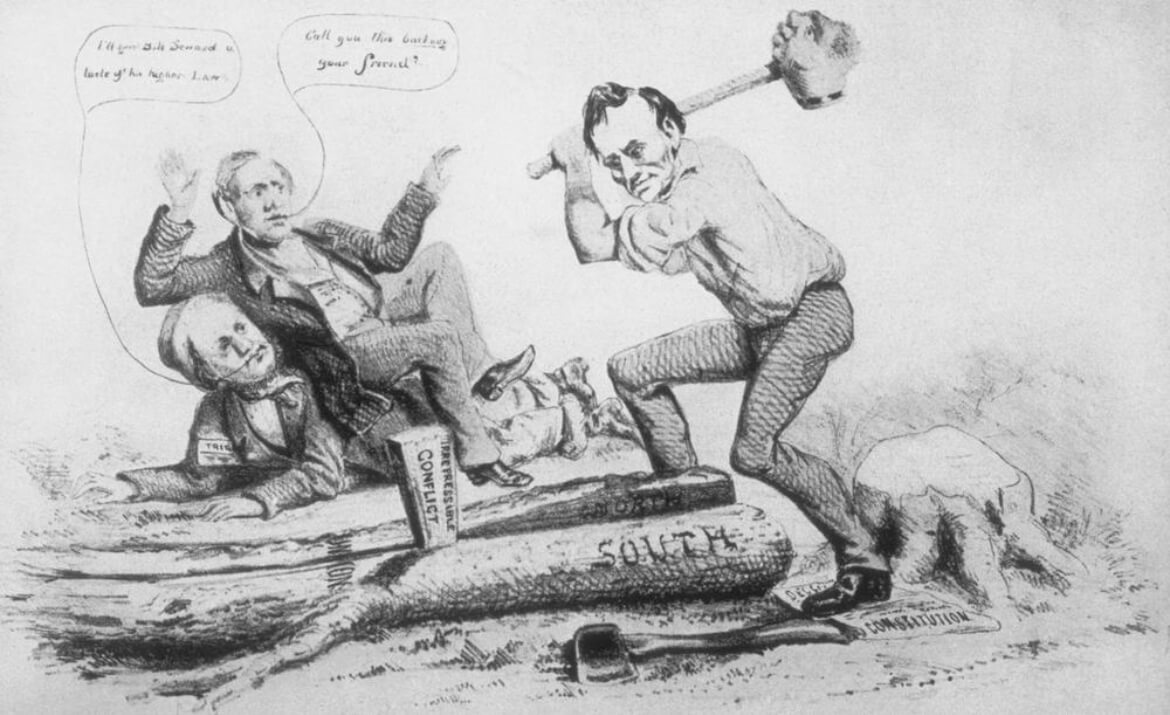
The intense partisan debates around the Election of 1860 alluded to the coming violence and secession of the Civil War. In this cartoon, each candidate works to pull the “National Map” further apart.
Frederick Douglass wrote a series of editorials in Douglass' Monthly. This excerpt from one editorial, entitled “The Late Election” and published in December of 1860, explains the famed abolitionist’s support for Abraham Lincoln and his sense of what will follow for the nation. While Douglass argued that Lincoln did not go far enough, he nonetheless characterizes Lincoln’s election as a turning point.
“What, then, has been gained to the anti-slavery cause by the election of Mr. Lincoln? Not much, in itself considered, but very much when viewed in the light of its relations and bearings. For fifty years the country has taken the law from the lips of an exacting, haughty and imperious slave oligarchy. The masters of slaves have been masters of the Republic. Their authority was almost undisputed, and their power irresistible. They were the President makers of the Republic, and no aspirant dared to hope for success against their frown. Lincoln's election has vitiated their authority, and broken their power. It has taught the North its strength, and shown the South its weakness. More important still, it has demonstrated the possibility of electing, if not an Abolitionist, at least an anti-slavery reputation to the Presidency of the United States. The years are few since it was thought possible that the Northern people could be wrought up to the exercise of such startling courage. Hitherto the threat of disunion has been as potent over the politicians of the North, as the cat-o'-nine-tails is over the backs of the slaves. Mr. Lincoln's election breaks this enchantment, dispels this terrible nightmare, and awakes the nation to the consciousness of new powers, and the possibility of a higher destiny than the perpetual bondage to an ignoble fear.”
Douglass, Frederick. “The Late Election.” University of Rochester Frederick Douglass Project, December 1860, https://rbscp.lib.rochester.edu/4404. Accessed 13 December 2022.
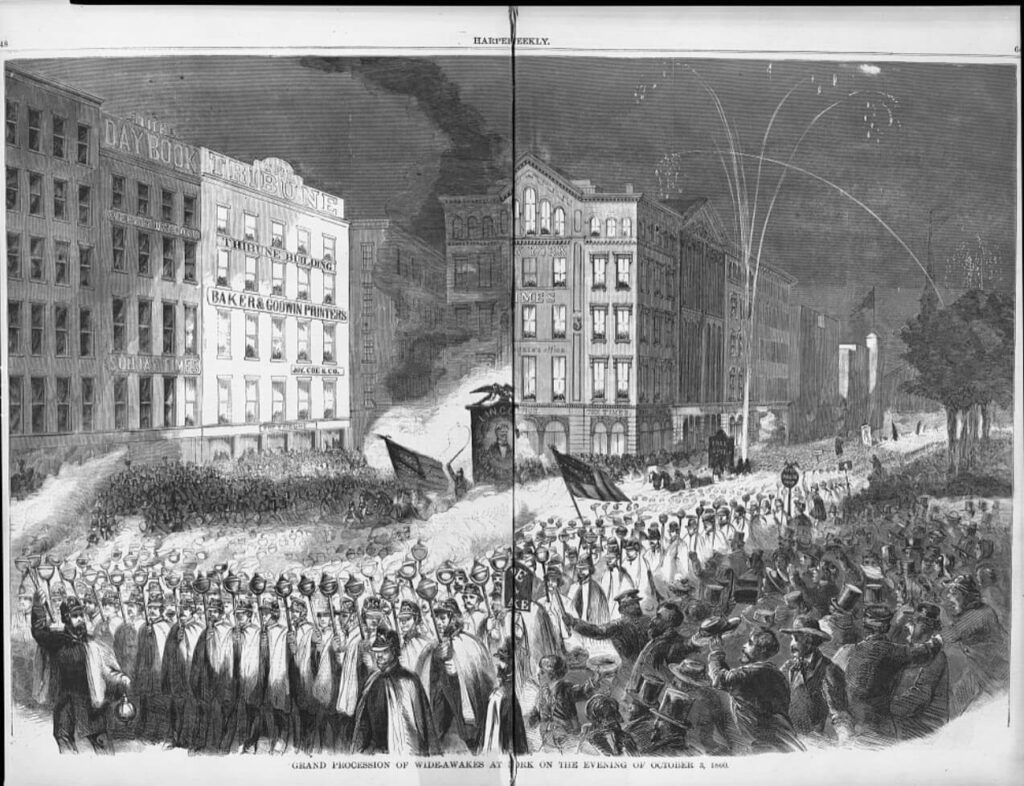
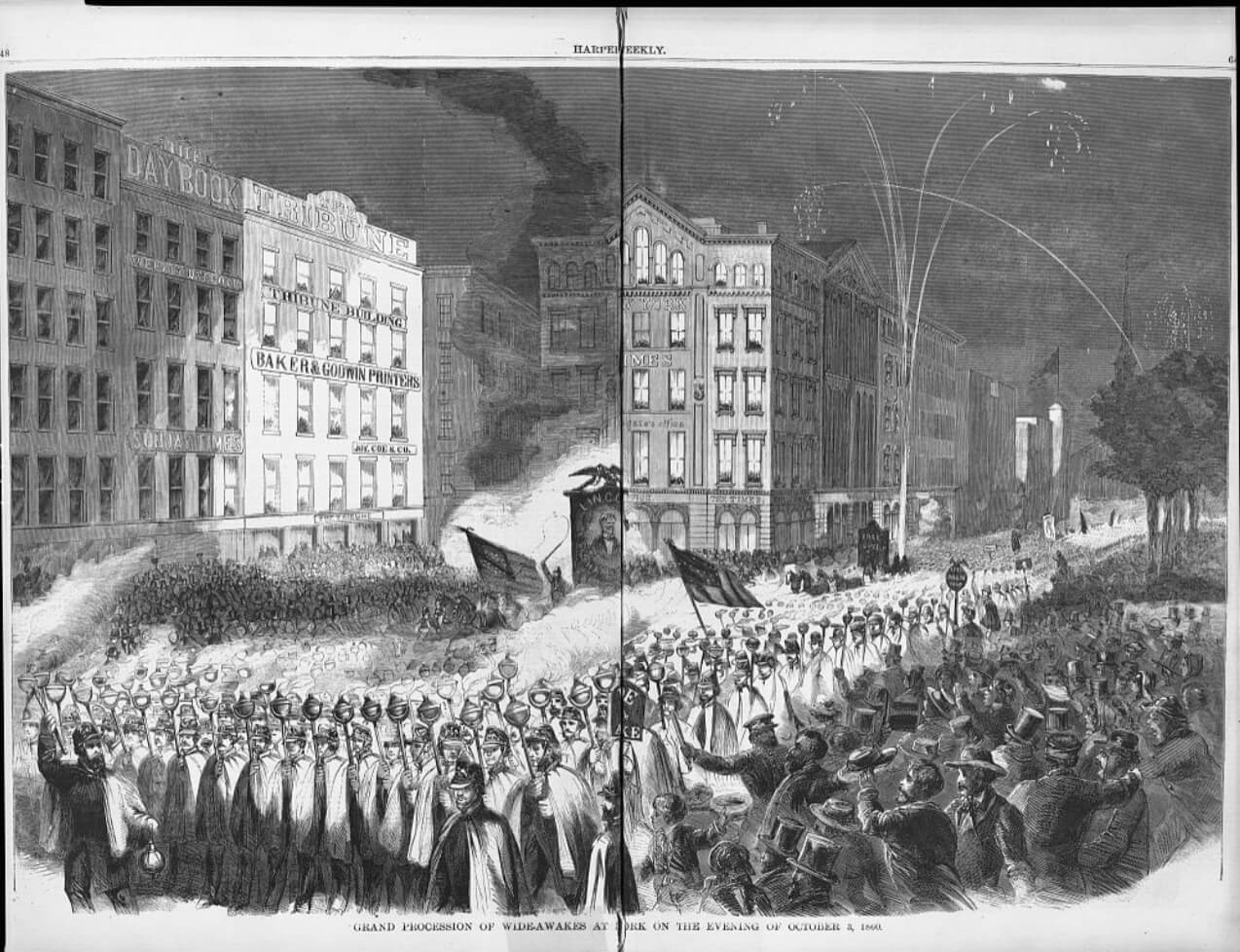
Grand procession of Wide-Awakes at New York on the evening of October 3, .Republican Wide Awakes in N.Y. - Lincoln-Hamlin Campaign Printing-House Square Park Row and Nassau St. , 1860
“Grand procession of Wide-Awakes at New York on the evening of October 3, 1860”
The “Wide-Awakes,” a youth movement, formed first in Hartford, Connecticut in 1860. Influenced by published writings and songs about their movement, clubs formed throughout the north and midwest. The groups were Republican-leaning, abolitionist, and increasingly paramilitary over the course of the year leading up to the election.
This image ran in Harper’s Weekly and shows the Wide-Awakes carrying torches and wearing uniform capes at a rally in New York.
Grand procession of Wide-Awakes at New York on the evening of October 3, .Republican Wide Awakes in N.Y. - Lincoln-Hamlin Campaign Printing-House Square Park Row and Nassau St., 1860. Photograph. https://www.loc.gov/item/99614201/.
Speech by H. Ford Douglas to the Massachusetts Anti-Slavery Society, July 1860
H. Ford Douglas, like Frederick Douglass (no relation) a Black abolitionist, opposed Lincoln’s candidacy. Douglas felt strongly that Lincoln and the Republican Party were not prepared to go far enough to abolish slavery and extend the rights of citizenship to Black Americans. This speech was delivered to the Massachusetts Anti-Slavery Society and published in The Liberator.
“I do not believe in the anti-slavery of Abraham Lincoln, because he is on the side of this Slave Power of which I am speaking, that has possession of the Federal Government. What does he propose to do? Simply to let the people and the Territories regulate
their domestic institutions in their own way. In the great debate between Lincoln and Douglas in Illinois, when he was interrogated as to whether he was in favor of the admission of more slave States into the Union, he said, that so long as we owned the territories, he did not see any other way of doing than to admit those States when they made application,
WITH OR WITHOUT SLAVERY…
Then, there is another item which I want to bring out in this connection. I am a colored man; I am an American citizen; and I think that I am entitled to exercise the elective franchise. I am about twenty-eight years old, and I would like to vote very much.
I think I am old enough to vote, and I think that, if I had a vote to give, I should know enough to place it on the side of freedom. (Applause.) No party, it seems to me, is entitled to the sympathy of anti-
slavery men, unless that party is willing to extend to the black man all the rights of a citizen.”
– Speech by H. Ford Douglas to the Massachusetts Anti-Slavery Society, July 1860
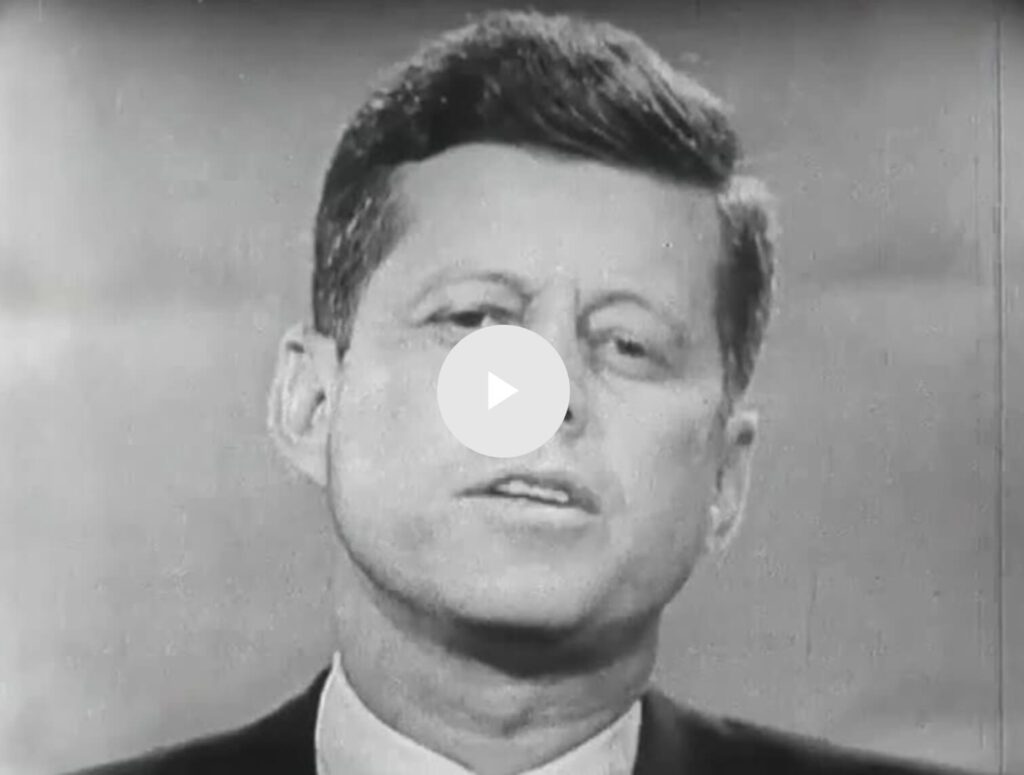
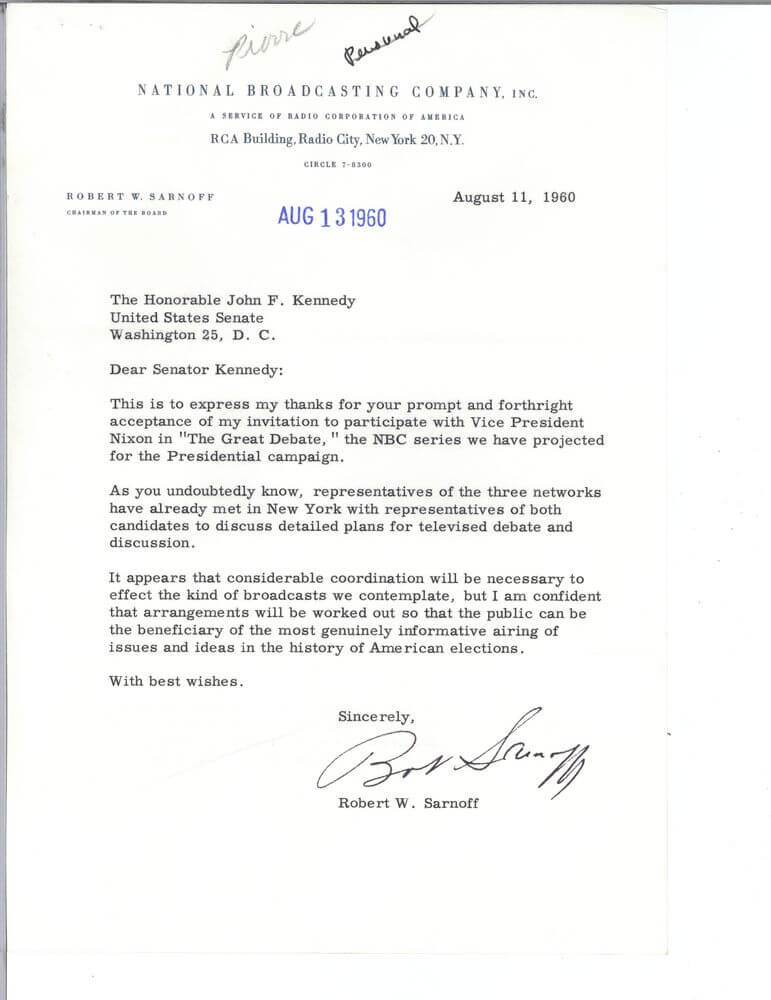
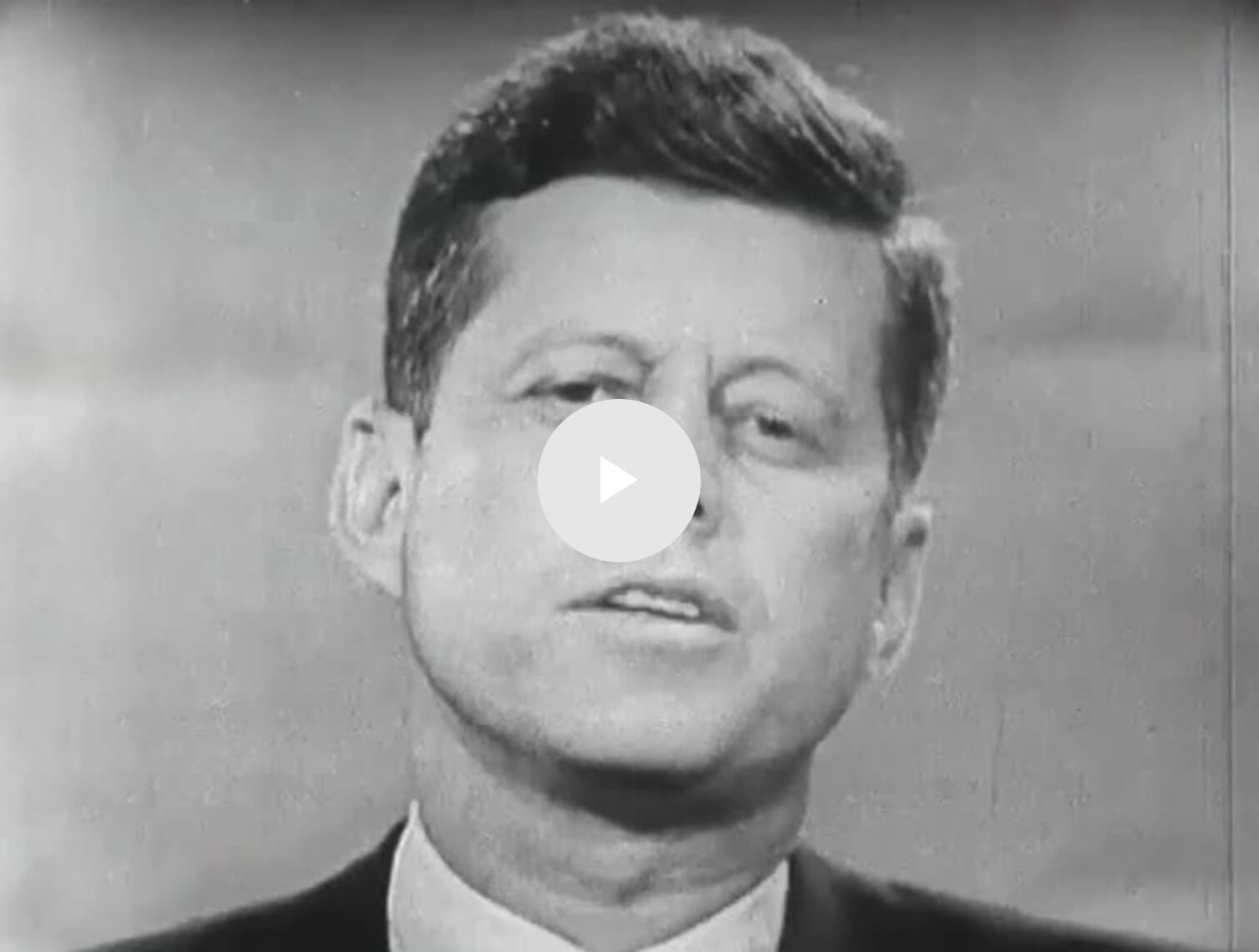
Kennedy v. Nixon: the first 1960 Presidential Debate
Prior to this event, presidential candidates had never before debated on television. Television introduced new challenges and offered new opportunities to the candidates; their appearances, body language, expressions, and live interactions were now broadcast to a wide audience for immediate scrutiny.
Note for items from the John F. Kennedy Presidential Library and Museum: Copyright for this item is held by Columbia Broadcasting System (CBS). Non-exclusive licensing rights are held by the John F. Kennedy Library Foundation, Inc.
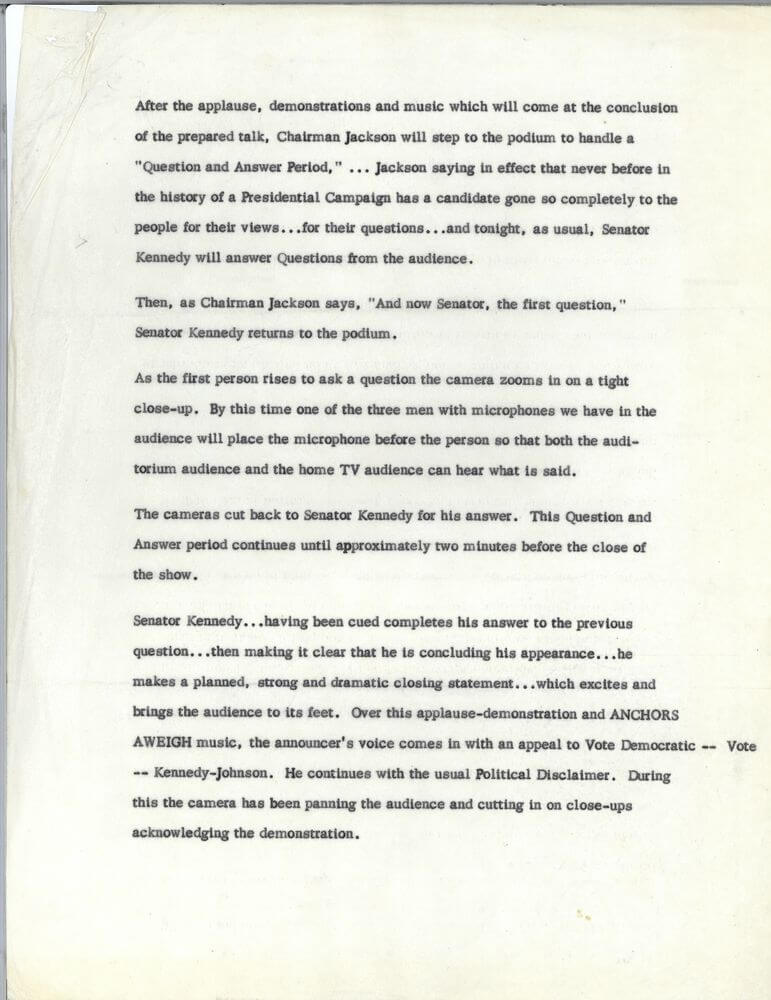
Description of John F. Kennedy’s television appearance, 1960
This document describes an appearance by John F. Kennedy, then a candidate, on television. The importance of the new medium is emphasized in phrases such as, “Senator Kennedy . . . makes a planned, strong, and dramatic closing statement . . . which excites and brings the audience to its feet.”
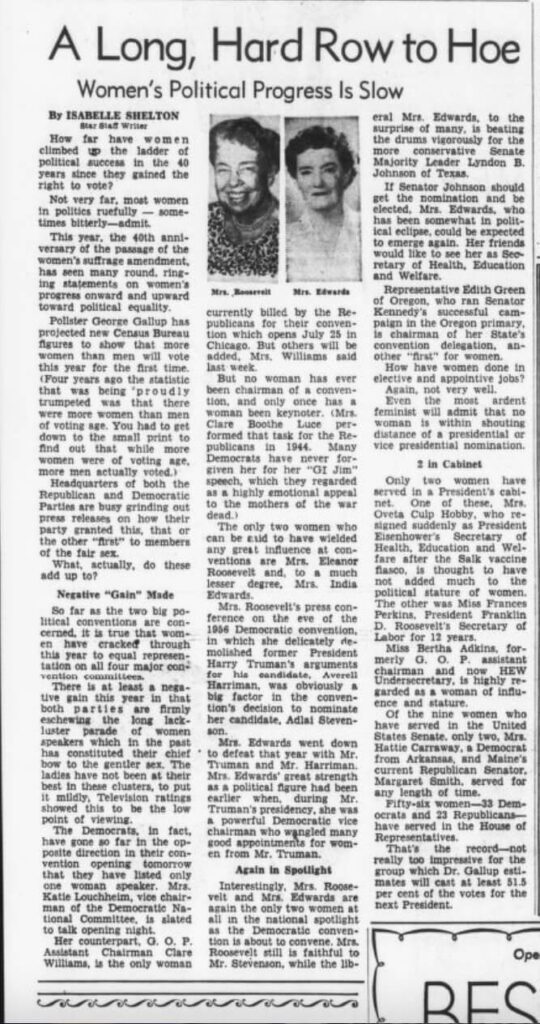
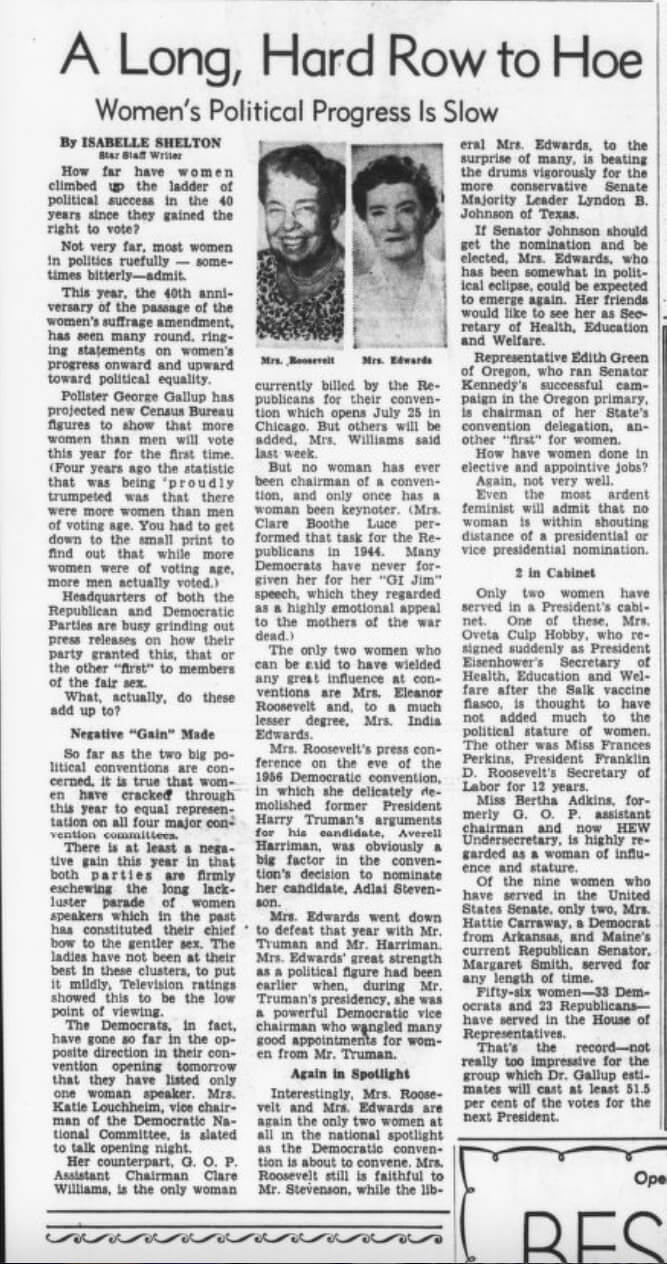
This news article, published forty years after women received the right to vote, describes the limited role women have in the 1960 political conventions and campaign.
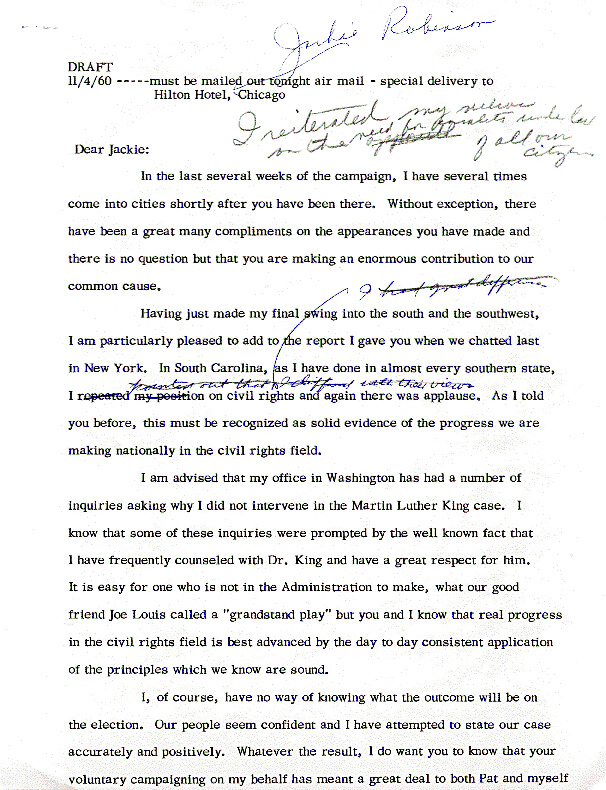
Draft Letter From Richard M. Nixon To Jackie Robinson, November 4, 1960.
Message from Nixon to the pathbreaking Black baseball player Jackie Robinson on his contributions to the 1960 campaign, with a reference to Dr. Martin Luther King, Jr. being jailed in Georgia.
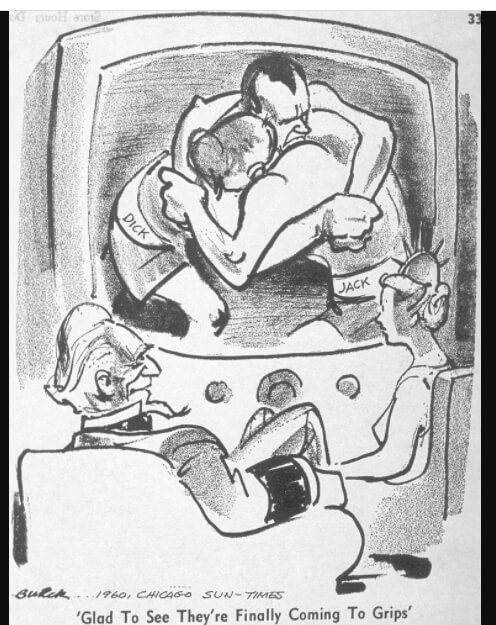
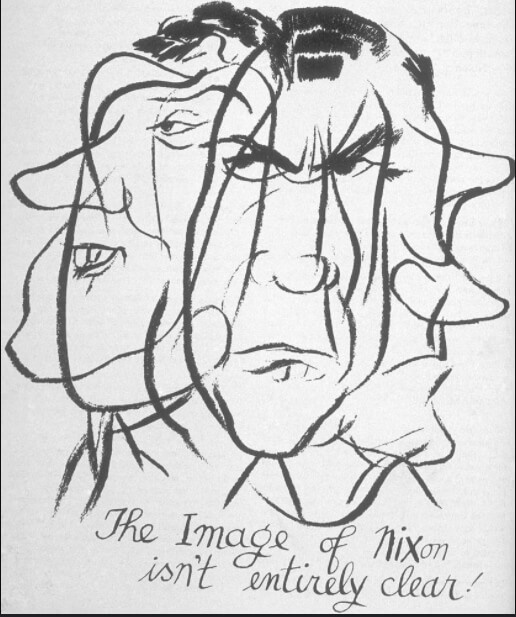
This political cartoon is a commentary on the televised presidential debate between John F. Kennedy and Richard Nixon. Television was a new medium in the 1960 presidential election; in the image, patriotic icons Uncle Sam and Lady Liberty watch the candidates wrestle on a giant television.
“Thoughts, on the subject of the ensuing election, addressed to the party in the state of New-York, who claim exclusively the appellation of federalists “... April 1, 1800.
Transcript
Excerpt: “At a time when the eyes of all genuine Americans are wet with sorrow for the loss of a WASHINGTON, it is particularly incumbent upon you…to remember not only what you owe to the example of his life, but what is due also to the authority of his opinions…..Before, therefore, you adopt the nomination of a single candidate, test his principles, private and public, with those of a WASHINGTON. Is he a moral man, and a friend to religion? If he is not, reject him….
….Does he, in fine, think it just, proper, or prudent, that Mr. ADAMS should be continued four other years in office, and that the many extraordinary blessings of his Presidency, which have been detailed, should be continued with him. If he does, reject him…surely it is time for Mr. Adams to retire, and do this when he may, he will carry with him an abundant share, both of public honours and public money.”
The Election of 1800 was a bitter partisan battle. This article highlights the opposition felt towards incumbent president John Adams, focusing on both political and moral failings on his behalf. Adams would go on to lose New York’s vote and the presidency.
1
The resources in this spotlight kit are intended for classroom use. Teachers, if your use will be beyond a single classroom, please review the copyright and fair use guidelines.
Thoughts, on the subject of the ensuing election, addressed to the party in the state of New-York, who claim exclusively the appellation of federalists ... April 1, . {Albany Printed by Barber & Southwick } Positive Photostat. Albany, 1800. Pdf. Retrieved from the Library of Congress, www.loc.gov/item/rbpe.1130010b/
(An April 1800 broadside containing opinions and persuasive writing concerning the upcoming presidential election.)
In this cartoon from 1797, as Monticello Classroom explains, "Jefferson’s political enemies portrayed the then-vice-president as dangerously pro-French, un-Christian, and un-American. Jefferson kneels ready to sacrifice the U.S. Constitution …[as] God and an American eagle oppose him, as Satan happily looks on.”
Thomas Paine did not hesitate to critique John Adams and the federalist party during Thomas Jefferson’s presidency. As a result, federalists published this image of Thomas Paine working with the devil to bring down the Nation.
“Extract from the Election Law of Pennsylvania,” 1799
According to the Library of Congress, “State and federal laws governing elections and citizenship are listed in this anonymous broadside, clearly published with an eye to the elections leading up to the national presidential election of 1800. In Pennsylvania, Federalists and Republicans battled to elect supporters for the state legislature so that they could control the selection of presidential electors. In the end, Pennsylvania’s electors split their votes between John Adams and Thomas Jefferson.”
Extract from the Election Law of Pennsylvania, 1799. [Philadelphia: 1799]. Broadside. Rare Book and Special Collections Division, Library of Congress (097.04.00) [Digital ID# us0097_04]
From “The National Intelligencer and Washington Advertiser,” November 7, 1800
Transcript
Excerpt:
“...from what I have stated you can vote only either for Mr. Pinckney or Mr. Jefferson; for Mr. Adams is out of the question.
If, for the above reasons you do not think that Mr. Pinckney will make a good President, Mr. Jefferson is your only resource.
Examine his character. His friends believe him not only wise but honest; they believe him to be a true friend to his country; they believe him to be a genuine republican. His enemies acknowledge his talents, his dignity of public as well as private character. All agree that he is independent. He is the friend of peace with all the world. Such a man must be your friend.”
Newspapers during the Election of 1800 were very partisan and did not shy away from personal and private attacks on candidates. Samuel Harrison Smith started the National Intelligencer as a Republican affiliated paper at the behest of Thomas Jefferson.
1
“About The national intelligencer and Washington advertiser. [volume] (Washington City [D.C.]) 1800-1810,” The National Intelligencer, https://chroniclingamerica.loc.gov/lccn/sn83045242/. Accessed May 16, 2022.
James Calendar pamphlet, “ Prospect Before Us,” 1800-1801
Transcript
Excerpt:
“...Unless the next election for president shall pitch the whole gang of stock-jobbers over the precipice of perdition, every cent in America lies at the mercy of Mr. Adams.
Men of Virginia! Pause and ponder upon those instructive cyphers, and these incontestible facts….judge without regard to the prattle of a president, the prattle of that strange compound of ignorance and ferocity, of deceit and weakness; without regard to that hideous hermaphroditical character, which has neither the force and firmness of a man, nor the gentleness and sensibility of a woman.”
James Calendar was a partisan editor who wrote this piece denouncing John Adams on the basis of his moral failings.
“The National Game. Three 'Outs' and One 'Run' (Abraham winning the Ball),” 1860
The election of 1860 came with stark partisanship between candidates Abraham LIncoln, John Bell, Stephen A. Douglas, and John C. Breckinridge. In this cartoon, Lincoln wins “The National Game” by using his "good bat" –– a wooden rail labeled "Equal Rights and Free Territory.”
In this cartoon, Lincoln is dressed as a “Wide Awake,” a member of a Republican-supporting youth group in the North. In the background, we see incumbent James Buchanan helping the other presidential candidates through the window of the White House. This depicts the partisan splits leading up to the 1860 election.
The intense partisan debates around the Election of 1860 alluded to the coming violence and secession of the Civil War. In this cartoon, each candidate works to pull the “National Map” further apart.
Frederick Douglass wrote a series of editorials in Douglass' Monthly. This excerpt from one editorial, entitled “The Late Election” and published in December of 1860, explains the famed abolitionist’s support for Abraham Lincoln and his sense of what will follow for the nation. While Douglass argued that Lincoln did not go far enough, he nonetheless characterizes Lincoln’s election as a turning point.
“What, then, has been gained to the anti-slavery cause by the election of Mr. Lincoln? Not much, in itself considered, but very much when viewed in the light of its relations and bearings. For fifty years the country has taken the law from the lips of an exacting, haughty and imperious slave oligarchy. The masters of slaves have been masters of the Republic. Their authority was almost undisputed, and their power irresistible. They were the President makers of the Republic, and no aspirant dared to hope for success against their frown. Lincoln's election has vitiated their authority, and broken their power. It has taught the North its strength, and shown the South its weakness. More important still, it has demonstrated the possibility of electing, if not an Abolitionist, at least an anti-slavery reputation to the Presidency of the United States. The years are few since it was thought possible that the Northern people could be wrought up to the exercise of such startling courage. Hitherto the threat of disunion has been as potent over the politicians of the North, as the cat-o'-nine-tails is over the backs of the slaves. Mr. Lincoln's election breaks this enchantment, dispels this terrible nightmare, and awakes the nation to the consciousness of new powers, and the possibility of a higher destiny than the perpetual bondage to an ignoble fear.”
Douglass, Frederick. “The Late Election.” University of Rochester Frederick Douglass Project, December 1860, https://rbscp.lib.rochester.edu/4404. Accessed 13 December 2022.
Grand procession of Wide-Awakes at New York on the evening of October 3, .Republican Wide Awakes in N.Y. - Lincoln-Hamlin Campaign Printing-House Square Park Row and Nassau St. , 1860
“Grand procession of Wide-Awakes at New York on the evening of October 3, 1860”
The “Wide-Awakes,” a youth movement, formed first in Hartford, Connecticut in 1860. Influenced by published writings and songs about their movement, clubs formed throughout the north and midwest. The groups were Republican-leaning, abolitionist, and increasingly paramilitary over the course of the year leading up to the election.
This image ran in Harper’s Weekly and shows the Wide-Awakes carrying torches and wearing uniform capes at a rally in New York.
Grand procession of Wide-Awakes at New York on the evening of October 3, .Republican Wide Awakes in N.Y. - Lincoln-Hamlin Campaign Printing-House Square Park Row and Nassau St., 1860. Photograph. https://www.loc.gov/item/99614201/.
Speech by H. Ford Douglas to the Massachusetts Anti-Slavery Society, July 1860
H. Ford Douglas, like Frederick Douglass (no relation) a Black abolitionist, opposed Lincoln’s candidacy. Douglas felt strongly that Lincoln and the Republican Party were not prepared to go far enough to abolish slavery and extend the rights of citizenship to Black Americans. This speech was delivered to the Massachusetts Anti-Slavery Society and published in The Liberator.
“I do not believe in the anti-slavery of Abraham Lincoln, because he is on the side of this Slave Power of which I am speaking, that has possession of the Federal Government. What does he propose to do? Simply to let the people and the Territories regulate
their domestic institutions in their own way. In the great debate between Lincoln and Douglas in Illinois, when he was interrogated as to whether he was in favor of the admission of more slave States into the Union, he said, that so long as we owned the territories, he did not see any other way of doing than to admit those States when they made application,
WITH OR WITHOUT SLAVERY…
Then, there is another item which I want to bring out in this connection. I am a colored man; I am an American citizen; and I think that I am entitled to exercise the elective franchise. I am about twenty-eight years old, and I would like to vote very much.
I think I am old enough to vote, and I think that, if I had a vote to give, I should know enough to place it on the side of freedom. (Applause.) No party, it seems to me, is entitled to the sympathy of anti-
slavery men, unless that party is willing to extend to the black man all the rights of a citizen.”
– Speech by H. Ford Douglas to the Massachusetts Anti-Slavery Society, July 1860
Kennedy v. Nixon: the first 1960 Presidential Debate
Prior to this event, presidential candidates had never before debated on television. Television introduced new challenges and offered new opportunities to the candidates; their appearances, body language, expressions, and live interactions were now broadcast to a wide audience for immediate scrutiny.
Note for items from the John F. Kennedy Presidential Library and Museum: Copyright for this item is held by Columbia Broadcasting System (CBS). Non-exclusive licensing rights are held by the John F. Kennedy Library Foundation, Inc.
Description of John F. Kennedy’s television appearance, 1960
This document describes an appearance by John F. Kennedy, then a candidate, on television. The importance of the new medium is emphasized in phrases such as, “Senator Kennedy . . . makes a planned, strong, and dramatic closing statement . . . which excites and brings the audience to its feet.”
This news article, published forty years after women received the right to vote, describes the limited role women have in the 1960 political conventions and campaign.
Draft Letter From Richard M. Nixon To Jackie Robinson, November 4, 1960.
Message from Nixon to the pathbreaking Black baseball player Jackie Robinson on his contributions to the 1960 campaign, with a reference to Dr. Martin Luther King, Jr. being jailed in Georgia.
This political cartoon is a commentary on the televised presidential debate between John F. Kennedy and Richard Nixon. Television was a new medium in the 1960 presidential election; in the image, patriotic icons Uncle Sam and Lady Liberty watch the candidates wrestle on a giant television.
As part of the dissemination of the Educating for American Democracy Roadmap, we organized an Educator Task Force (ETF).Members of the early ETF curated an initial collection of over 500 instructional resources aligned to the seven themes and five design challenges.In addition to this collection, ETF members recently built robust, diverse, and accessible primary source collections, known as Spotlight Kits, that provide rich avenues for inquiry and that braid U.S. history and civic learning throughout.
add to list:
Picturing Change Images, 1955-2022: What does resistance look like in the United States? What can photographs and other visual media teach us about moments of protest? How have protests throughout history used words, images, and the media to convey their messages?
Primary Sources Spotlight Kit
Source: Education for American Democracy
Picturing Change Images, 1955-2022: What does resistance look like in the United States? What can photographs and other visual media teach us about moments of protest? How have protests throughout history used words, images, and the media to convey their messages?
Primary Sources Spotlight Kit
With ever-evolving media, visual images play a significant and powerful role in moments of social change. This spotlight kit, made up almost entirely of primary source images ripe for visual analysis, focuses on moments of protest and resistance to government policies and other symbols of authority. Resources include images of events, movements and moments of resistance from the mid-20th to the early 21st centuries. In these moments, photographs and other media play the dual role of capturing the message and, in helping to spread its visibility, contributing to the fight for social change.
This image-based Spotlight Kit lends itself particularly well to a range of uses in the classroom: as an inquiry activity to introduce an historic era or the theme of protest; with diverse learners, including students with identified language processing disorders or students who are English Language Learners; and as a supplement to other text-based primary sources.
While no set of images can comprehensively capture any era, these particular examples were selected for their intentional use of visual media or the ways in which these moments have become symbolic and iconic. The images also include powerful slogans used by activists, many of which connect and echo across different events in this collection.
The resources in this spotlight kit are intended for classroom use, and are shared here under a CC-BY-SA license. Teachers, please review the copyright and fair use guidelines.
Meredith Gavrin
Meredith Gavrin (New Haven, CT) has worked in the field of education for 30 years, primarily as both a teacher and school administrator. After teaching in New York City Public Schools, she co-founded New Haven Academy, an interdistrict magnet high school in New Haven, Connecticut, where she continues to work as an administrator and teaches one Civics class to seniors. She is also a member of the Advisory Group for the Partner Schools Network of Facing History and Ourselves and a board member of the Fund for Women and Girls at the Community Foundation for Greater New Haven. She also served on the Fall 2021 EAD Educator Task Force.
EAD, Education Task Force
Margo Loflin
Margo Loflin (Norman, OK) is a retired social studies teacher with 30 years of classroom experience in Norman Public Schools where she taught AP U.S. History, U.S. History, American government, AP Human Geography, and Oklahoma History. She served as the Social Studies Department Chair at Norman High School and is distinguished as the Gilder Lehrman History Teacher of the Year for Oklahoma. She was also recognized as the Oklahoma National History Day Teacher of the Year in 2015. She currently is a member of the Curriculum and Workshop Development Team for the Chickasaw Nation and a volunteer for the Oklahoma History Center.
EAD, Education Task Force
Bryan Lowe
Bryan Lowe (Parsippany Troy-Hills, NJ) is a fifth grade teacher at Littleton Elementary School in Parsippany Troy-Hills, New Jersey. He also has taught in Clark, New Jersey. While in Clark, Bryan created and directed the first social studies camp in the district, focusing on exploring multiple perspectives throughout history. He has been teaching for ten years and was selected as a finalist for the New Jersey State Teacher of the Year in 2020. He holds a certification in Teaching Prejudice Reduction and Genocide Studies. His current plans of academic development include graduate school where he is working on his master’s degree in Holocaust and Geneocide Studies. He also served on the Fall 2021 EAD Educator Task Force.
EAD, Education Task Force
Mario Mohorn
Mario Mohorn (Atlanta, GA) is in his seventh year as a classroom teacher and his tenth year in the field of education. He currently teaches sixth grade social studies in Cobb County School district. Previously, he taught fourth and fifth grade. Currently, he is a doctoral student at Augusta University where his current research topics include service learning, art-based pedagogies, and civic engagement. His past research project included integrating social studies through language arts strategies. Additionally, Mario earned an Education Specialist in Reading Education certification from Georgia Southern University, a Master of Arts in Teaching (Elementary Education) from Shorter University, and a Bachelor of Arts in History with a minor in Urban Education from Georgia State University.
The resources in this spotlight kit are intended for classroom use. Teachers, if your use will be beyond a single classroom, please review the copyright and fair use guidelines.
Primary Resources by Decade
1955-1960s (4)
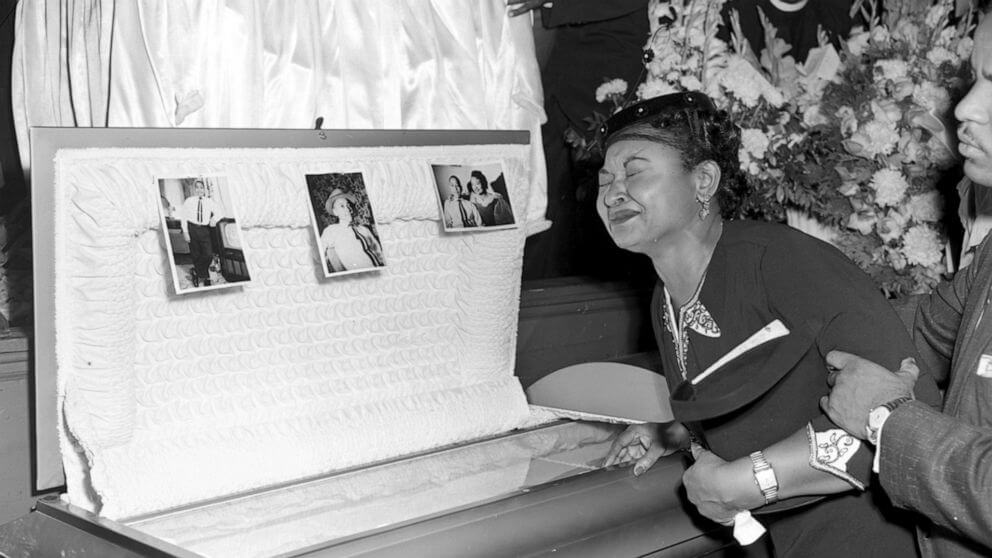
Mamie Till Mobley weeps at her son's funeral (1955)
Mamie Till Mobley weeps at her son's funeral on Sept. 6, 1955, in Chicago. Mobley insisted that her son's body be displayed in an open casket forcing the nation to see the brutality directed at Blacks in the South. AP, FILE
Following the lynching murder of her fifteen-year-old son, Emmett Till,, Mamie TIll Mobley insisted on an open casket at his funeral; according to Time magazine, “When Till’s mother Mamie came to identify her son, she told the funeral director, ‘Let the people see what I’ve seen.’” The graphic images of his beaten body captured the attention of people across the United States, and the photo’s publication in Jet magazine is widely considered a galvanizing moment for the Civil Rights Era.
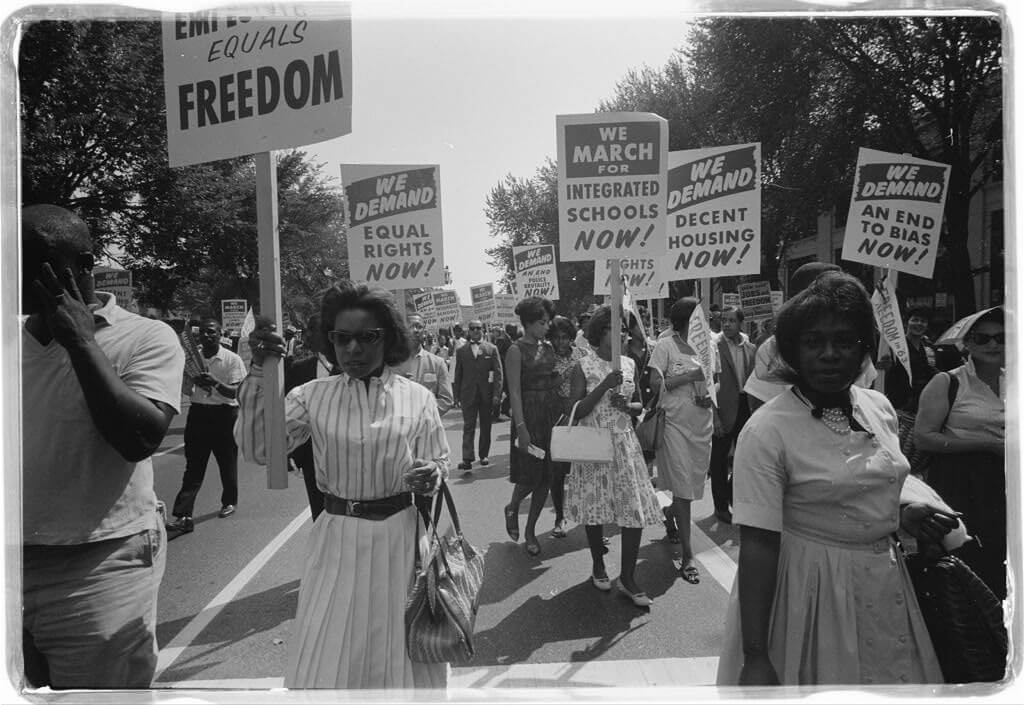
The March on Washington, 1963By 1963 the Civil Rights Movement had grown substantially. They had support for both the black and white communities, as well as many celebrities. The purpose of this march was to gain national support for legislation in Congress. One of the most famous moments of the march was Dr. Martin Luther King Jr.'s “I Have a Dream” speech. Originally proposed in 1941 as the “March for Jobs and Freedom” by A. Philip Randolph, photographs of the March became – and remain – some of the most iconic images of the Civil Rights Movement.
Leffler, W. K., photographer. (1963) Civil rights march on Washington, D.C. / WKL. Washington D.C, 1963. [Photograph] Retrieved from the Library of Congress, https://www.loc.gov/item/2003654393/.
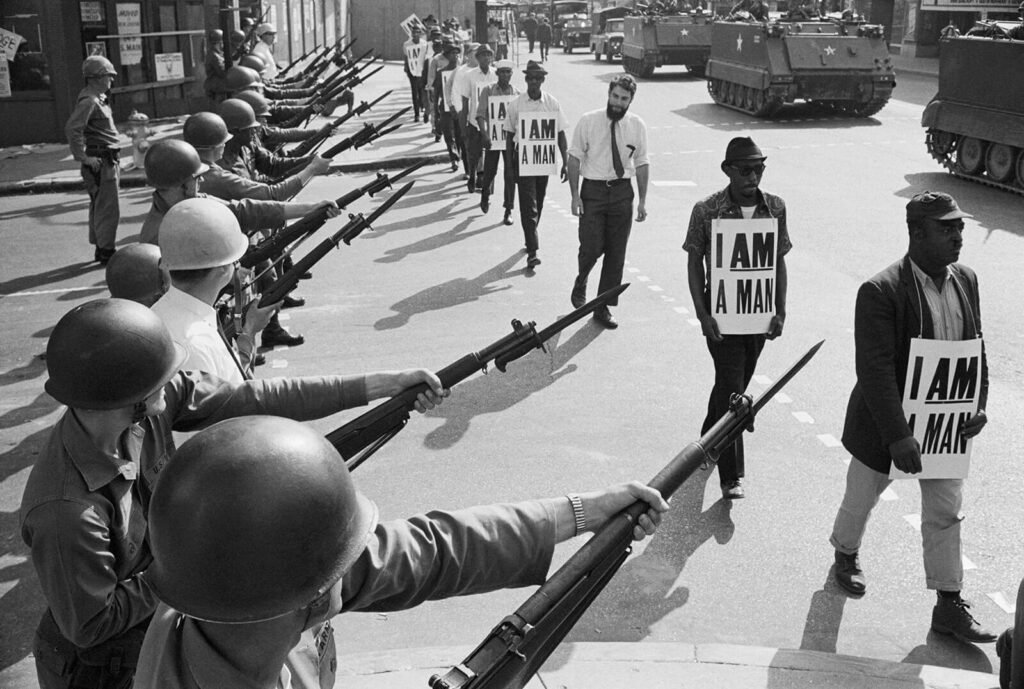
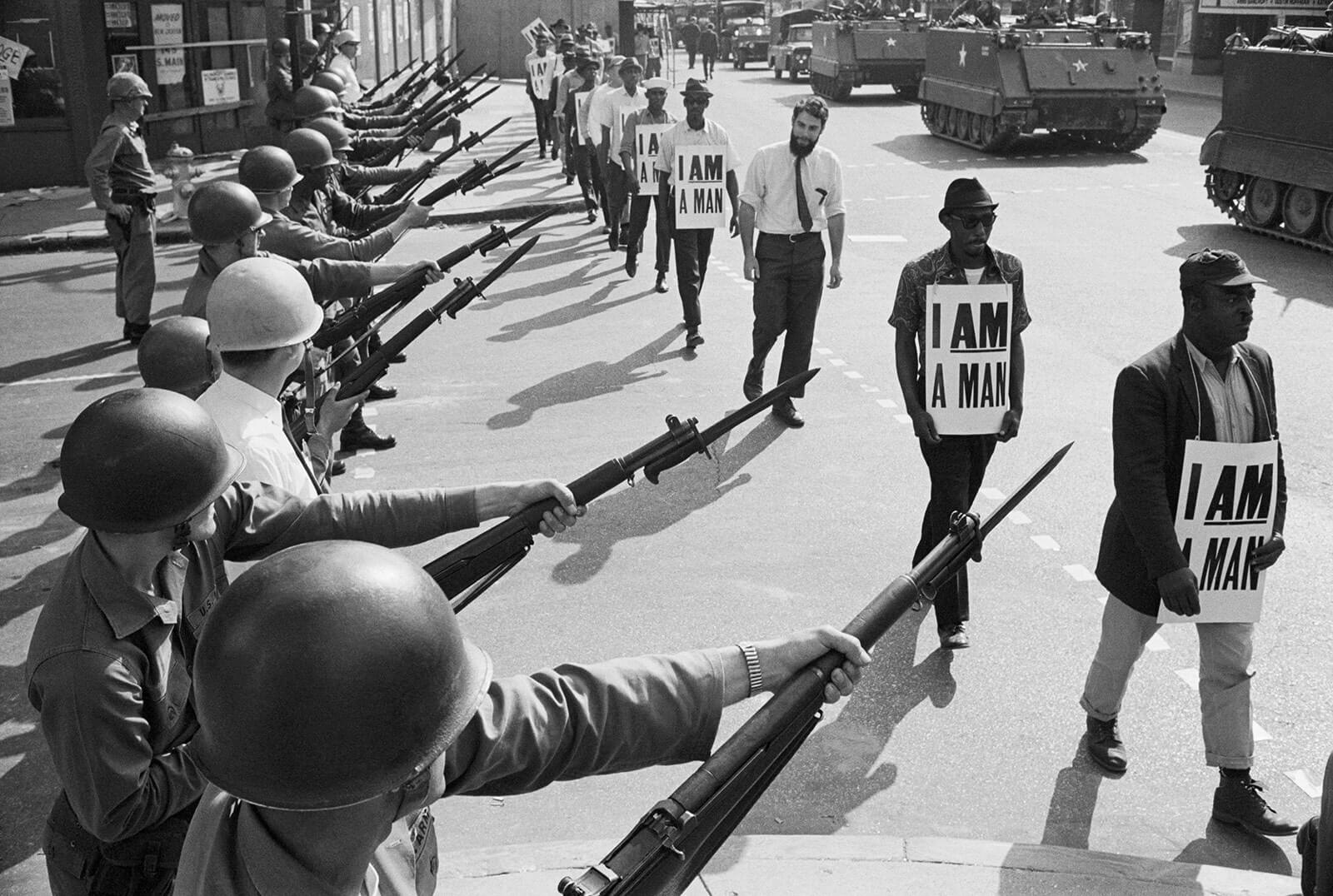
US National Guard troops block off Beale Street in Memphis, Tennessee, as civil rights protesters march for the third day in a row. Bettmann/Getty Images (March 29, 1968)
Any number of images from the Civil Rights era would benefit a unit on freedom of speech, but this particular image does a few things: (1) it marks the occasion immediately before Martin Luther King’s assassination; (2) it provides an image of a single text used over and over, in contrast to the image above with multiple demands; and (3) it juxtaposes protesters exercising their first amendment rights with National Guard troops wielding weapons.
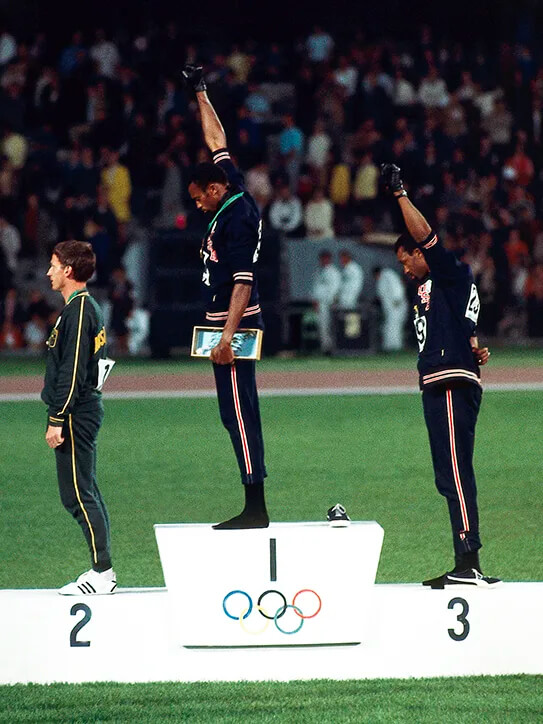
John Carlos and Tommie Smith raise fists in protest as they receive their Olympic medals (1968)
Aware of the platform provided by international television coverage of the Olympics, medal-winning U.S. track athletes John Carlos and Tommie Smith chose to raise a fist during their medal ceremony to protest racial inequality in the country they were representing, at the very moment the Star Spangled Banner was playing.
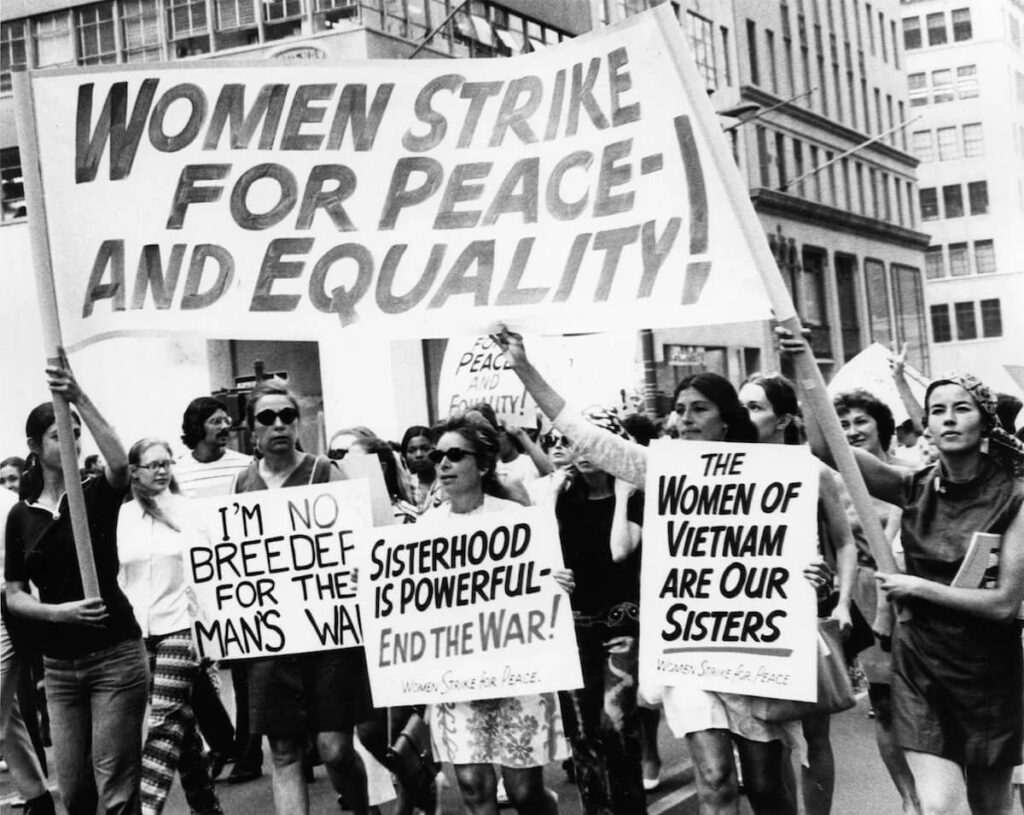
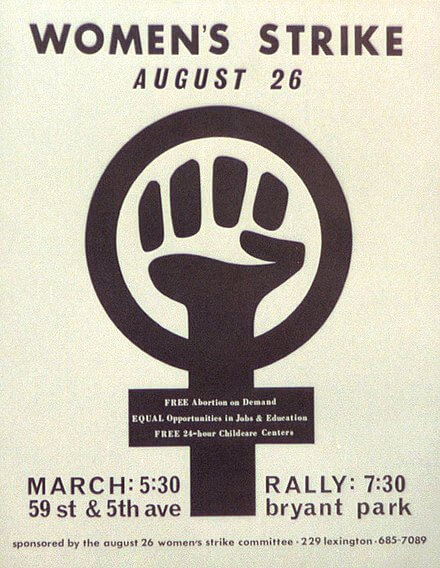
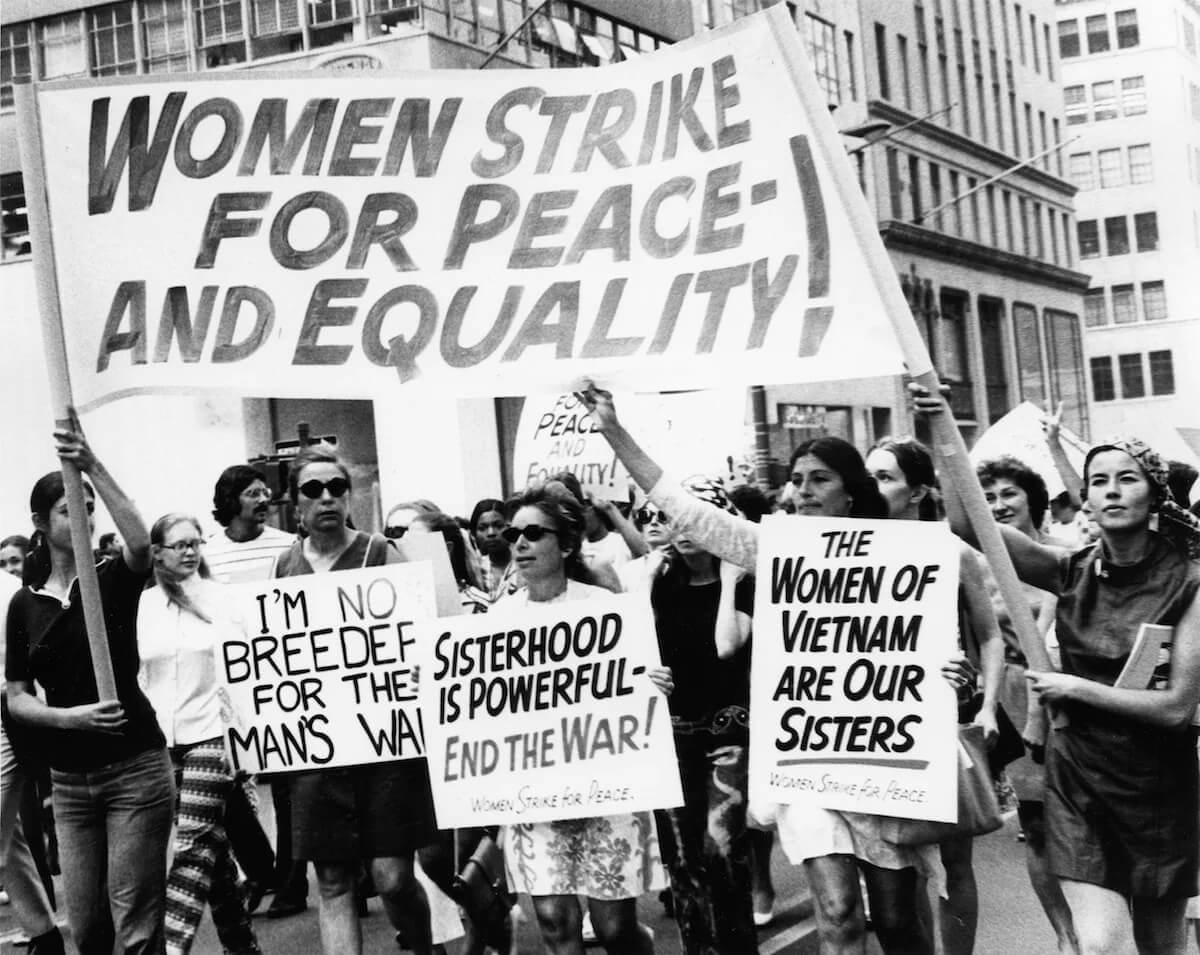
The 1970s Women’s Strike was organized by feminist author Betty Friedan, to commemorate the fiftieth anniversary of the 19th Amendment, which prevented women from being denied the vote “on the basis of sex.” As reported by Time, “Friedan’s original idea for Aug. 26 was a national work stoppage, in which women would cease cooking and cleaning in order to draw attention to the unequal distribution of domestic labor, an issue she discussed in her 1963 bestseller The Feminine Mystique. It isn’t clear how many women truly went on ‘strike’ that day, but the march served as a powerful symbolic gesture. Participants held signs with slogans like ‘Don’t Iron While the Strike is Hot’ and ‘Don’t Cook Dinner – Starve a Rat Today.’”
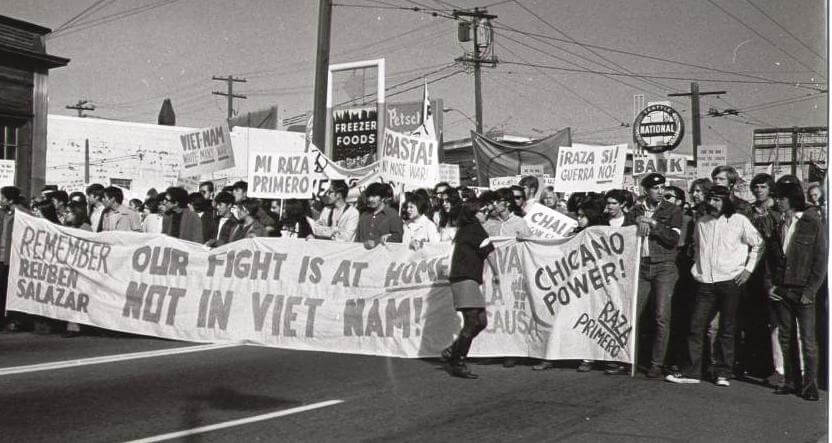
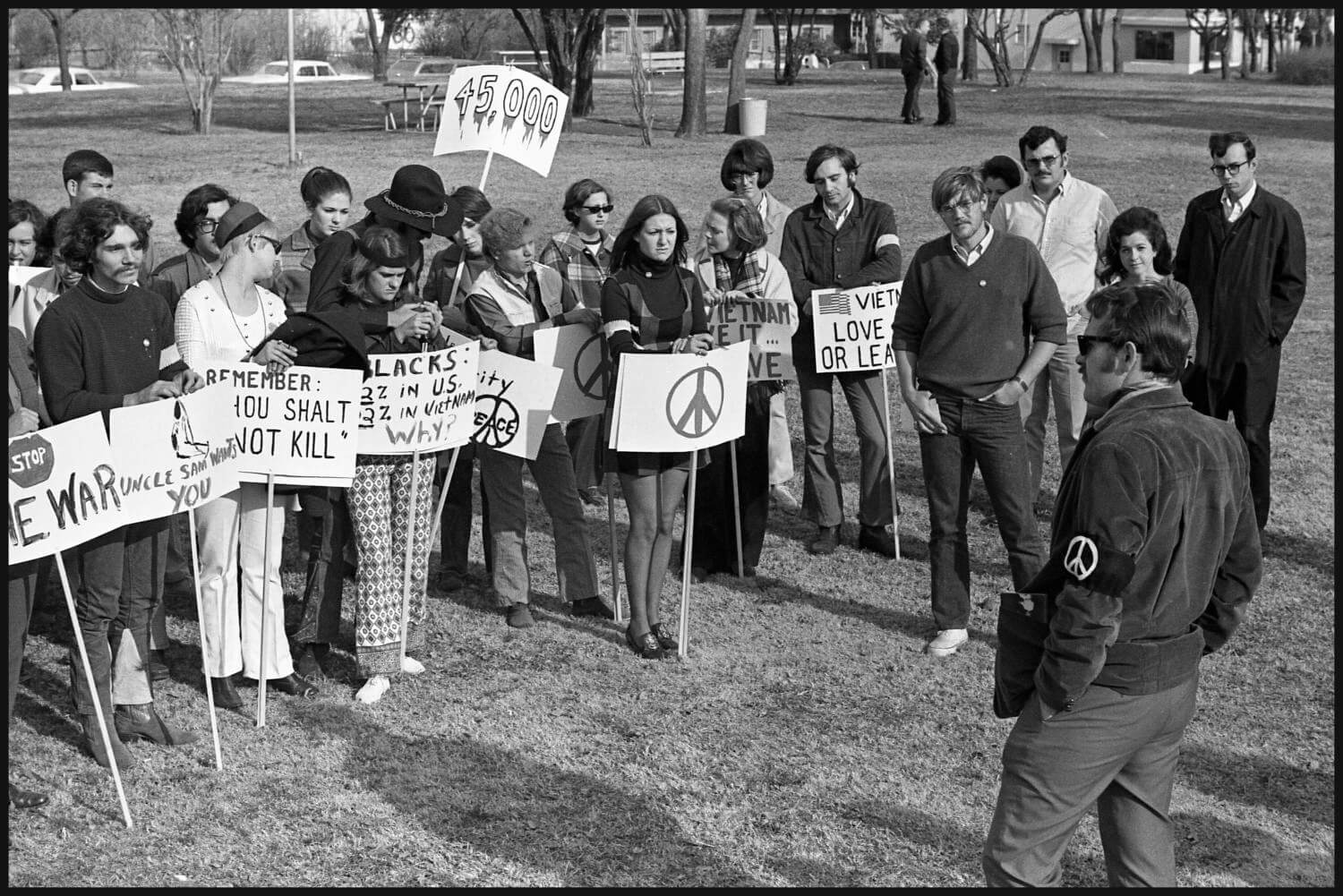
Antiwar march October 31, 1970, Seattle, two months after the death of Reuben Salazar in the Los Angeles Chicano Moratorium protest
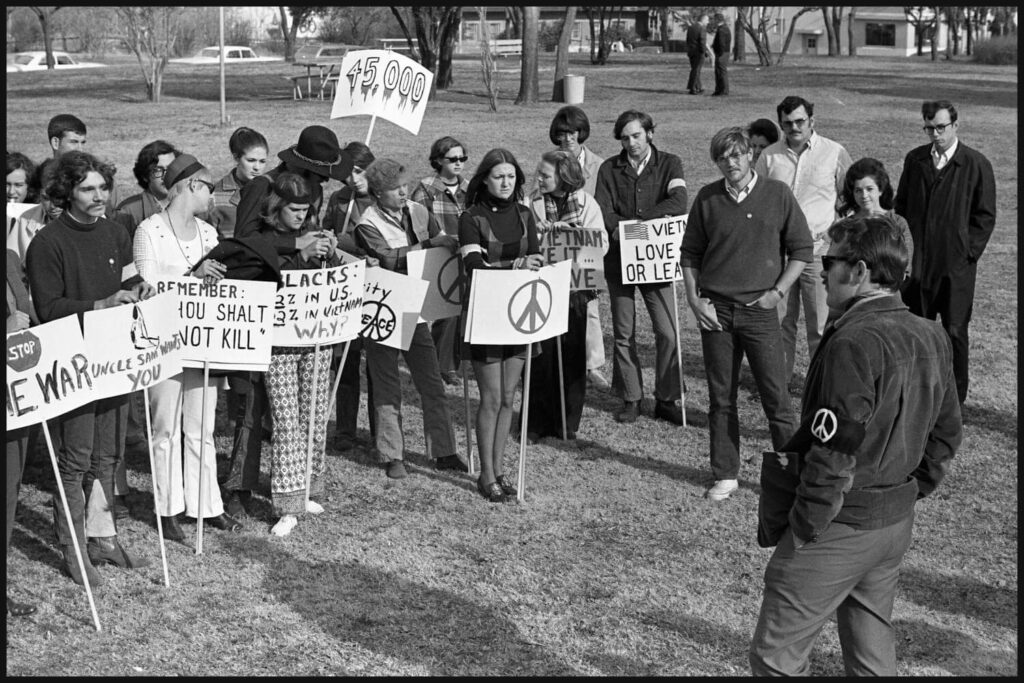
Vietnam War ProtestsThe Vietnam protest movement represented a growing anti-war movement in the United States in the late 1960s to early 1970s. Protestors spanned the racial spectrum and employed varying methods to end the war in Vietnam, started by the United States.
In many cases, anti-war protests combined with efforts to turn attention to domestic issues. As described in the Mapping American Social Movements Project of the University of Washington, “Chicanos in Los Angeles formed alliances with other oppressed people who identified with the Third World Left and were committed to toppling U.S. imperialism and fighting racism…. The Chicano Moratorium antiwar protests of 1970 and 1971…reflected the vibrant collaboration between African Americans, Japanese Americans, American Indians, and white antiwar activists that had developed in Southern California.”
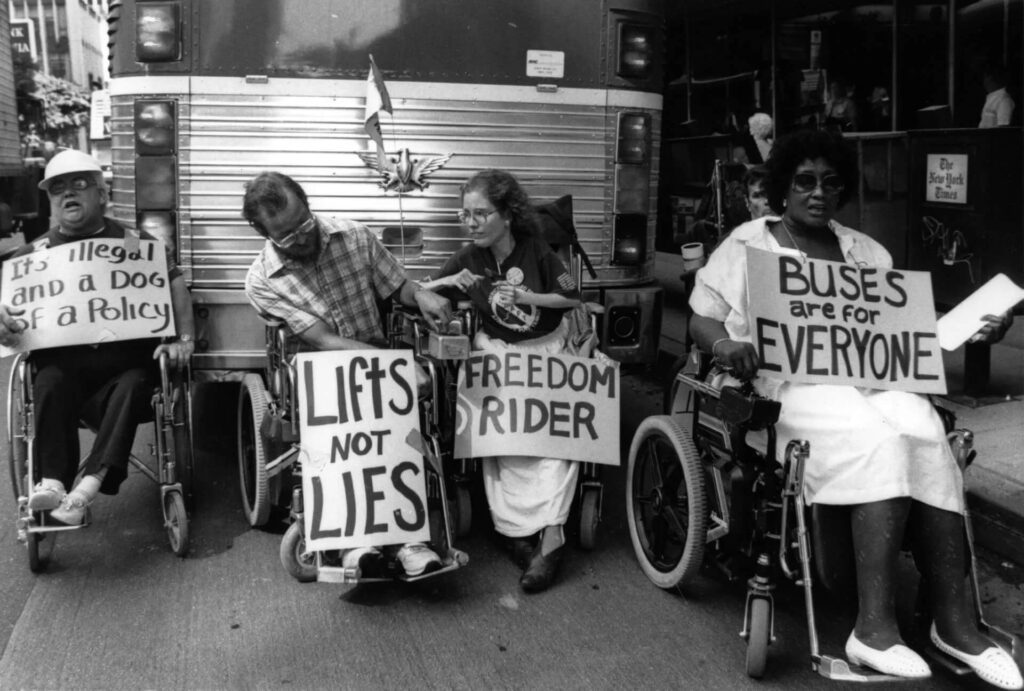
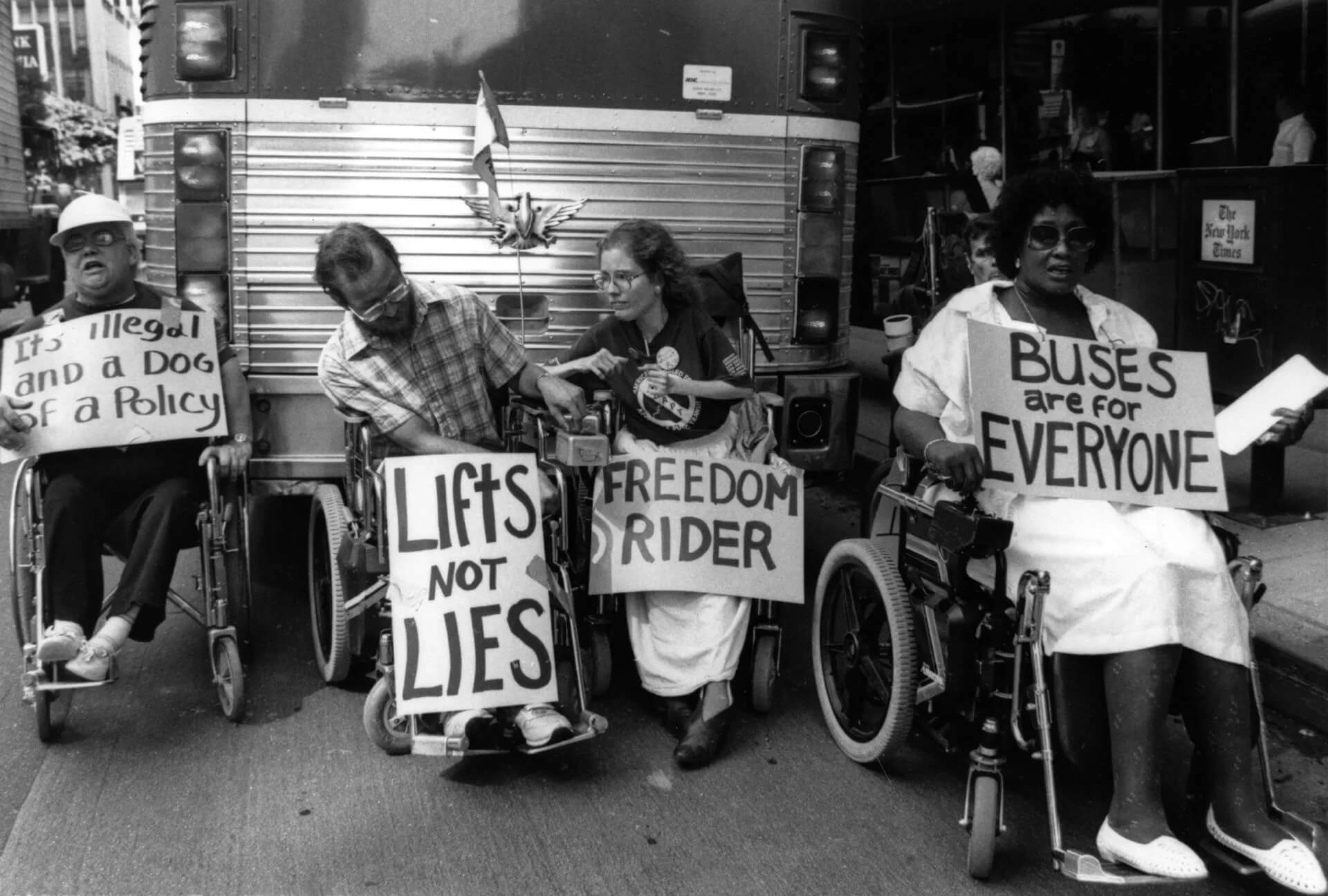
Disability Rights Movement Protest for the Rehabilitation Act 1973, photographer Tom Olin Greyhound Bus Depot in Los Angeles, Diane Coleman, Steve Remington and Rick Wilson.
The Civil Rights Movement for Black equality inspired many other movements, including a national push for disability rights. The Rehabilitation Act of 1973 prohibited discrimination on the basis of disability and protected equal access for people with disabilities in areas including public services, employment, and education.
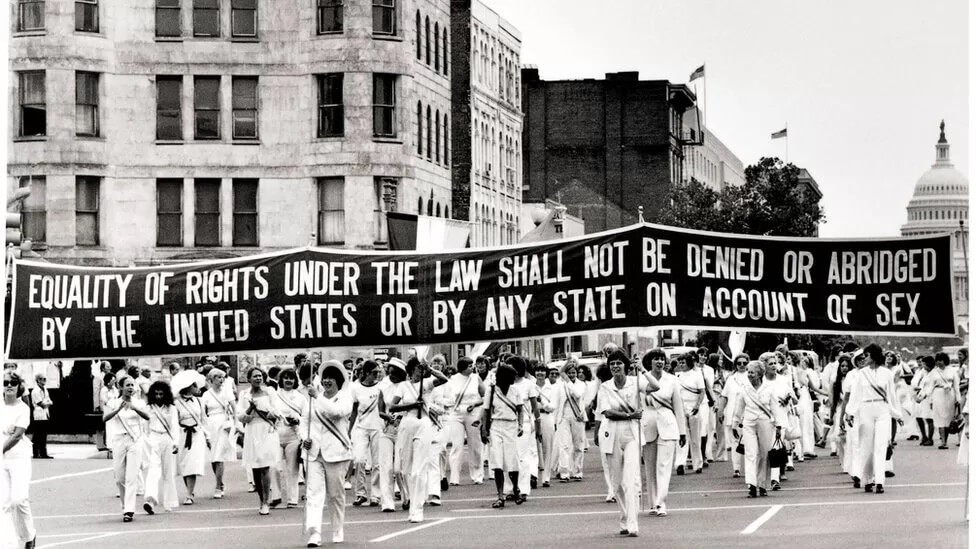
Women supporting the ERA carry a banner down Pennsylvania Avenue in Washington DC on August 26, 1977
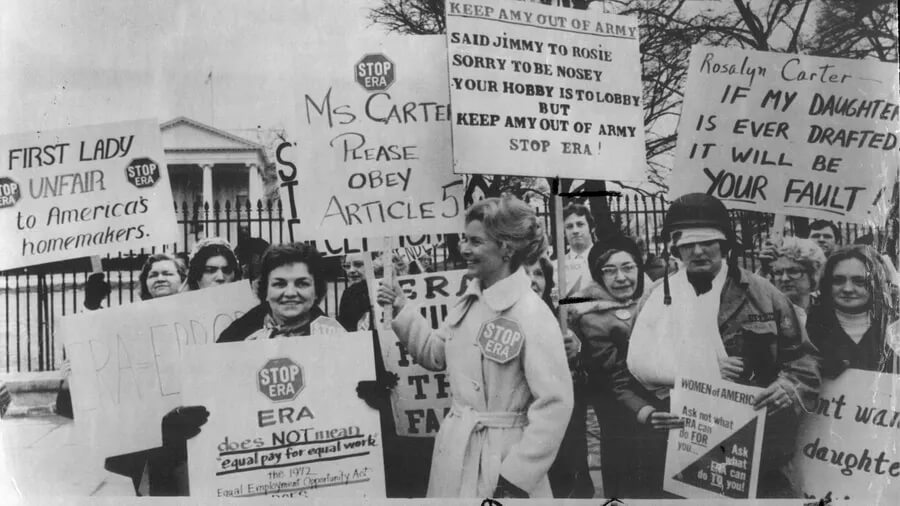
The Equal Rights Amendment (ERA) states: "Equality of rights under the law shall not be denied or abridged by the United States or by any state on account of sex." First proposed as an Amendment to the Constitution in 1923, Congress finally passed the ERA in 1972. The senate vote was overwhelming: 84 to 8. The Amendment then went to state legislatures for approval, requiring 38 for ratification. 22 states ratified in that first year, and 8 more in 1973. But then a grassroots opposition movement made significant inroads. 35 states eventually approved it by 1977, but the passage of the Amendment then stalled and the deadline expired in 1982.
In these photos, women who fought both for and against the Amendment’s passage are pictured protesting. In the top photograph, American attorney and conservative activist Phyllis Schlafly, founder of STOP-ERA, leads a protest against the Amendment. In the bottom photograph, women dressed in white – evoking suffragists of the past – protest in favor of the Amendment in Washington, DC on August 26, 1977 – the same date of the Women’s Strike seven years earlier (also included in this Spotlight Kit).
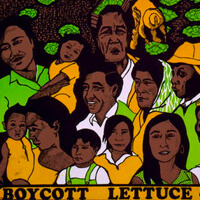
Dolores Huerta Lettuce Boycott Poster:Dolores Huerta and Cesar Chavez fought together for the rights and protections of the workers who picked fruits and vegetables in the fields and orchards, organizing a workers’ union and boycotts to gain attention and create economic pressure for the cause. Huerta led a successful lettuce and grape boycott, first in California and later on a national scale, that paved the way for migrant labor protection laws.
(1978) Boycott Lettuce & Grapes. United States, 1978. [Chicago: Women's Graphics Collective] [Photograph] Retrieved from the Library of Congress, https://www.loc.gov/item/93505187/.
Lily Chin Holds a Photograph of Her Son Vincent Chin (1983)
As explained by the New York Times, “Vincent Chin, a Chinese American man who lived near Detroit, was beaten to death with a baseball bat after being pursued by two white autoworkers in 1982…Mr. Chin was killed at a time when the rise of Japanese carmakers and the collapse of Detroit’s auto industry had contributed to a rise in anti-Asian racism.” The two men who murdered Chin accepted plea deals, serving only probation and paying about $3000 each in fines. In this image, Chin’s mother, Lily Chin, holds a photograph of her son.
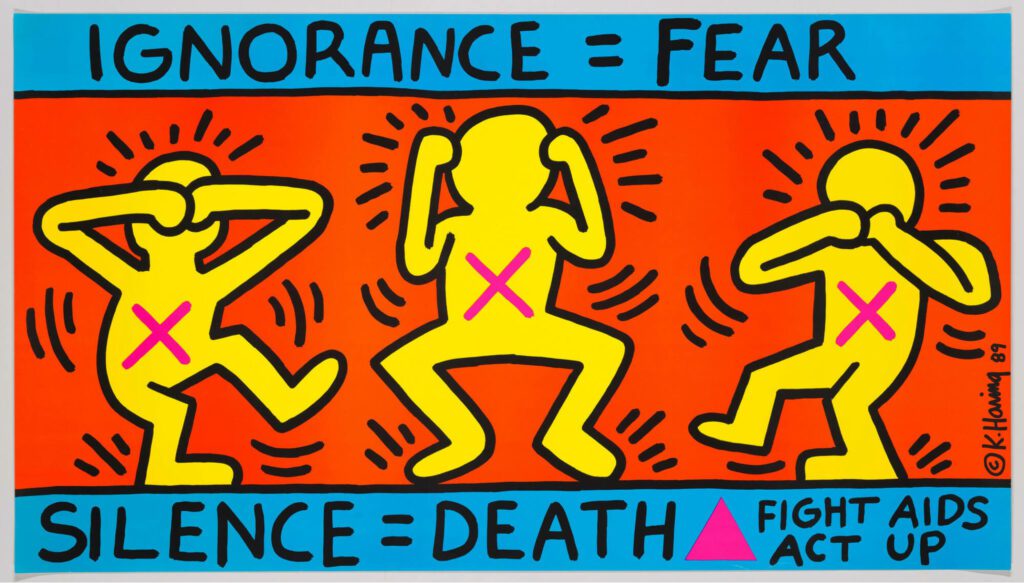
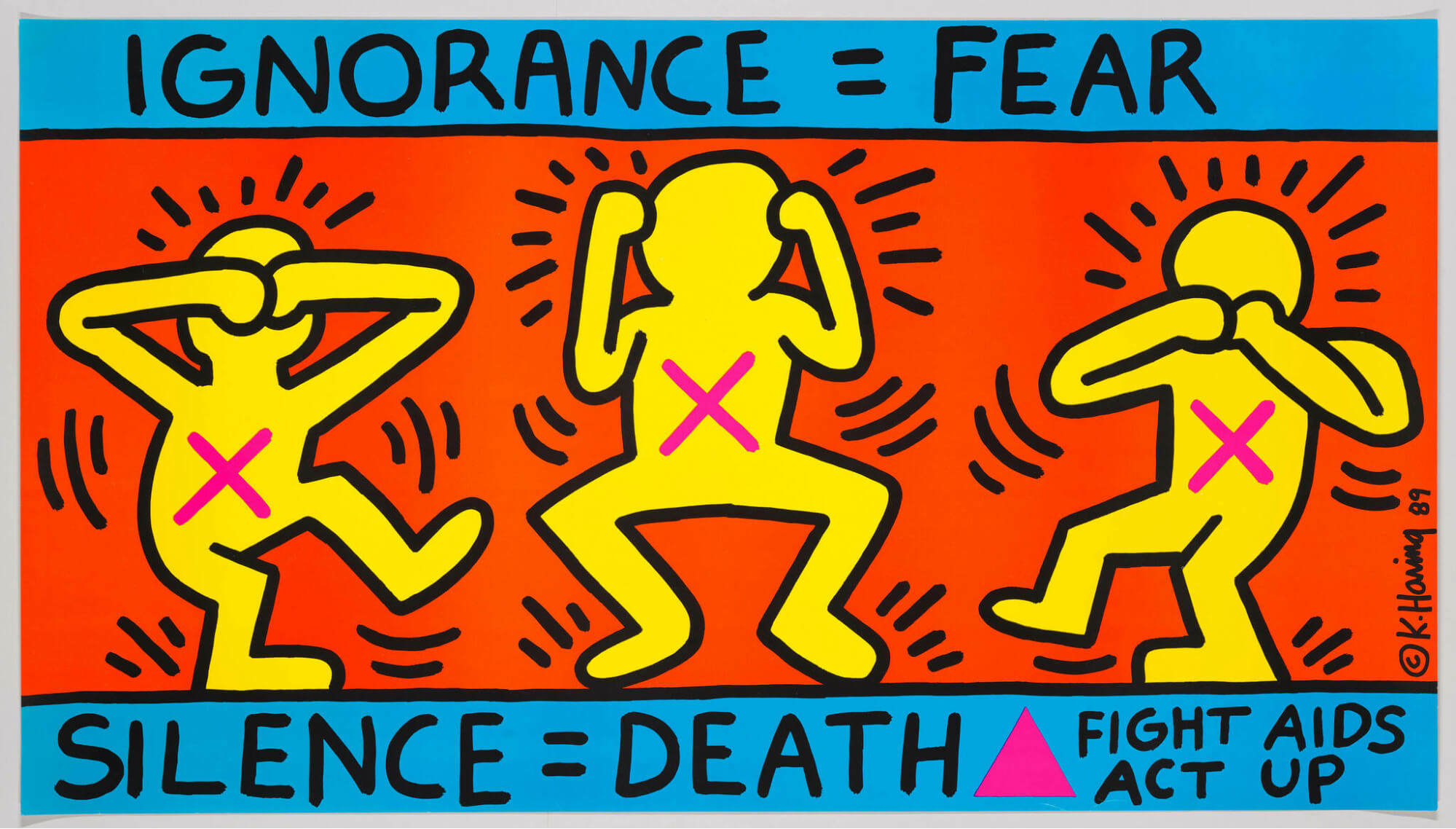
Keith Haring, Ignorance = Fear / Silence = Death (1989)
In the earliest years of the emergency of AIDS as a public health crisis, the American Government’s response was limited in terms of both resources dedicated to fighting the disease and public discussion of the disease, its victims, and public health strategies for prevention. Activists coined the phrase “silence=death” in 1987 to help raise awareness and spur the government to devote greater resources and attention.
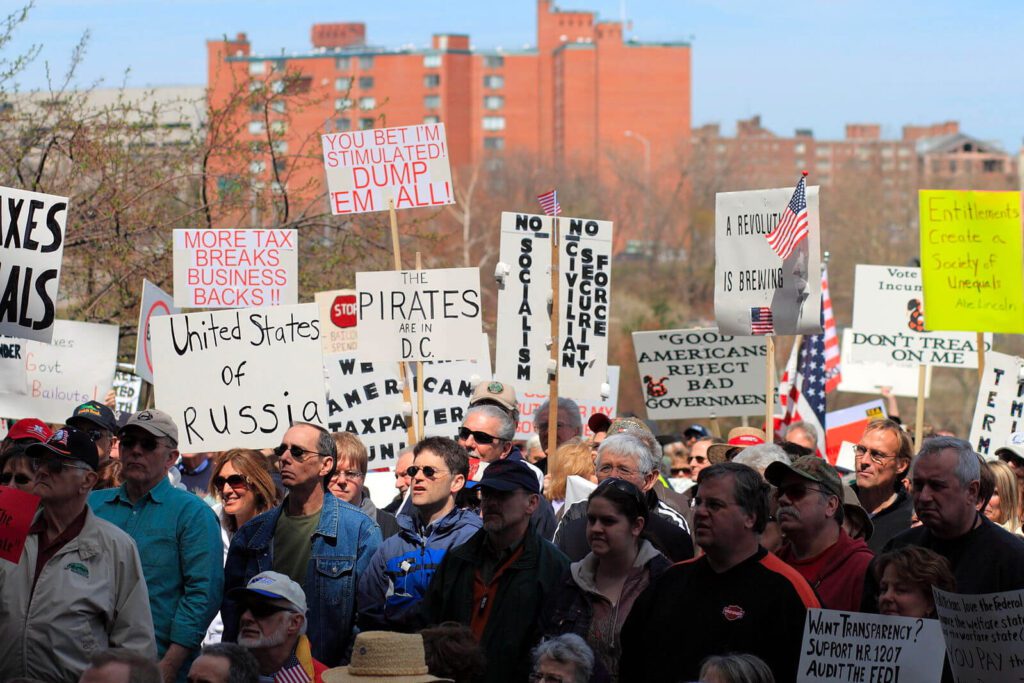
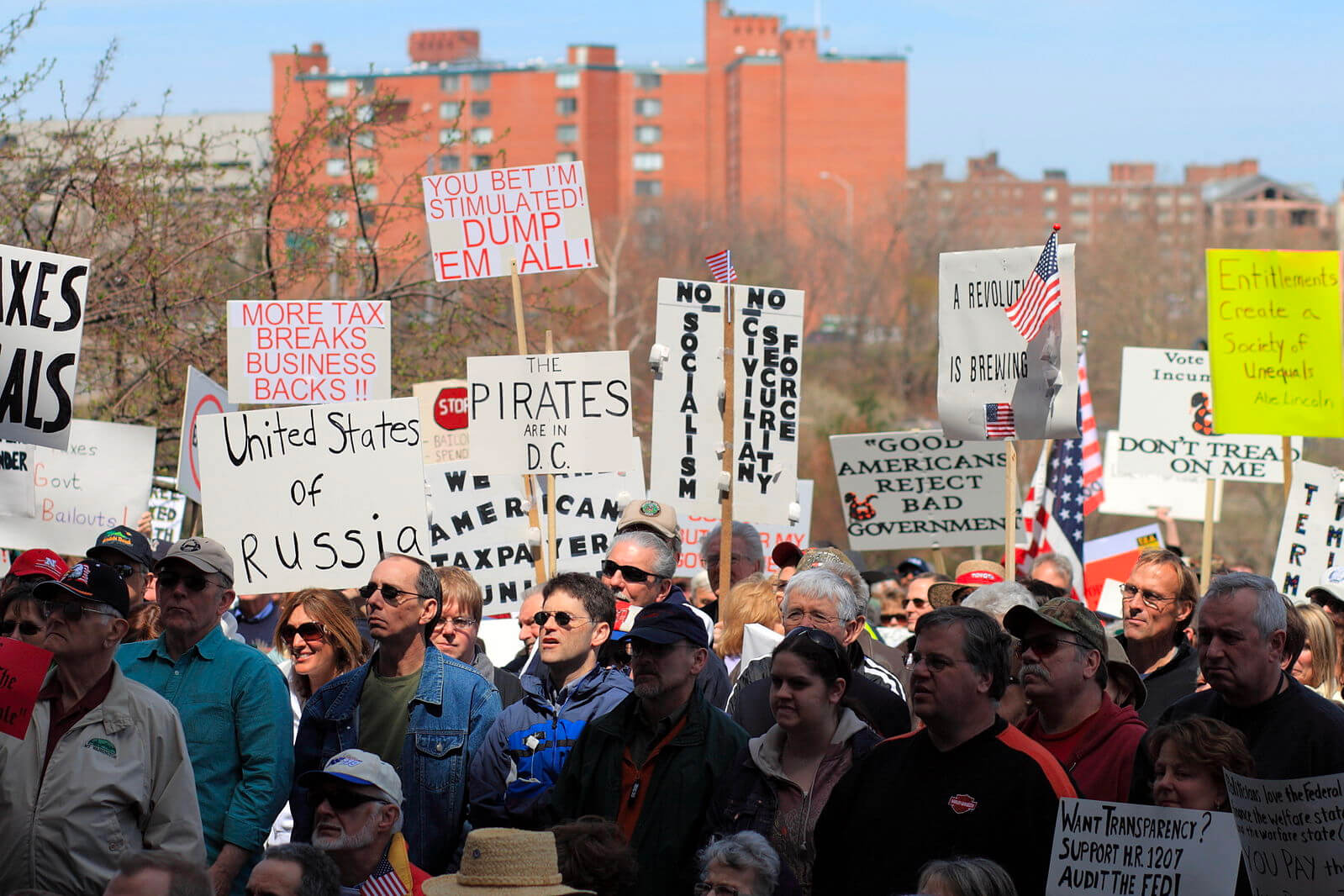
Tea Party protest at the Connecticut State Capitol in Hartford, Connecticut. April 15, 2009. Organizers reported that the police estimate of attendance was 5000 people.
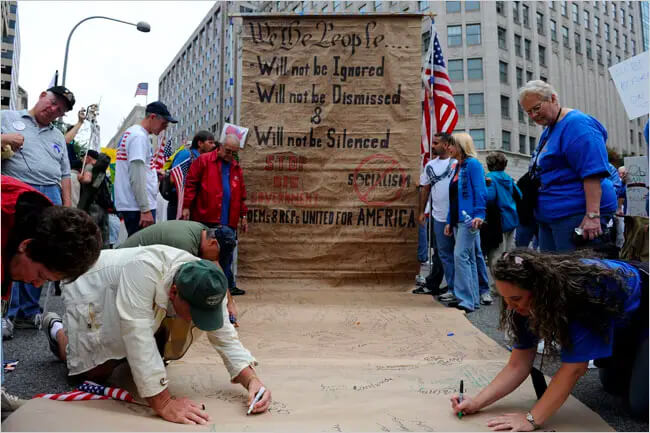
Protesters in Washington D.C. during a rally, September 2009.
After the financial crisis of 2008, a CNBC commentator, Rick Santelli, argued against President Obama’s mortgage relief policies and evoked the Revolutionary War-era Tea Party in calling for a protest against them. The “Tea Party Movement” took hold among some conservative and libertarian circles, leading to rallies and political campaigns arguing against federal taxation and in favor of fiscal conservatism and a free market economy. Several rallies were held specifically on April 15th – Tax Day – 2009.
Occupy Wall Street / Park Avenue Millionaires Protest (2011)
Occupy Wall Street ProtestsStarting in Washington, then moving to New York, protesters camped out in Zucotti park for an extended period of time in 2011 while voicing their concern about inequality in America. The protesters had a unique style of protesting employing methods such as “the people’s mic,” organized childcare, a library, and were predominantly “leaderless.” They had regularly scheduled marches throughout New York City for a variety of issues. Some critique focused on how participants were mostly white, accused of antisemitism, and had an amorphous set of demands.
In September of 2017, Attorney General Jeff Sessions’ announcement that the Trump Administration planned to end DACA, or the Deferred Action for Childhood Arrivals program, was met with protests around the country. As reported by National Public Radio, “hundreds of demonstrators gathered outside the White House. They shouted ‘We are America’ and ‘We want education. Down with deportation.’ The marchers then proceeded to the Department of Justice…and to the Trump International Hotel on Pennsylvania Avenue, where they staged a sit-in.”
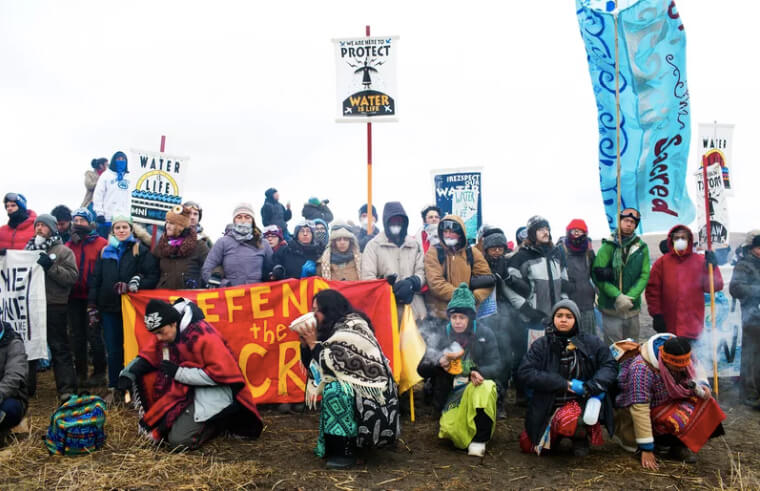
The planned construction of The Dakota Access Pipeline and resulting protests is a recent example of Native Americans and U.S. industry clashing. One side feared for the quality of their water and lands being abused. Proponents of the pipeline included union members and business, who viewed the pipeline’s development as essential to the growth of the economy.
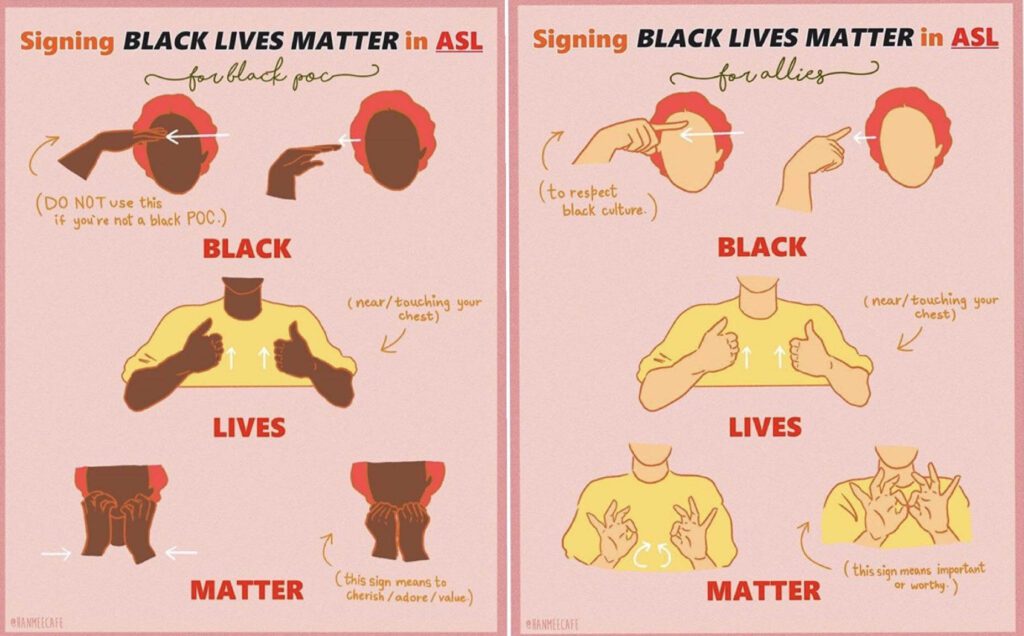
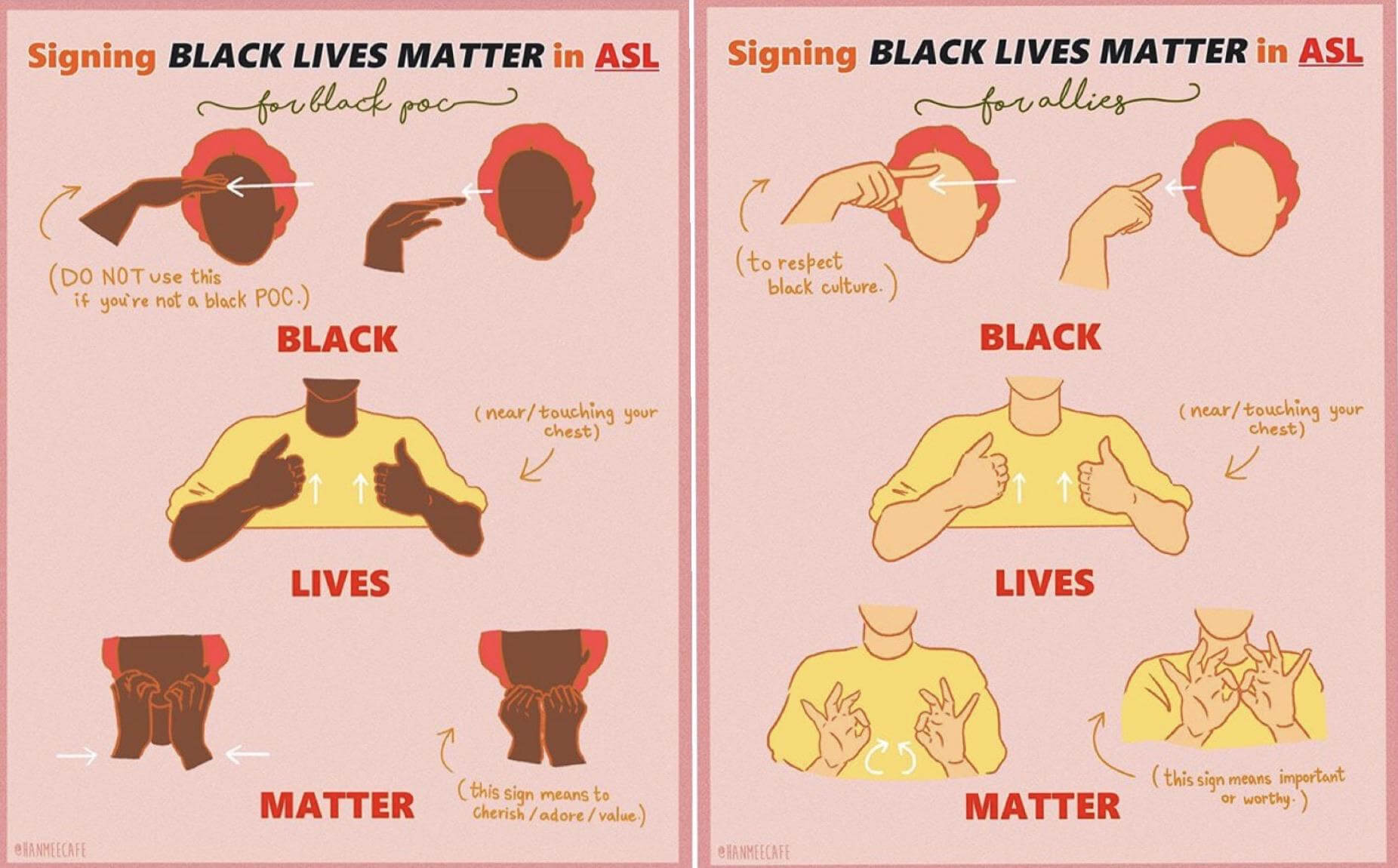
How do you sign ‘Black Lives Matter’ in ASL? (2020)
As reported by the Los Angeles Times, the intersection of disability rights and racial equity can be complicated for deaf members of the Black Lives Matter Movement: “The phrase begins with four fingers cut across the brow, followed by two thumbs drawn up like breath from navel to chest, ending with a fierce tug with two hands down from the chin into fists toward the heart.
Black. Life. Cherish. This is how Harold Foxx and many other black deaf Angelenos sign ‘Black Lives Matter,’ though it is by no means a universal translation. .. It is a reminder of an ongoing struggle for equity, representation and authenticity in ASL, a language deeply scarred by racism and exclusion.”
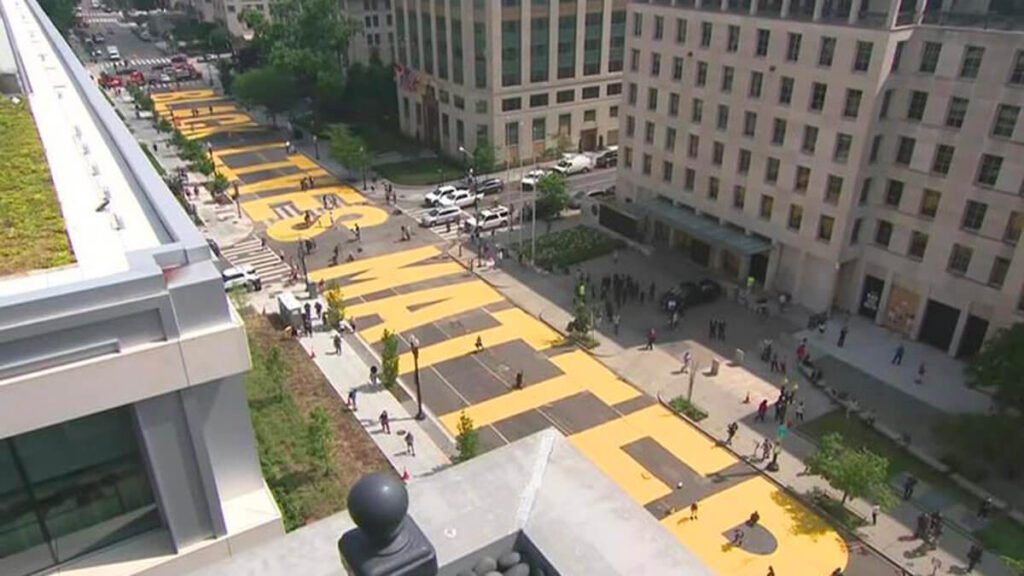
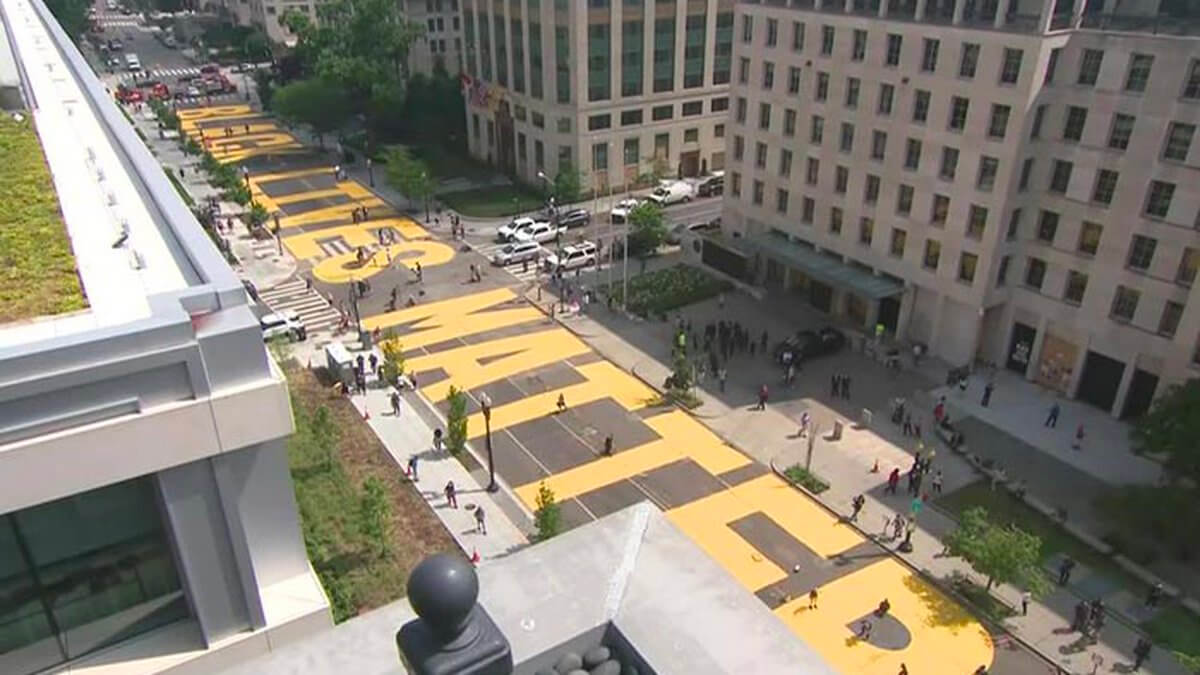
On June 5, 2020, CNN reported: “Washington, DC is painting a message in giant, yellow letters down a busy DC street ahead of a planned protest this weekend: BLACK LIVES MATTER.
The massive banner-like project spans two blocks of 16th Street, a central axis that leads southward straight to the White House. Each of the 16 bold yellow letters spans the width of the two-lane street, creating an unmistakable visual easily spotted by aerial cameras and virtually anyone within a few blocks. The painters were contacted by Mayor Muriel Bowser and began work early Friday morning, the mayor’s office told CNN. Bowser has officially deemed the section of 16th Street bearing the mural ‘Black Lives Matter Plaza,’ complete with a new street sign.”
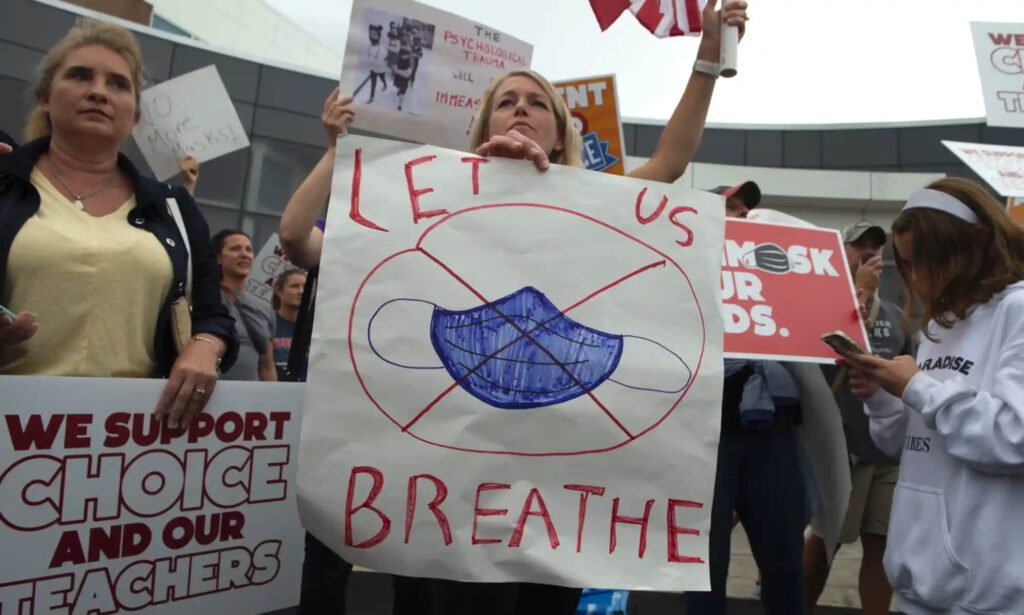
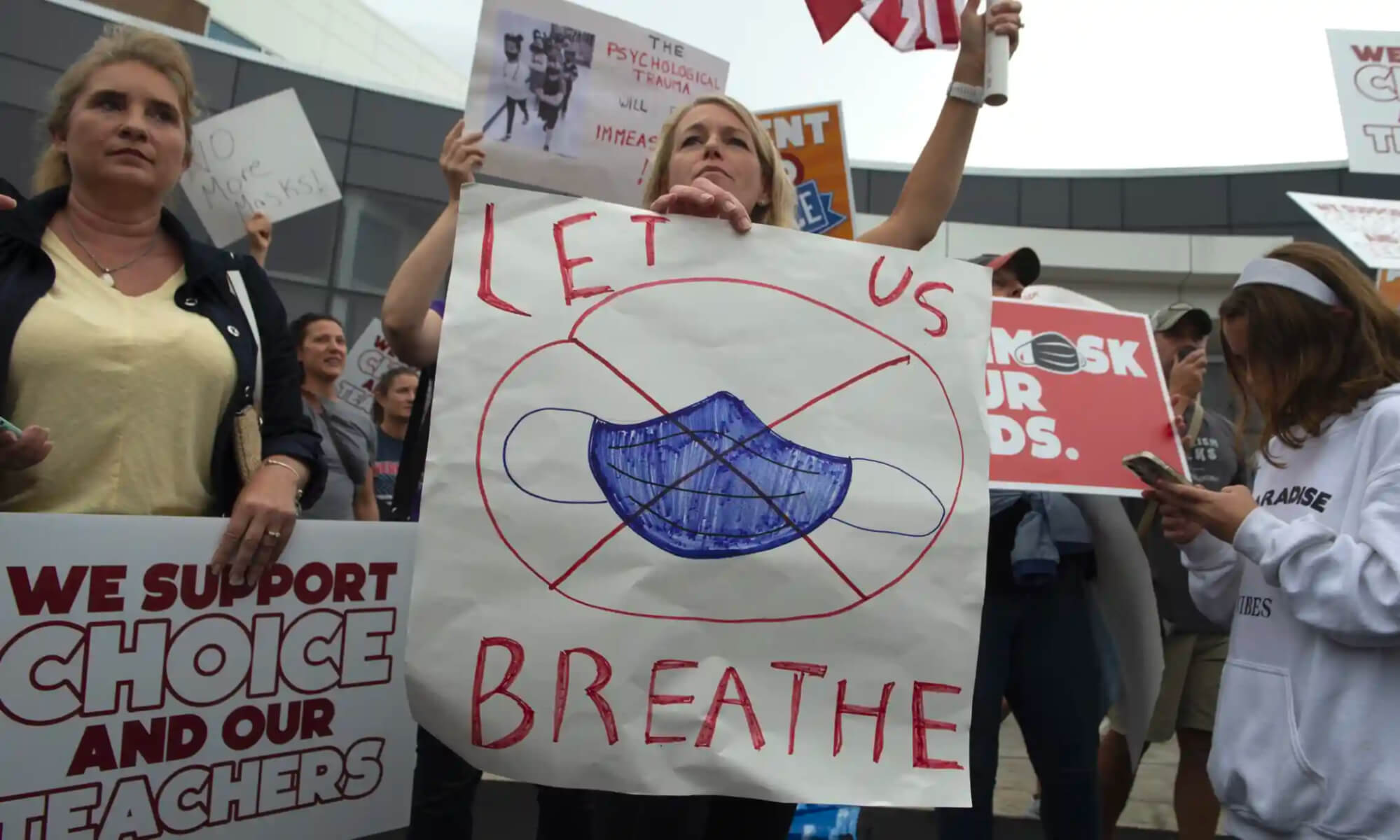
People demonstrate against mask mandates at a Cobb county, Georgia, school board meeting last week. Photograph: Robin Rayne/Zuma Press Wire/Rex/Shutterstock (2021)
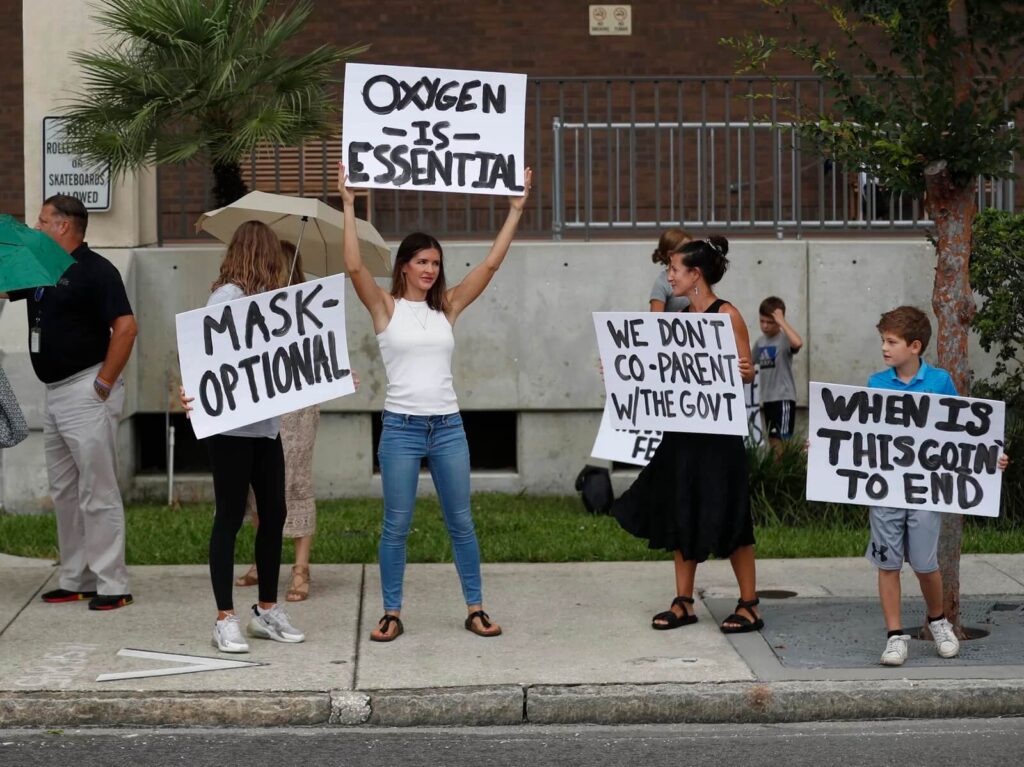
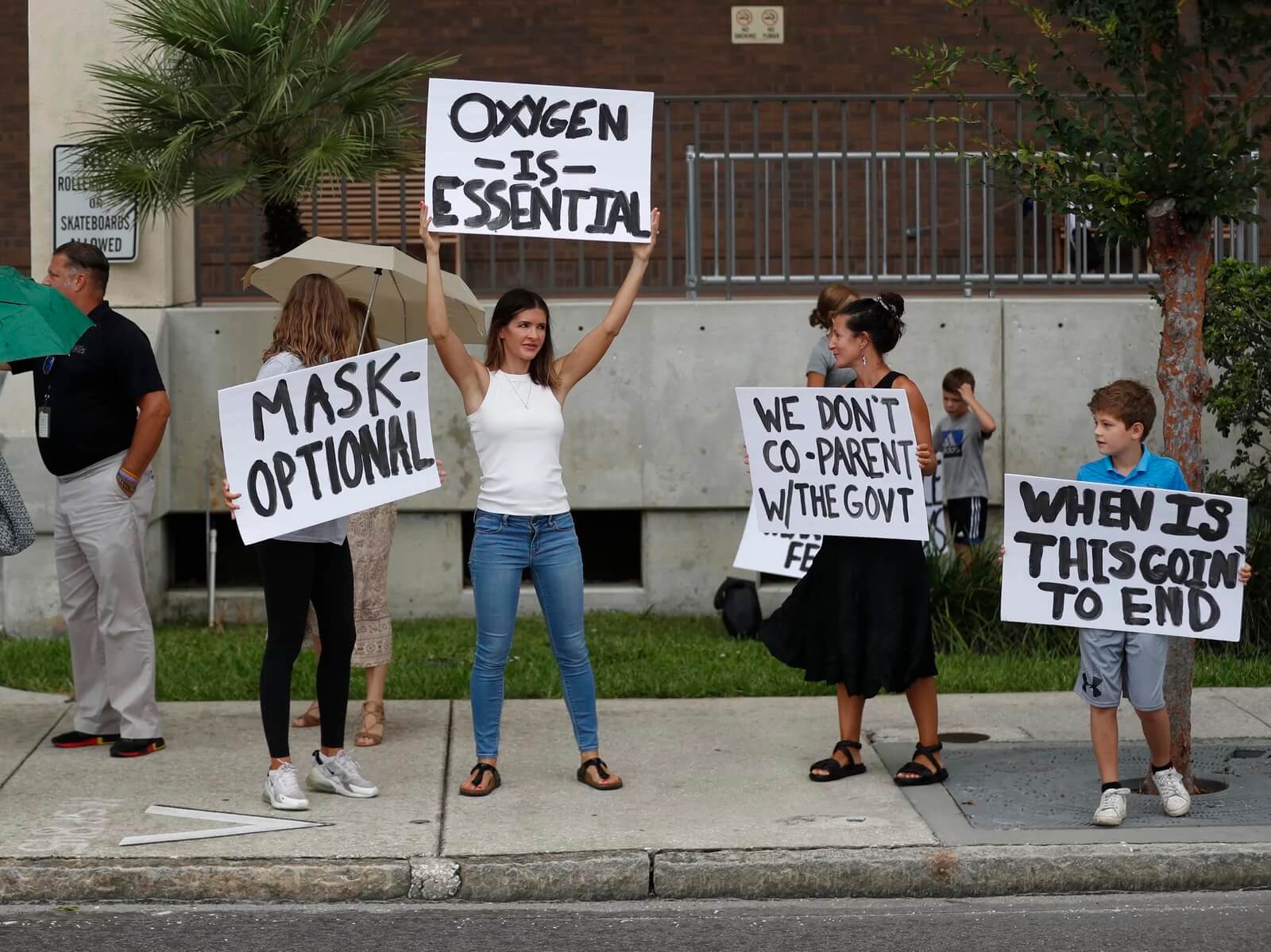
Families protest any potential mask mandates before the Hillsborough County School Board meeting last month in Tampa, Fla.
During the height of the Coronavirus pandemic, all levels of government – federal, state, and local – were required to respond to information emerging daily about what policies and practices would be safest for the public. In many places, including public spaces and schools, people were required to wear masks. Some people pushed back against these requirements, arguing that mandates were a violation of their individual rights.
Capitol rally to “stop critical race theory in Pennsylvania schools.” Harrisburg, Pennsylvania, July 14, 2021. Dan Gleiter
While “Critical Race Theory” (CRT) is taught primarily in law schools, protests began in 2021 against the teaching of CRT at local school board meetings in many places across the country. Often, participants in these protests raised a range of concerns about how topics including, but not limited to, race are covered in school curricula. These protests became part of a larger “parents’ rights” movement, arguing that parents should have a greater say in determining what their children learn in school.
The “I Still Believe In Our City” public art series was created in partnership with the New York City Commission on Human Rights. Courtesy Amanda Phingbodhipakkiya
"I Am Not Your Scapegoat" poster.Courtesy Amanda Phingbodhipakkiya
As reported by NBC News, “Last winter, as violent attacks against Asian elders began to spike, vividly painted portraits of Asian, Pacific Islander and Black people — flanked by vibrant florals and messages like ‘I am not your scapegoat’ — appeared on the walls of New York City's busiest subway and bus stops. Amanda Phingbodhipakkiya’s I Still Believe In Our City public art series, created in partnership with the New York City Commission on Human Rights, reminded millions of commuters of the humanity, diversity and beauty of Asian Americans at a time when many saw them as mere carriers of a deadly virus.”
Demonstrators headed toward a pier in St. Petersburg during a rally against the bill.
As reported by the New York Times in March of 2022, Gov. Ron DeSantis of Florida signed House Bill 1557, “which supporters call the ‘Parental Rights in Education’ bill, but that opponents refer to as the ‘Don’t Say Gay’ bill.” Among the provisions of the bill, “Instruction on gender and sexuality would be constrained in all grades; schools would be required to notify parents when children receive mental, emotional or physical health services, unless educators believe there is a risk of ‘abuse, abandonment, or neglect’; and parents would have the right to opt their children out of counseling and health services.”
Mamie Till Mobley weeps at her son's funeral on Sept. 6, 1955, in Chicago. Mobley insisted that her son's body be displayed in an open casket forcing the nation to see the brutality directed at Blacks in the South. AP, FILE
Following the lynching murder of her fifteen-year-old son, Emmett Till,, Mamie TIll Mobley insisted on an open casket at his funeral; according to Time magazine, “When Till’s mother Mamie came to identify her son, she told the funeral director, ‘Let the people see what I’ve seen.’” The graphic images of his beaten body captured the attention of people across the United States, and the photo’s publication in Jet magazine is widely considered a galvanizing moment for the Civil Rights Era.
The March on Washington, 1963By 1963 the Civil Rights Movement had grown substantially. They had support for both the black and white communities, as well as many celebrities. The purpose of this march was to gain national support for legislation in Congress. One of the most famous moments of the march was Dr. Martin Luther King Jr.'s “I Have a Dream” speech. Originally proposed in 1941 as the “March for Jobs and Freedom” by A. Philip Randolph, photographs of the March became – and remain – some of the most iconic images of the Civil Rights Movement.
Leffler, W. K., photographer. (1963) Civil rights march on Washington, D.C. / WKL. Washington D.C, 1963. [Photograph] Retrieved from the Library of Congress, https://www.loc.gov/item/2003654393/.
US National Guard troops block off Beale Street in Memphis, Tennessee, as civil rights protesters march for the third day in a row. Bettmann/Getty Images (March 29, 1968)
Any number of images from the Civil Rights era would benefit a unit on freedom of speech, but this particular image does a few things: (1) it marks the occasion immediately before Martin Luther King’s assassination; (2) it provides an image of a single text used over and over, in contrast to the image above with multiple demands; and (3) it juxtaposes protesters exercising their first amendment rights with National Guard troops wielding weapons.
John Carlos and Tommie Smith raise fists in protest as they receive their Olympic medals (1968)
Aware of the platform provided by international television coverage of the Olympics, medal-winning U.S. track athletes John Carlos and Tommie Smith chose to raise a fist during their medal ceremony to protest racial inequality in the country they were representing, at the very moment the Star Spangled Banner was playing.
The 1970s Women’s Strike was organized by feminist author Betty Friedan, to commemorate the fiftieth anniversary of the 19th Amendment, which prevented women from being denied the vote “on the basis of sex.” As reported by Time, “Friedan’s original idea for Aug. 26 was a national work stoppage, in which women would cease cooking and cleaning in order to draw attention to the unequal distribution of domestic labor, an issue she discussed in her 1963 bestseller The Feminine Mystique. It isn’t clear how many women truly went on ‘strike’ that day, but the march served as a powerful symbolic gesture. Participants held signs with slogans like ‘Don’t Iron While the Strike is Hot’ and ‘Don’t Cook Dinner – Starve a Rat Today.’”
Antiwar march October 31, 1970, Seattle, two months after the death of Reuben Salazar in the Los Angeles Chicano Moratorium protest
Vietnam War ProtestsThe Vietnam protest movement represented a growing anti-war movement in the United States in the late 1960s to early 1970s. Protestors spanned the racial spectrum and employed varying methods to end the war in Vietnam, started by the United States.
In many cases, anti-war protests combined with efforts to turn attention to domestic issues. As described in the Mapping American Social Movements Project of the University of Washington, “Chicanos in Los Angeles formed alliances with other oppressed people who identified with the Third World Left and were committed to toppling U.S. imperialism and fighting racism…. The Chicano Moratorium antiwar protests of 1970 and 1971…reflected the vibrant collaboration between African Americans, Japanese Americans, American Indians, and white antiwar activists that had developed in Southern California.”
Disability Rights Movement Protest for the Rehabilitation Act 1973, photographer Tom Olin Greyhound Bus Depot in Los Angeles, Diane Coleman, Steve Remington and Rick Wilson.
The Civil Rights Movement for Black equality inspired many other movements, including a national push for disability rights. The Rehabilitation Act of 1973 prohibited discrimination on the basis of disability and protected equal access for people with disabilities in areas including public services, employment, and education.
Women supporting the ERA carry a banner down Pennsylvania Avenue in Washington DC on August 26, 1977
The Equal Rights Amendment (ERA) states: "Equality of rights under the law shall not be denied or abridged by the United States or by any state on account of sex." First proposed as an Amendment to the Constitution in 1923, Congress finally passed the ERA in 1972. The senate vote was overwhelming: 84 to 8. The Amendment then went to state legislatures for approval, requiring 38 for ratification. 22 states ratified in that first year, and 8 more in 1973. But then a grassroots opposition movement made significant inroads. 35 states eventually approved it by 1977, but the passage of the Amendment then stalled and the deadline expired in 1982.
In these photos, women who fought both for and against the Amendment’s passage are pictured protesting. In the top photograph, American attorney and conservative activist Phyllis Schlafly, founder of STOP-ERA, leads a protest against the Amendment. In the bottom photograph, women dressed in white – evoking suffragists of the past – protest in favor of the Amendment in Washington, DC on August 26, 1977 – the same date of the Women’s Strike seven years earlier (also included in this Spotlight Kit).
Dolores Huerta Lettuce Boycott Poster:Dolores Huerta and Cesar Chavez fought together for the rights and protections of the workers who picked fruits and vegetables in the fields and orchards, organizing a workers’ union and boycotts to gain attention and create economic pressure for the cause. Huerta led a successful lettuce and grape boycott, first in California and later on a national scale, that paved the way for migrant labor protection laws.
(1978) Boycott Lettuce & Grapes. United States, 1978. [Chicago: Women's Graphics Collective] [Photograph] Retrieved from the Library of Congress, https://www.loc.gov/item/93505187/.
Lily Chin Holds a Photograph of Her Son Vincent Chin (1983)
As explained by the New York Times, “Vincent Chin, a Chinese American man who lived near Detroit, was beaten to death with a baseball bat after being pursued by two white autoworkers in 1982…Mr. Chin was killed at a time when the rise of Japanese carmakers and the collapse of Detroit’s auto industry had contributed to a rise in anti-Asian racism.” The two men who murdered Chin accepted plea deals, serving only probation and paying about $3000 each in fines. In this image, Chin’s mother, Lily Chin, holds a photograph of her son.
Keith Haring, Ignorance = Fear / Silence = Death (1989)
In the earliest years of the emergency of AIDS as a public health crisis, the American Government’s response was limited in terms of both resources dedicated to fighting the disease and public discussion of the disease, its victims, and public health strategies for prevention. Activists coined the phrase “silence=death” in 1987 to help raise awareness and spur the government to devote greater resources and attention.
Tea Party protest at the Connecticut State Capitol in Hartford, Connecticut. April 15, 2009. Organizers reported that the police estimate of attendance was 5000 people.
Protesters in Washington D.C. during a rally, September 2009.
After the financial crisis of 2008, a CNBC commentator, Rick Santelli, argued against President Obama’s mortgage relief policies and evoked the Revolutionary War-era Tea Party in calling for a protest against them. The “Tea Party Movement” took hold among some conservative and libertarian circles, leading to rallies and political campaigns arguing against federal taxation and in favor of fiscal conservatism and a free market economy. Several rallies were held specifically on April 15th – Tax Day – 2009.
Occupy Wall Street / Park Avenue Millionaires Protest (2011)
Occupy Wall Street ProtestsStarting in Washington, then moving to New York, protesters camped out in Zucotti park for an extended period of time in 2011 while voicing their concern about inequality in America. The protesters had a unique style of protesting employing methods such as “the people’s mic,” organized childcare, a library, and were predominantly “leaderless.” They had regularly scheduled marches throughout New York City for a variety of issues. Some critique focused on how participants were mostly white, accused of antisemitism, and had an amorphous set of demands.
In September of 2017, Attorney General Jeff Sessions’ announcement that the Trump Administration planned to end DACA, or the Deferred Action for Childhood Arrivals program, was met with protests around the country. As reported by National Public Radio, “hundreds of demonstrators gathered outside the White House. They shouted ‘We are America’ and ‘We want education. Down with deportation.’ The marchers then proceeded to the Department of Justice…and to the Trump International Hotel on Pennsylvania Avenue, where they staged a sit-in.”
The planned construction of The Dakota Access Pipeline and resulting protests is a recent example of Native Americans and U.S. industry clashing. One side feared for the quality of their water and lands being abused. Proponents of the pipeline included union members and business, who viewed the pipeline’s development as essential to the growth of the economy.
How do you sign ‘Black Lives Matter’ in ASL? (2020)
As reported by the Los Angeles Times, the intersection of disability rights and racial equity can be complicated for deaf members of the Black Lives Matter Movement: “The phrase begins with four fingers cut across the brow, followed by two thumbs drawn up like breath from navel to chest, ending with a fierce tug with two hands down from the chin into fists toward the heart.
Black. Life. Cherish. This is how Harold Foxx and many other black deaf Angelenos sign ‘Black Lives Matter,’ though it is by no means a universal translation. .. It is a reminder of an ongoing struggle for equity, representation and authenticity in ASL, a language deeply scarred by racism and exclusion.”
On June 5, 2020, CNN reported: “Washington, DC is painting a message in giant, yellow letters down a busy DC street ahead of a planned protest this weekend: BLACK LIVES MATTER.
The massive banner-like project spans two blocks of 16th Street, a central axis that leads southward straight to the White House. Each of the 16 bold yellow letters spans the width of the two-lane street, creating an unmistakable visual easily spotted by aerial cameras and virtually anyone within a few blocks. The painters were contacted by Mayor Muriel Bowser and began work early Friday morning, the mayor’s office told CNN. Bowser has officially deemed the section of 16th Street bearing the mural ‘Black Lives Matter Plaza,’ complete with a new street sign.”
People demonstrate against mask mandates at a Cobb county, Georgia, school board meeting last week. Photograph: Robin Rayne/Zuma Press Wire/Rex/Shutterstock (2021)
Families protest any potential mask mandates before the Hillsborough County School Board meeting last month in Tampa, Fla.
During the height of the Coronavirus pandemic, all levels of government – federal, state, and local – were required to respond to information emerging daily about what policies and practices would be safest for the public. In many places, including public spaces and schools, people were required to wear masks. Some people pushed back against these requirements, arguing that mandates were a violation of their individual rights.
Capitol rally to “stop critical race theory in Pennsylvania schools.” Harrisburg, Pennsylvania, July 14, 2021. Dan Gleiter
While “Critical Race Theory” (CRT) is taught primarily in law schools, protests began in 2021 against the teaching of CRT at local school board meetings in many places across the country. Often, participants in these protests raised a range of concerns about how topics including, but not limited to, race are covered in school curricula. These protests became part of a larger “parents’ rights” movement, arguing that parents should have a greater say in determining what their children learn in school.
The “I Still Believe In Our City” public art series was created in partnership with the New York City Commission on Human Rights. Courtesy Amanda Phingbodhipakkiya
"I Am Not Your Scapegoat" poster.Courtesy Amanda Phingbodhipakkiya
As reported by NBC News, “Last winter, as violent attacks against Asian elders began to spike, vividly painted portraits of Asian, Pacific Islander and Black people — flanked by vibrant florals and messages like ‘I am not your scapegoat’ — appeared on the walls of New York City's busiest subway and bus stops. Amanda Phingbodhipakkiya’s I Still Believe In Our City public art series, created in partnership with the New York City Commission on Human Rights, reminded millions of commuters of the humanity, diversity and beauty of Asian Americans at a time when many saw them as mere carriers of a deadly virus.”
Demonstrators headed toward a pier in St. Petersburg during a rally against the bill.
As reported by the New York Times in March of 2022, Gov. Ron DeSantis of Florida signed House Bill 1557, “which supporters call the ‘Parental Rights in Education’ bill, but that opponents refer to as the ‘Don’t Say Gay’ bill.” Among the provisions of the bill, “Instruction on gender and sexuality would be constrained in all grades; schools would be required to notify parents when children receive mental, emotional or physical health services, unless educators believe there is a risk of ‘abuse, abandonment, or neglect’; and parents would have the right to opt their children out of counseling and health services.”
As part of the dissemination of the Educating for American Democracy Roadmap, we organized an Educator Task Force (ETF).Members of the early ETF curated an initial collection of over 500 instructional resources aligned to the seven themes and five design challenges.In addition to this collection, ETF members recently built robust, diverse, and accessible primary source collections, known as Spotlight Kits, that provide rich avenues for inquiry and that braid U.S. history and civic learning throughout.
add to list:
Before and Beyond the Constitution: What Should a President do?
Grades 6–8:
Unit Plan
Source: National Endowment for the Humanities
Before and Beyond the Constitution: What Should a President do?
Grades 6–8: Unit Plan
In this curriculum unit, students look at the role of President as defined in the Constitution and consider the precedent-setting accomplishments of George Washington.
Learning Objectives:Examine the responsibilities of the President as defined by the Articles of Confederation.Evaluate the power of a President under the Article of Confederation.Evaluate the decisions President Washington made that continue to influence the office of the President of the United States.
EDSITEment offers free resources for teachers, students, and parents searching for high-quality K-12 humanities education materials in the subject areas of history and social studies, literature and language arts, foreign languages, arts, and culture. All websites linked to EDSITEment have been reviewed for content, design, and educational impact in the classroom.
Source: National Archives Center for Legislative Archives
Congress Creates the Bill of Rights
Grades 6–11: Games + Interactive
The mobile app is an interactive learning tool for tablets that situates the user in the proposals, debates, and revisions in Congress that shaped the Bill of Rights. Its menu-based organization presents a historic overview, a detailed study of the evolving language of each proposed amendment as it was shaped in the House and Senate, a close-up look at essential documents, and opportunities for participation and reflection designed for individual or collaborative exploration.
Learning Objectives:Students will explore the question: Why was a Bill of Rights needed in 1789?Students will explore the question: What was James Madison’s role in creating the Bill of Rights?Students will explore the question: What constitutional role did Congress fulfill in proposing amendments?
Related Skills: Analyzing Texts, Images, or Videos, Historical Thinking Skills
The Center for Legislative Archives preserves and makes available to researchers the historical records of the U.S. House of Representatives and the U.S. Senate. Through its public outreach programs, the Center uses these historical records to promote a better understanding of Congress and the history of American representative government.
In the summer of 1787, delegates gathered for a convention in Philadelphia, with the goal of revising the Articles of Confederation—the nation’s existing governing document, which wasn’t really working. Instead, they wrote a whole new document, which created a revolutionary form of government: the U.S. Constitution.
Learning Objectives:Students will learn why the Founding generation decided to write the Constitution.Students will learn how the Articles of Confederation differed from the Constitution.Students will learn about the compromises made during the Constitution.
Related Skills: Analyzing Texts, Images, or Videos, Media Literacy, Historical Thinking Skills
Aligned to State Standards: ALL 50 States
Note: State alignment defined by submitter and should always be checked.
The National Constitution Center in Philadelphia brings together people of all ages and perspectives to learn about, debate, and celebrate the the U.S. Constitution. It disseminate information about the United States Constitution on a nonpartisan basis in order to increase awareness and understanding of the Constitution among the American people.
In this lesson, students are presented with a series of searches/seizures and they are asked to evaluate whether they are lawful or not.
Related Skills: Analyzing Texts, Images, or Videos, Media Literacy, Building Evidentiary Claims, Engaging in Difficult Conversations, Growing Student Agency, Taking Informed Action
Aligned to State Standards: ALL 50 States
Note: State alignment defined by submitter and should always be checked.
The Division for Public Education provides reliable information about the law and legal issues, including resources and programs for educators, students, journalists, legal professionals, opinion leaders, and the public to advance public understanding of law and its role in society.
The lesson explores the philosophical argument for equal and inalienable rights and their implications for government.
Learning Objectives:Students will understand the story of the Constitutional Convention of 1787.Students will analyze the various constitutional principles contained in the Constitution and how they are applied in the document.
Related Skills: Analyzing Texts, Images, or Videos, Historical Thinking Skills
Aligned to State Standards: ALL 50 States
Note: State alignment defined by submitter and should always be checked.
The Institute develops educational resources on American history and government, provides professional development opportunities to teachers, and runs student programs and scholarship contests. It seeks to to engage, educate, and empower individuals with a passion for the freedom and opportunity that exist in a free society.
All humans are born with equal inherent rights, but many governments do not protect people's freedom to exercise those rights. The way to secure inalienable rights, the Founders believed, was to consent to giving up a small amount of our freedom so that government has the authority to protect our rights. Freedom depends on citizens having the wisdom, courage, and sense of justice necessary to take action in choosing virtuous leaders, and in holding those leaders to their commitments.
Learning Objectives:Students will examine principles of equal and inalienable rights.Students will compare and contrast the writings of Thomas Hobbes and John Locke.
Related Skills: Analyzing Texts, Images, or Videos, Historical Thinking Skills
Aligned to State Standards: ALL 50 States
Note: State alignment defined by submitter and should always be checked.
The Institute develops educational resources on American history and government, provides professional development opportunities to teachers, and runs student programs and scholarship contests. It seeks to to engage, educate, and empower individuals with a passion for the freedom and opportunity that exist in a free society.
This free curriculum guide from the New-York Historical Society illuminates the stakes of the American Revolution through a study of the largest single battle of the Revolutionary War.
Learning Objectives:Students will learn about the Battle of Brooklyn.Students will learn about the personal choices both prominent and lesser-known individuals faced during the American Revolution.
Related Skills: Analyzing Texts, Images, or Videos, Historical Thinking Skills, Building Evidentiary Claims
Aligned to State Standards: New York
Note: State alignment defined by submitter and should always be checked.
New-York Historical Society, one of New York's first museum, features exhibitions, public programs, and research exploring the history of New York and the nation. It aims to facilitate a broad grasp of history’s enduring importance and its usefulness in finding explanations, causes, and insights.
Download the Educating for American Democracy Roadmap and Report Documents
Get the Roadmap and Report to unlock the work of over 300 leading scholars, educators, practitioners, and others who spent thousands of hours preparing this robust framework and guiding principles. The time is now to prioritize history and civics.
Your contact information will not be shared, and only used to send additional updates and materials from Educating for American Democracy, from which you can unsubscribe.
X
We the People
This theme explores the idea of “the people” as a political concept–not just a group of people who share a landscape but a group of people who share political ideals and institutions.
This theme explores how social arrangements and conflicts have combined with political institutions to shape American life from the earliest colonial period to the present, investigates which moments of change have most defined the country, and builds understanding of how American political institutions and society changes.
This theme explores the contemporary terrain of civic participation and civic agency, investigating how historical narratives shape current political arguments, how values and information shape policy arguments, and how the American people continues to renew or remake itself in pursuit of fulfillment of the promise of constitutional democracy.
This theme explores the relationship between self-government and civic participation, drawing on the discipline of history to explore how citizens’ active engagement has mattered for American society and on the discipline of civics to explore the principles, values, habits, and skills that support productive engagement in a healthy, resilient constitutional democracy. This theme focuses attention on the overarching goal of engaging young people as civic participants and preparing them to assume that role successfully.
This theme begins from the recognition that American civic experience is tied to a particular place, and explores the history of how the United States has come to develop the physical and geographical shape it has, the complex experiences of harm and benefit which that history has delivered to different portions of the American population, and the civics questions of how political communities form in the first place, become connected to specific places, and develop membership rules. The theme also takes up the question of our contemporary responsibility to the natural world.
This theme explores the place of the U.S. and the American people in a global context, investigating key historical events in international affairs,and building understanding of the principles, values, and laws at stake in debates about America’s role in the world.
The Seven Themes provide the organizational framework for the Roadmap. They map out the knowledge, skills, and dispositions that students should be able to explore in order to be engaged in informed, authentic, and healthy civic participation. Importantly, they are neither standards nor curriculum, but rather a starting point for the design of standards, curricula, resources, and lessons.
X
Driving questions provide a glimpse into the types of inquiries that teachers can write and develop in support of in-depth civic learning. Think of them as a starting point in your curricular design. Learn more about inquiry-based learning in the Pedagogy Companion.
X
Sample guiding questions are designed to foster classroom discussion, and can be starting points for one or multiple lessons. It is important to note that the sample guiding questions provided in the Roadmap are NOT an exhaustive list of questions. There are many other great topics and questions that can be explored.
The Seven Themes provide the organizational framework for the Roadmap. They map out the knowledge, skills, and dispositions that students should be able to explore in order to be engaged in informed, authentic, and healthy civic participation. Importantly, they are neither standards nor curriculum, but rather a starting point for the design of standards, curricula, resources, and lessons.
X
The Five Design Challenges
America’s constitutional politics are rife with tensions and complexities.Our Design Challenges, which are arranged alongside our Themes, identify and clarify the most significant tensions that writers of standards, curricula, texts, lessons, and assessments will grapple with. In proactively recognizing and acknowledging these challenges, educators will help students better understand the complicated issues that arise in American history and civics.
X
Motivating Agency, Sustaining the Republic
How can we help students understand the full context for their roles as civic participants without creating paralysis or a sense of the insignificance of their own agency in relation to the magnitude of our society, the globe, and shared challenges?
How can we help students become engaged citizens who also sustain civil disagreement, civic friendship, and thus American constitutional democracy?
How can we help students pursue civic action that is authentic, responsible, and informed?
X
America’s Plural Yet Shared Story
How can we integrate the perspectives of Americans from all different backgrounds when narrating a history of the U.S. and explicating the content of the philosophical foundations of American constitutional democracy?
How can we do so consistently across all historical periods and conceptual content?
How can this more plural and more complete story of our history and foundations also be a common story, the shared inheritance of all Americans?
How do we simultaneously teach the value and the danger of compromise for a free, diverse, and self-governing people?
How do we help students make sense of the paradox that Americans continuously disagree about the ideal shape of self-government but also agree to preserve shared institutions?
X
Civic Honesty, Reflective Patriotism
How can we offer an account of U.S. constitutional democracy that is simultaneously honest about the wrongs of the past without falling into cynicism, and appreciative of the founding of the United States without tipping into adulation?
X
Balancing the Concrete & the Abstract
How can we support instructors in helping students move between concrete, narrative, and chronological learning and thematic and abstract or conceptual learning?
X
Each theme is supported by key concepts that map out the knowledge, skills, and dispositions students should be able to explore in order to be engaged in informed, authentic, and healthy civic participation. They are vertically spiraled and developed to apply to K—5 and 6—12. Importantly, they are not standards, but rather offer a vision for the integration of history and civics throughout grades K—12.
X
Helping Students Participate
How can I learn to understand my role as a citizen even if I’m not old enough to take part in government? How can I get excited to solve challenges that seem too big to fix?
How can I learn how to work together with people whose opinions are different from my own?
How can I be inspired to want to take civic actions on my own?
X
America’s Shared Story
How can I learn about the role of my culture and other cultures in American history?
How can I see that America’s story is shared by all?
X
Thinking About Compromise
How can teachers teach the good and bad sides of compromise?
How can I make sense of Americans who believe in one government but disagree about what it should do?
X
Honest Patriotism
How can I learn an honest story about America that admits failure and celebrates praise?
X
Balancing Time & Theme
How can teachers help me connect historical events over time and themes?
X
The Six Pedagogical Principles
EAD teacher draws on six pedagogical principles that are connected sequentially.
Six Core Pedagogical Principles are part of our Pedagogy Companion. The Pedagogical Principles are designed to focus educators’ effort on techniques that best support the learning and development of student agency required of history and civic education.
X
This resource aligns with the core pedagogical principle of:
EAD teachers commit to learn about and teach full and multifaceted historical and civic narratives. They appreciate student diversity and assume all students’ capacity for learning complex and rigorous content. EAD teachers focus on inclusion and equity in both content and approach as they spiral instruction across grade bands, increasing complexity and depth about relevant history and contemporary issues.
X
This resource aligns with the core pedagogical principle of:
Growth Mindset and Capacity Building
EAD teachers have a growth mindset for themselves and their students, meaning that they engage in continuous self-reflection and cultivate self-knowledge. They learn and adopt content as well as practices that help all learners of diverse backgrounds reach excellence. EAD teachers need continuous and rigorous professional development (PD) and access to professional learning communities (PLCs) that offer peer support and mentoring opportunities, especially about content, pedagogical approaches, and instruction-embedded assessments.
X
This resource aligns with the core pedagogical principle of:
Building an EAD-Ready Classroom and School
EAD teachers cultivate and sustain a learning environment by partnering with administrators, students, and families to conduct deep inquiry about the multifaceted stories of American constitutional democracy. They set expectations that all students know they belong and contribute to the classroom community. Students establish ownership and responsibility for their learning through mutual respect and an inclusive culture that enables students to engage courageously in rigorous discussion.
X
This resource aligns with the core pedagogical principle of:
Inquiry as the Primary Mode for Learning
EAD teachers not only use the EAD Roadmap inquiry prompts as entry points to teaching full and complex content, but also cultivate students’ capacity to develop their own deep and critical inquiries about American history, civic life, and their identities and communities. They embrace these rigorous inquiries as a way to advance students’ historical and civic knowledge, and to connect that knowledge to themselves and their communities. They also help students cultivate empathy across differences and inquisitiveness to ask difficult questions, which are core to historical understanding and constructive civic participation.
X
This resource aligns with the core pedagogical principle of:
Practice of Constitutional Democracy and Student Agency
EAD teachers use their content knowledge and classroom leadership to model our constitutional principle of “We the People” through democratic practices and promoting civic responsibilities, civil rights, and civic friendship in their classrooms. EAD teachers deepen students’ grasp of content and concepts by creating student opportunities to engage with real-world events and problem-solving about issues in their communities by taking informed action to create a more perfect union.
X
This resource aligns with the core pedagogical principle of:
Assess, Reflect, and Improve
EAD teachers use assessments as a tool to ensure all students understand civics content and concepts and apply civics skills and agency. Students have the opportunity to reflect on their learning and give feedback to their teachers in higher-order thinking exercises that enhance as well as measure learning. EAD teachers analyze and utilize feedback and assessment for self-reflection and improving instruction.
X
This resource aligns with the core pedagogical principle of:
EAD teachers commit to learn about and teach full and multifaceted historical and civic narratives. They appreciate student diversity and assume all students’ capacity for learning complex and rigorous content. EAD teachers focus on inclusion and equity in both content and approach as they spiral instruction across grade bands, increasing complexity and depth about relevant history and contemporary issues.
X
This resource aligns with the core pedagogical principle of:
Growth Mindset and Capacity Building
EAD teachers have a growth mindset for themselves and their students, meaning that they engage in continuous self-reflection and cultivate self-knowledge. They learn and adopt content as well as practices that help all learners of diverse backgrounds reach excellence. EAD teachers need continuous and rigorous professional development (PD) and access to professional learning communities (PLCs) that offer peer support and mentoring opportunities, especially about content, pedagogical approaches, and instruction-embedded assessments.
X
This resource aligns with the core pedagogical principle of:
Building an EAD-Ready Classroom and School
EAD teachers cultivate and sustain a learning environment by partnering with administrators, students, and families to conduct deep inquiry about the multifaceted stories of American constitutional democracy. They set expectations that all students know they belong and contribute to the classroom community. Students establish ownership and responsibility for their learning through mutual respect and an inclusive culture that enables students to engage courageously in rigorous discussion.
X
This resource aligns with the core pedagogical principle of:
Inquiry as the Primary Mode for Learning
EAD teachers not only use the EAD Roadmap inquiry prompts as entry points to teaching full and complex content, but also cultivate students’ capacity to develop their own deep and critical inquiries about American history, civic life, and their identities and communities. They embrace these rigorous inquiries as a way to advance students’ historical and civic knowledge, and to connect that knowledge to themselves and their communities. They also help students cultivate empathy across differences and inquisitiveness to ask difficult questions, which are core to historical understanding and constructive civic participation.
X
This resource aligns with the core pedagogical principle of:
Practice of Constitutional Democracy and Student Agency
EAD teachers use their content knowledge and classroom leadership to model our constitutional principle of “We the People” through democratic practices and promoting civic responsibilities, civil rights, and civic friendship in their classrooms. EAD teachers deepen students’ grasp of content and concepts by creating student opportunities to engage with real-world events and problem-solving about issues in their communities by taking informed action to create a more perfect union.
X
This resource aligns with the core pedagogical principle of:
Assess, Reflect, and Improve
EAD teachers use assessments as a tool to ensure all students understand civics content and concepts and apply civics skills and agency. Students have the opportunity to reflect on their learning and give feedback to their teachers in higher-order thinking exercises that enhance as well as measure learning. EAD teachers analyze and utilize feedback and assessment for self-reflection and improving instruction.





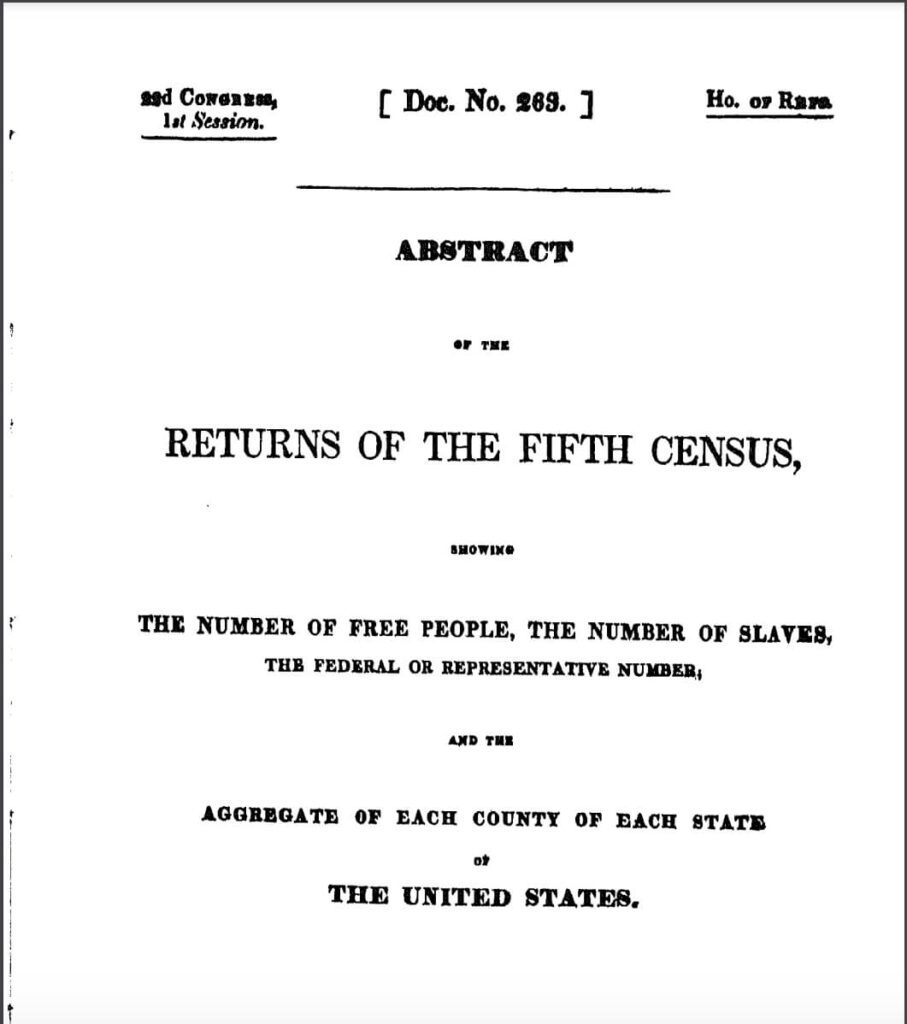
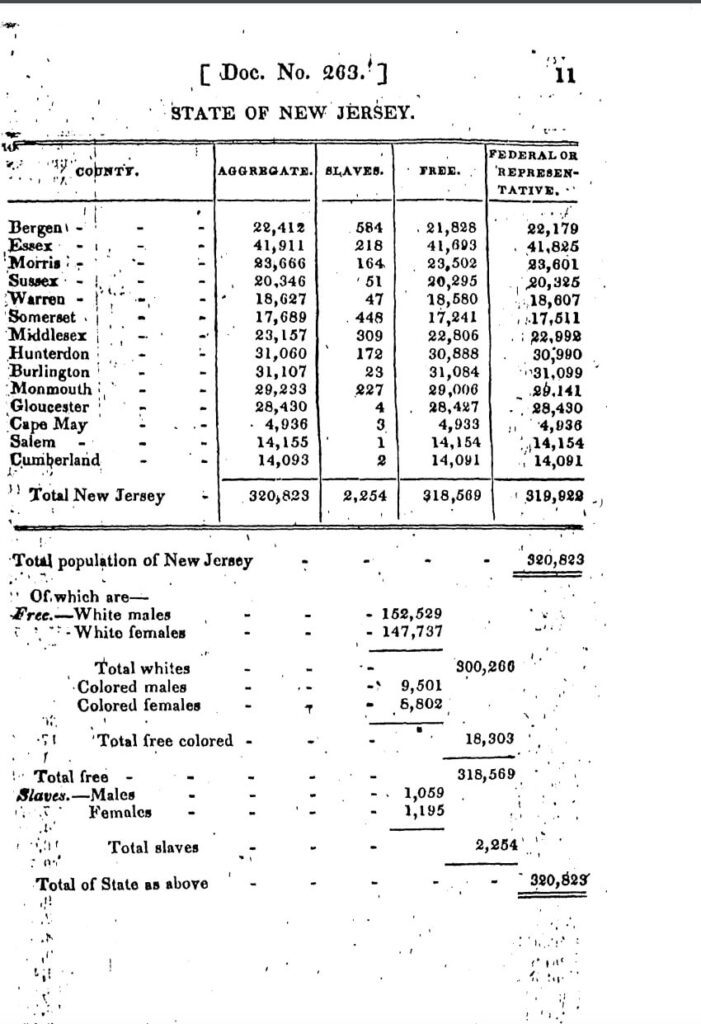
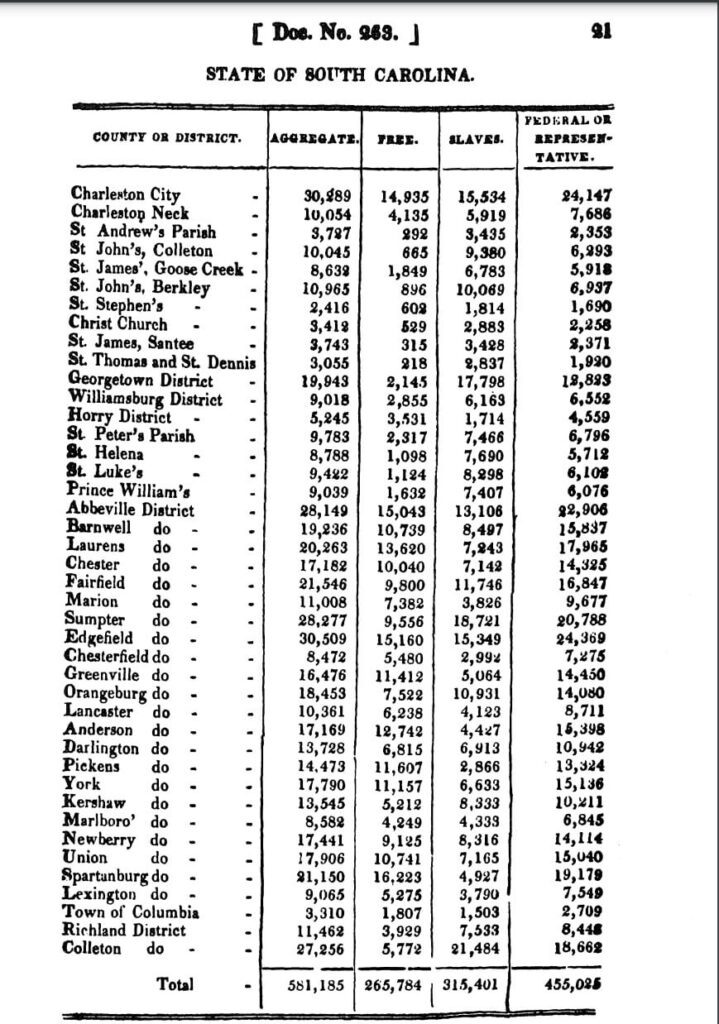
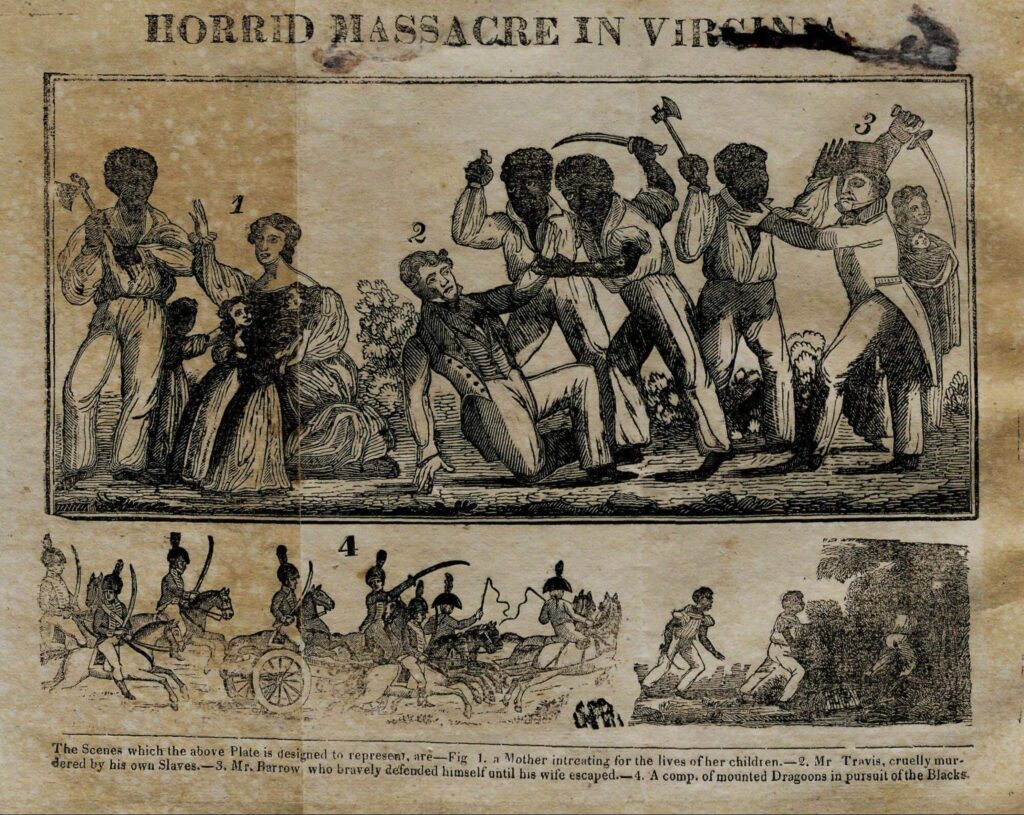
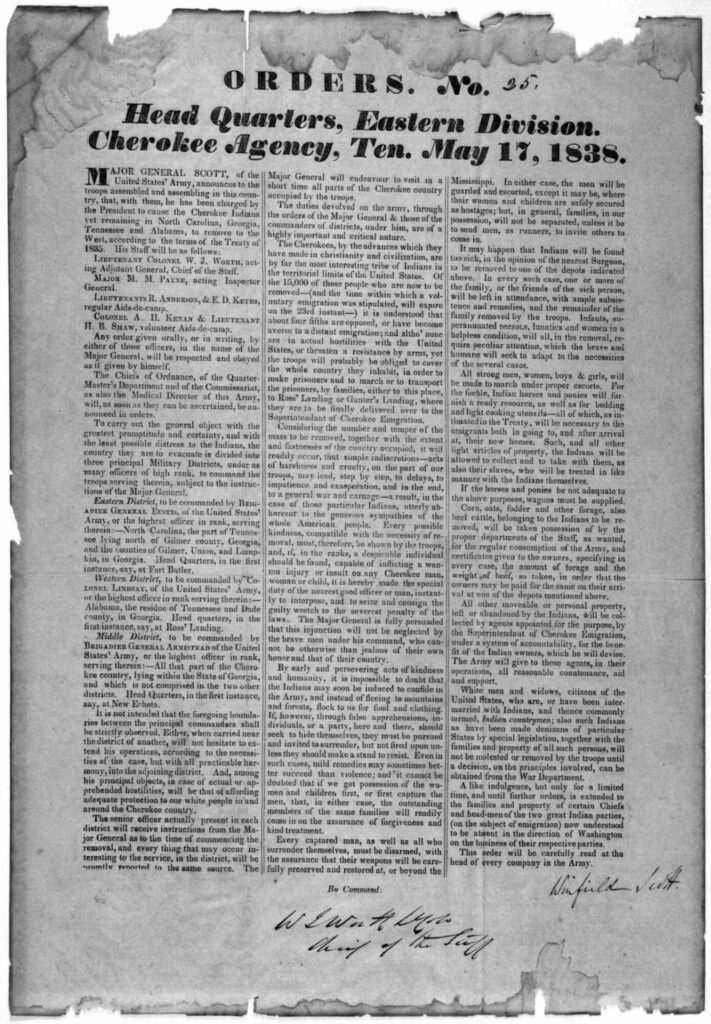
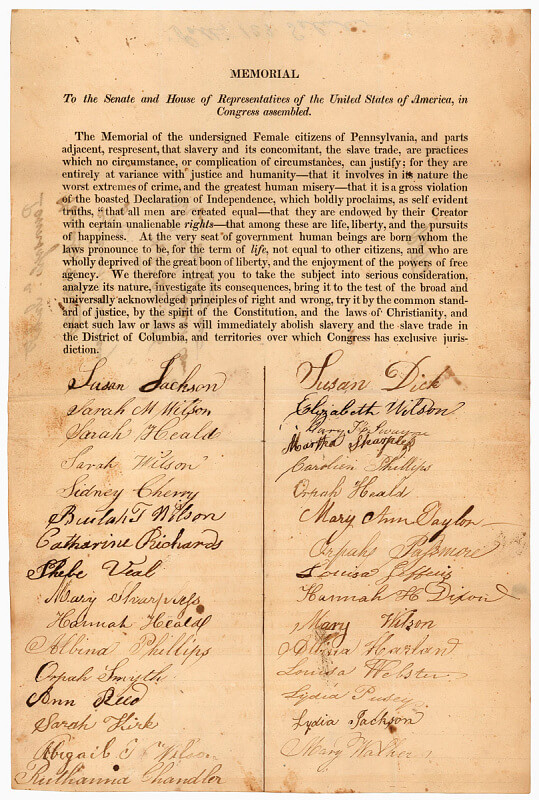
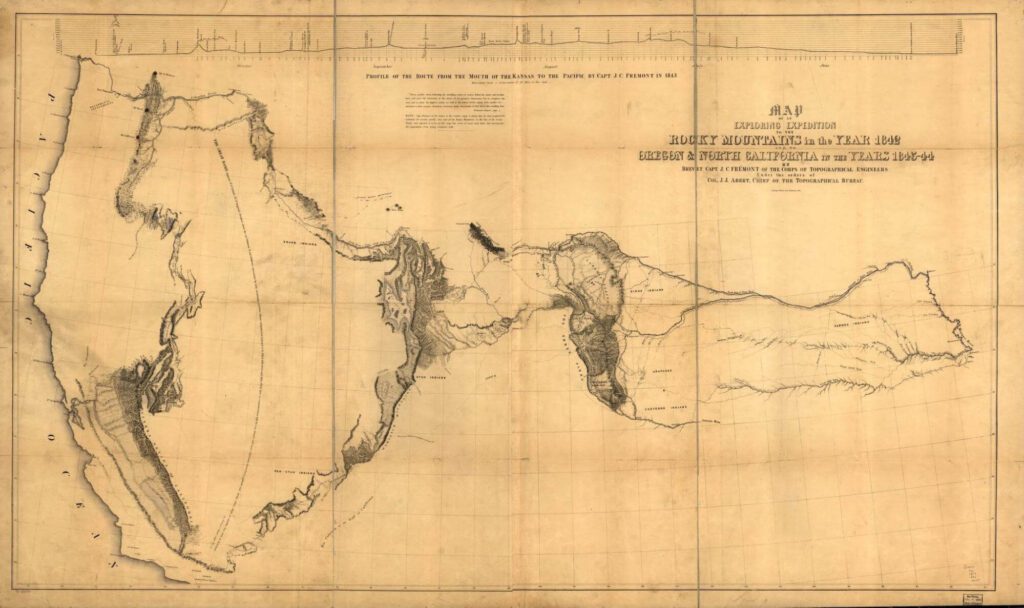
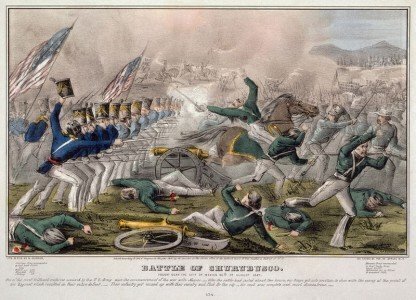
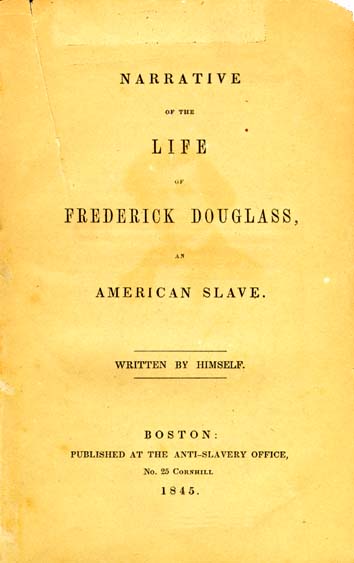
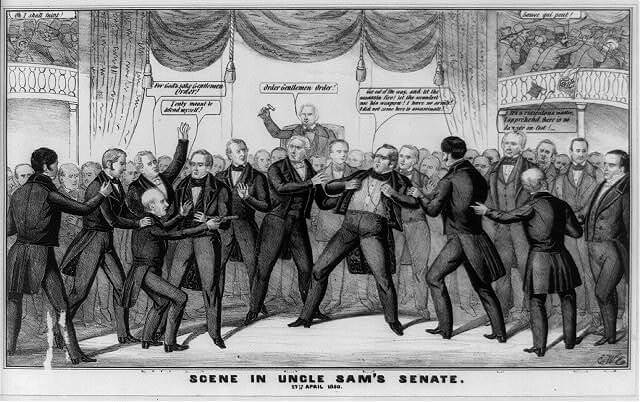
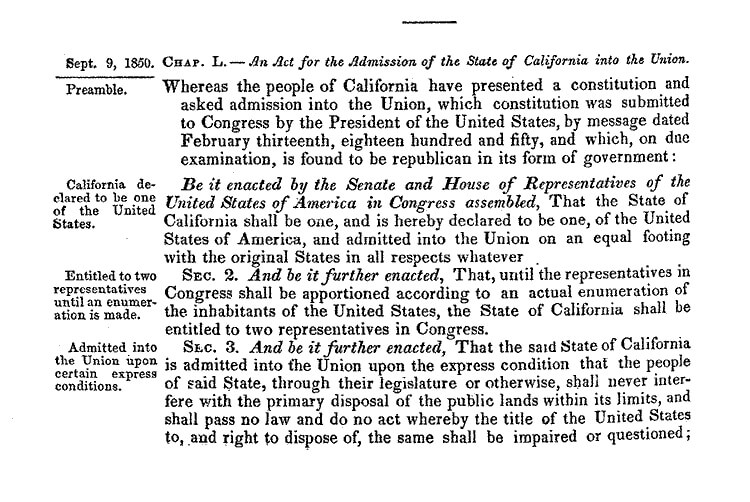
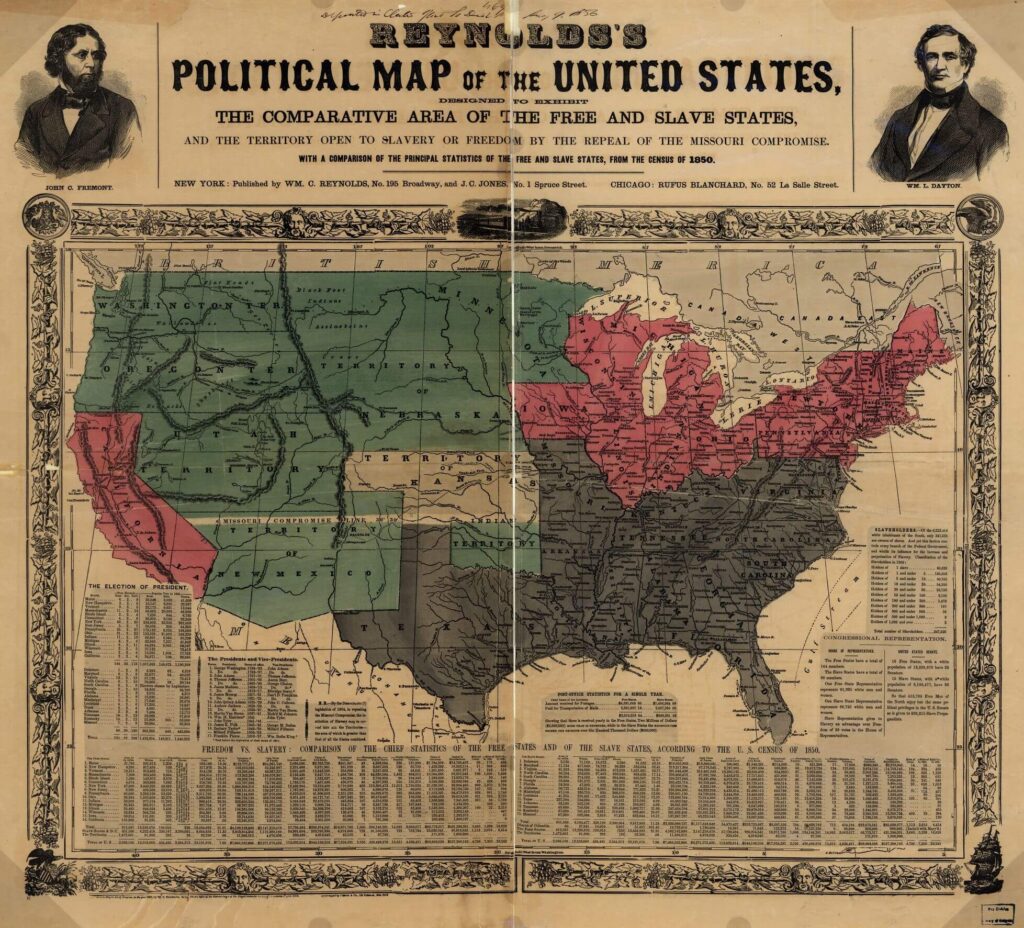
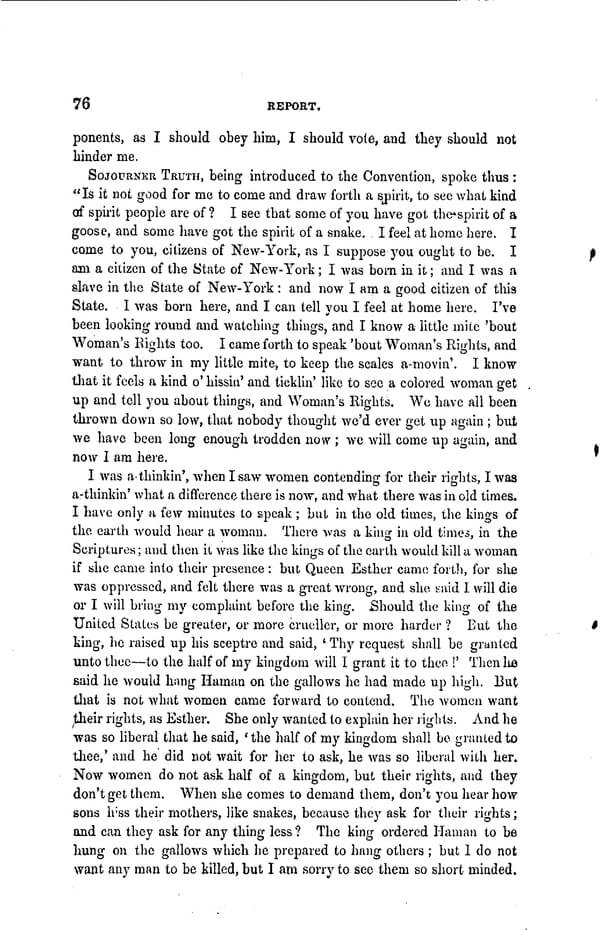
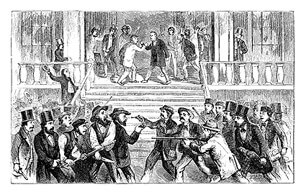
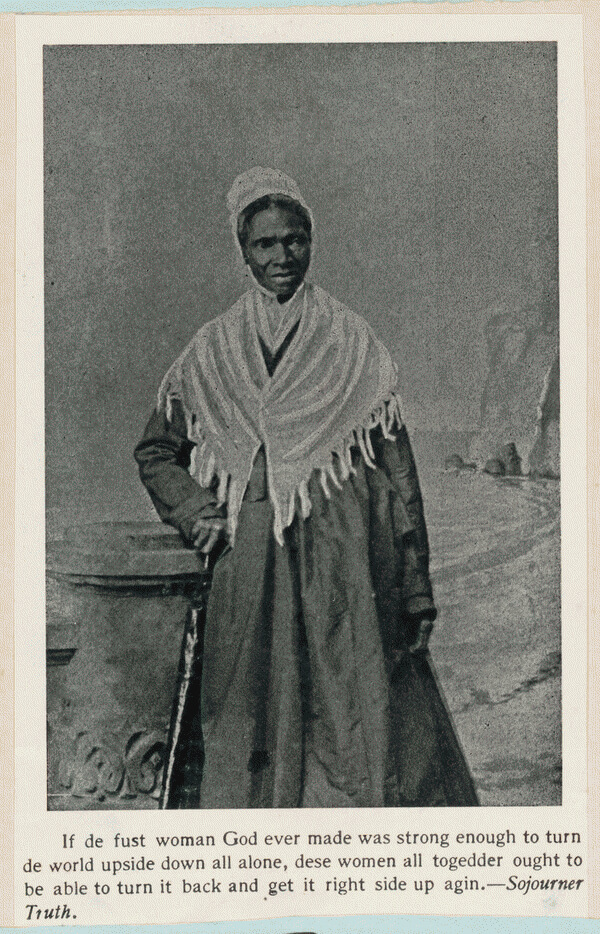



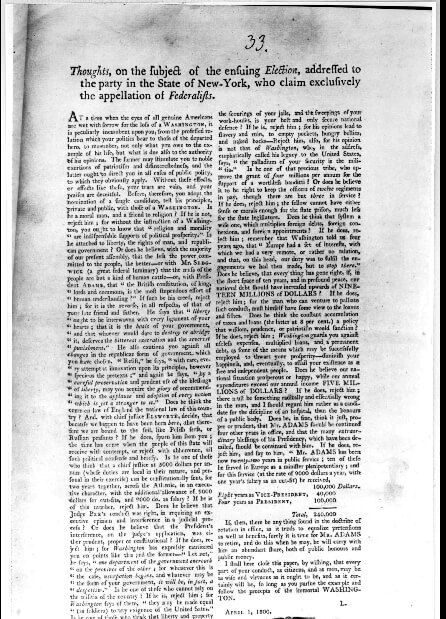
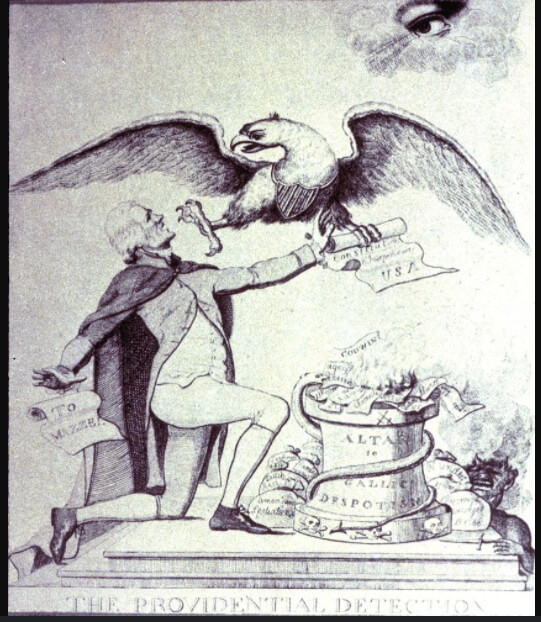
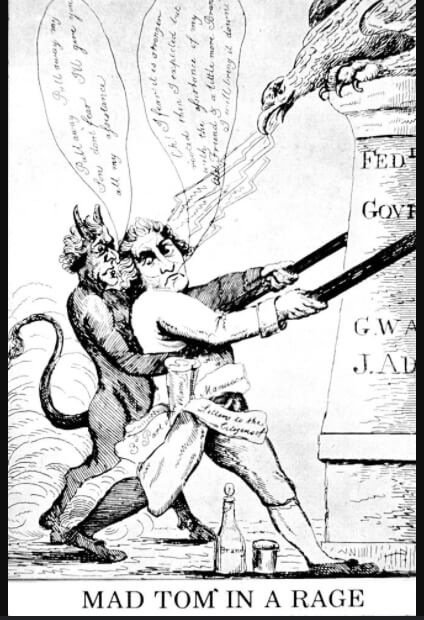
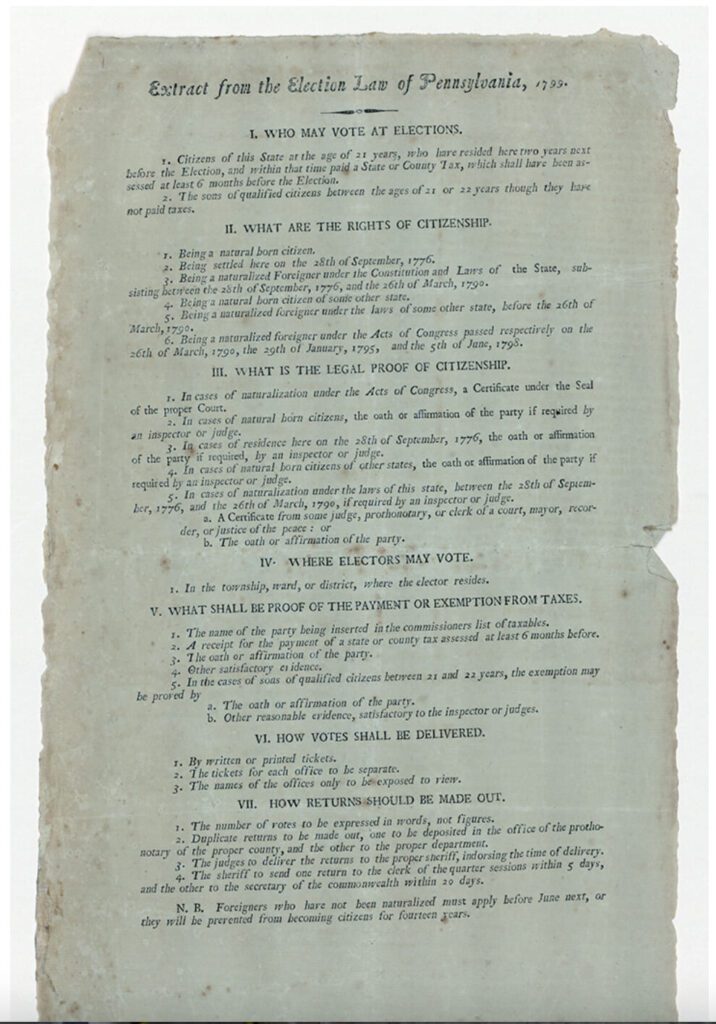
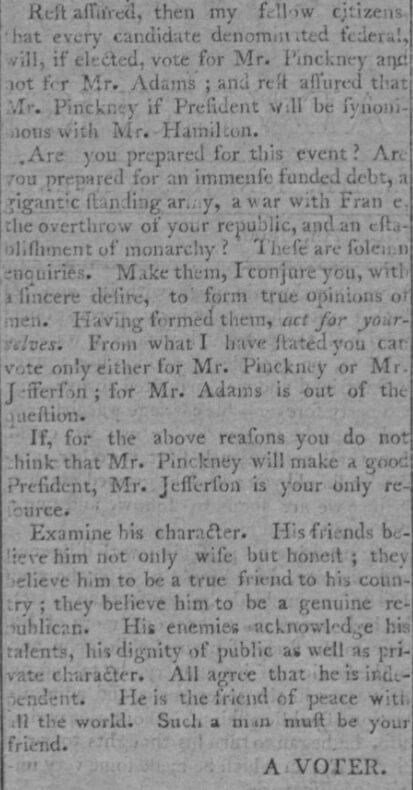
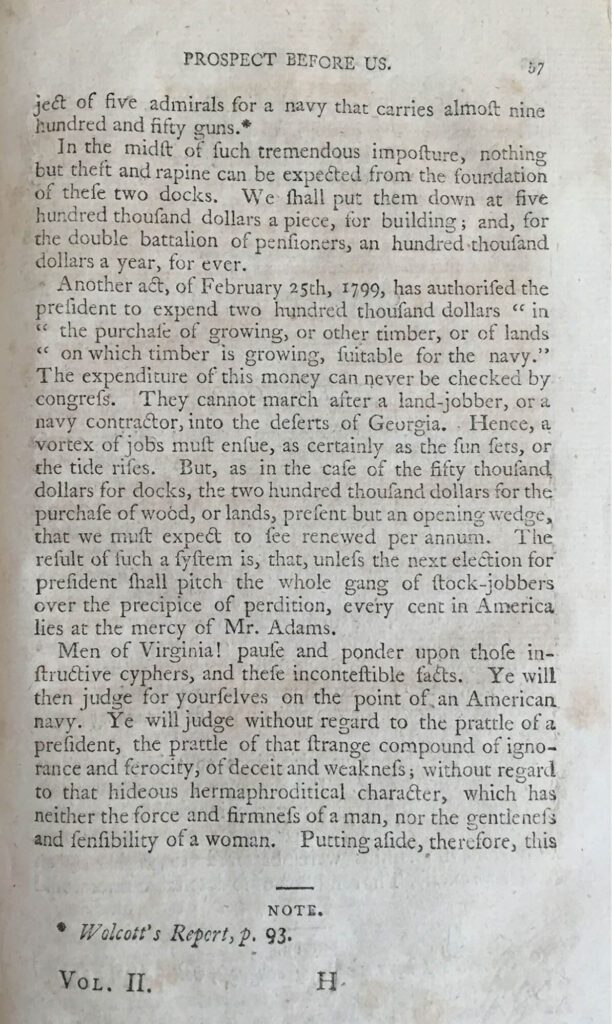
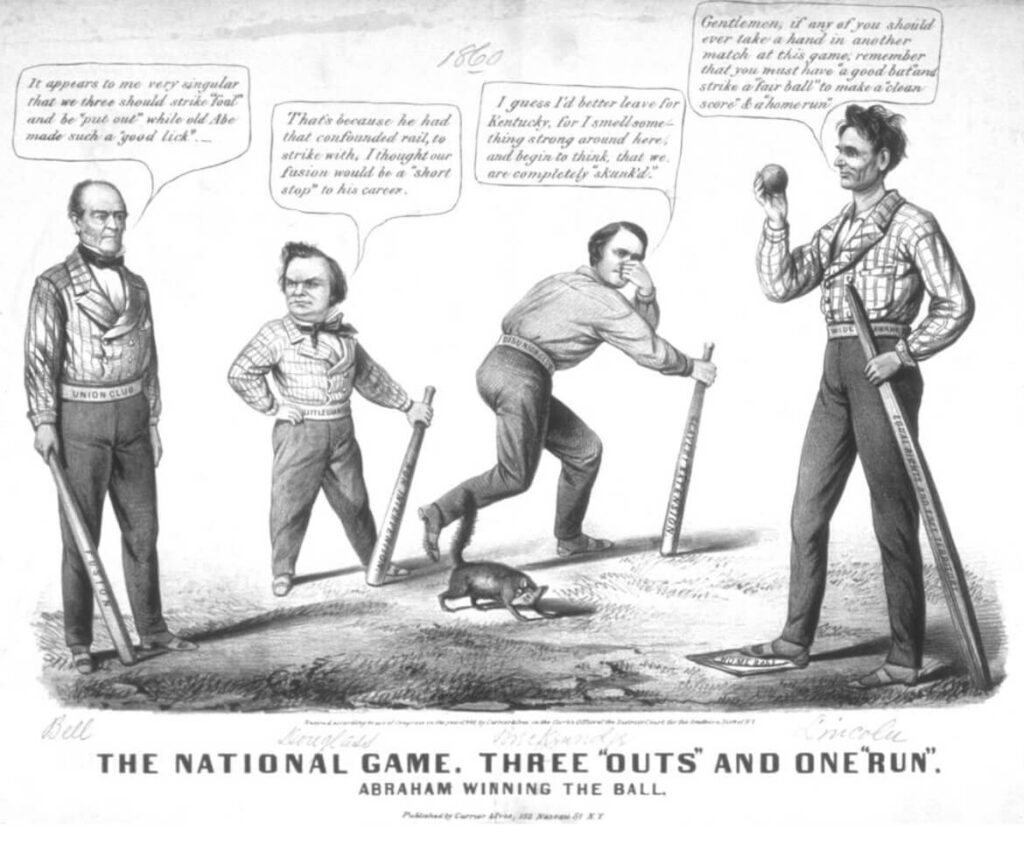
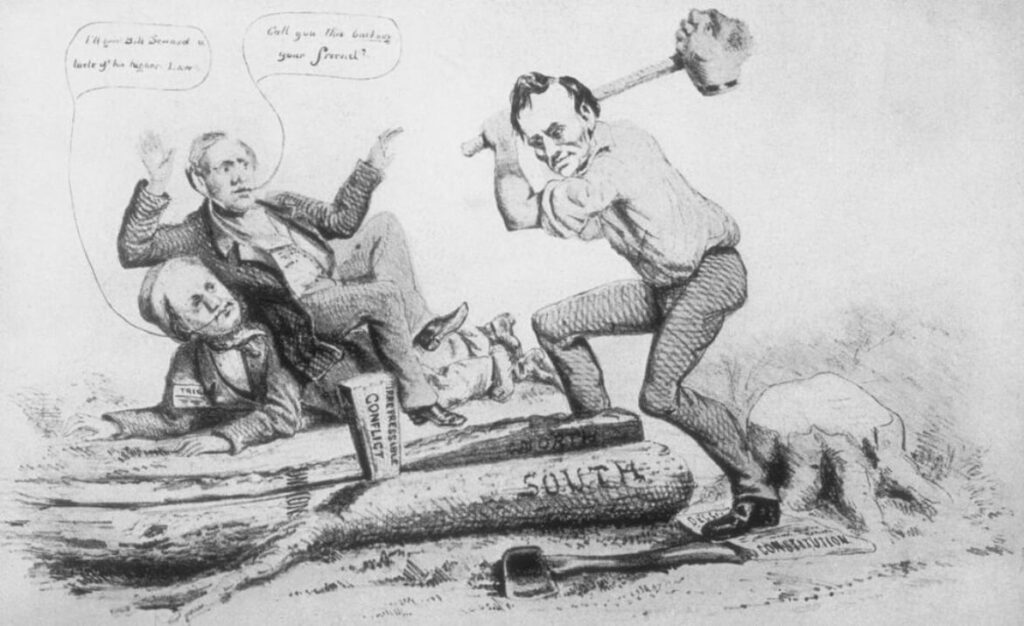
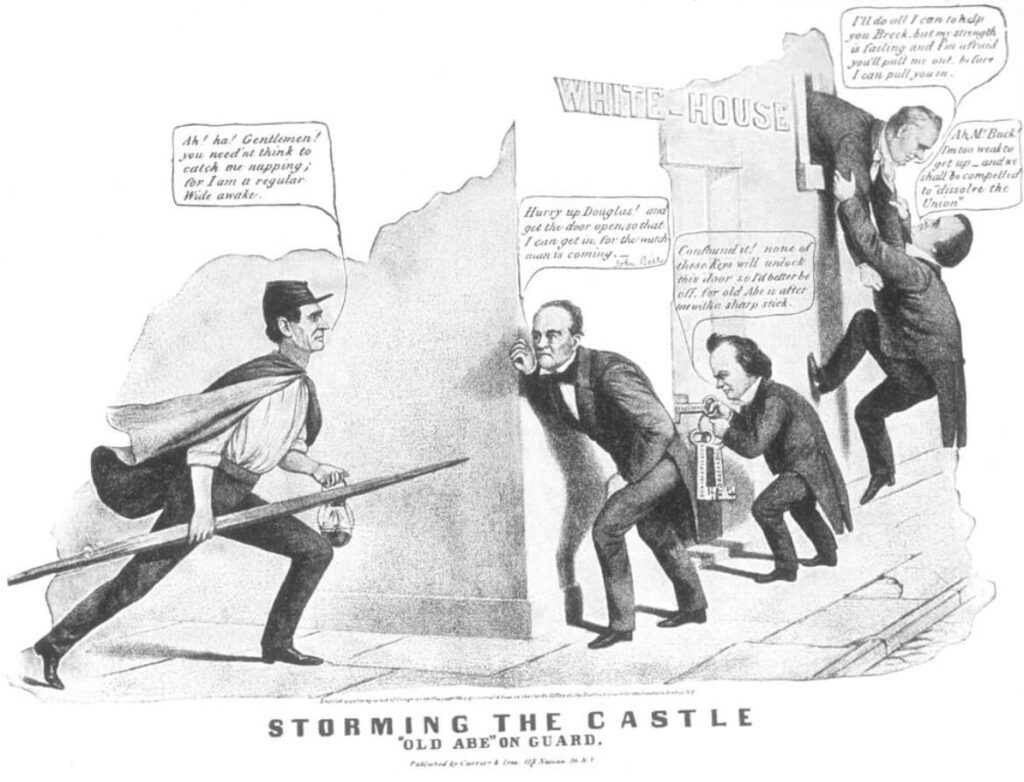
![“[Dividing the] National [Map],” 1860](/wp-content/uploads/2023/09/Dividing-the-National-Map-1860.jpg)